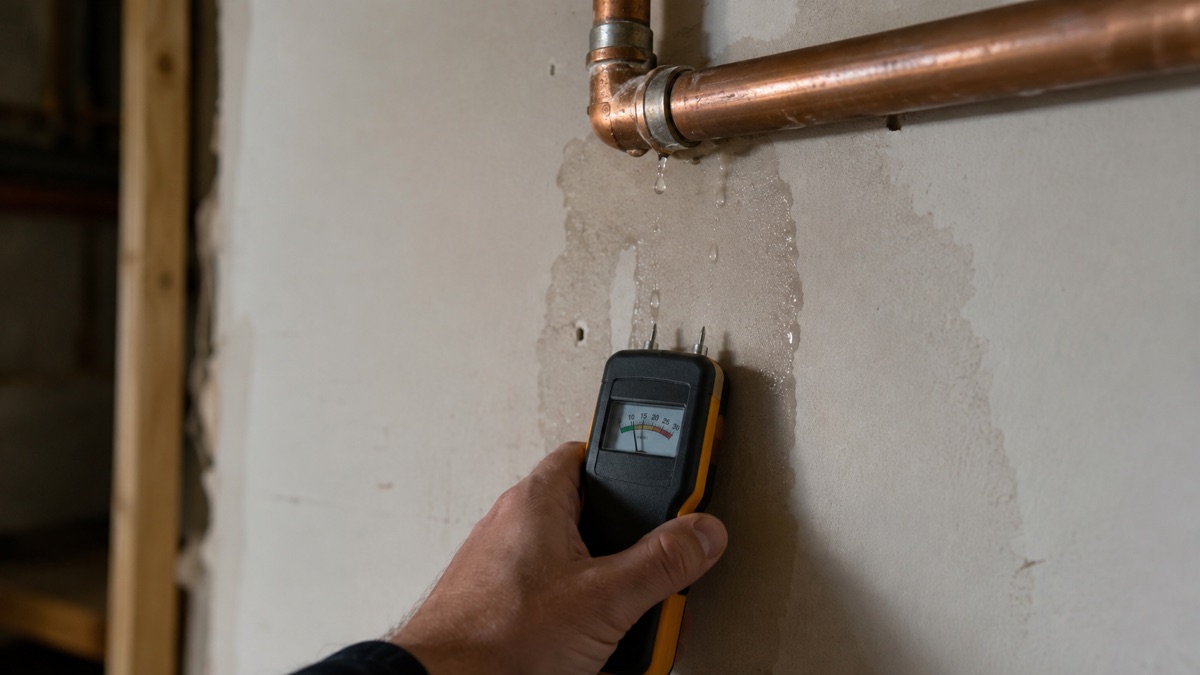
Here is what most homeowners do not realize: the majority of those claims start with a plumbing failure. A burst supply line. A failed water heater. A sewer backup. A washing machine hose that splits at the crimp after years of use. The plumbing side of the problem how fast the source gets stopped and how cleanly the issue gets repaired determines whether a restoration crew is cleaning up a small mess or demolishing half the house.
This guide explains exactly how common plumbing failures lead to water damage, what the timeline looks like once water starts flowing, and what you can do right now to protect your home. Whether you live in Phoenix, Southern California, Colorado, or Tampa, the science is the same but regional climate makes the stakes higher in some areas than others.
Most Water Damage Starts With a Plumbing Problem
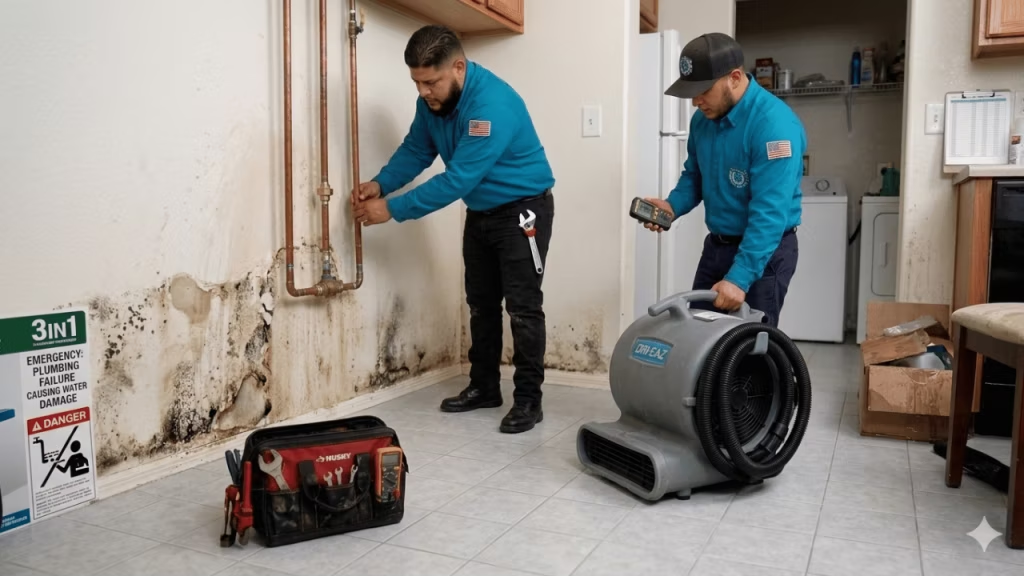
Water damage does not usually start with a dramatic event. It starts with plumbing that fails quietly and goes undetected for hours or days. By the time a homeowner notices water on the floor, the damage has already spread behind walls, under flooring, and into materials that are expensive to replace.
The five most common plumbing failures that lead to water damage are:
1. Burst or leaking supply lines
Copper pipes fatigue over time, especially in climates with extreme heat like Phoenix and Tucson. Sustained summer temperatures accelerate expansion and contraction cycles, weakening joints and connections. A supply line that was fine five years ago can fail without warning after years of thermal stress. Pipe leak repair done early prevents a small drip from becoming a $15,000 insurance claim.
2. Water heater failures
A standard tank water heater has a lifespan of 8 to 12 years. When it fails, it can release 40 to 80 gallons of water onto your floor in minutes. Sediment buildup from hard water, common in Phoenix, Ventura, and much of Southern California accelerates tank corrosion. Regular water heater maintenance and timely replacement are the simplest ways to prevent catastrophic water damage in your home.
3. Sewer line backups
Tree root intrusion, pipe collapse, and heavy storm water can all cause raw sewage to back up into your home. This is classified as Category 3 (black water) contamination, which means every porous material the water touches carpet, drywall, insulation must be removed and disposed of. A proactive sewer line inspection can catch problems before they turn into a health hazard.
4. Drain blockages that overflow
Kitchen sinks, bathroom drains, and laundry room lines can all back up if clogs are left untreated. What starts as a slow drain becomes a flooded room. Regular drain cleaning is an inexpensive preventive measure compared to the cost of water damage restoration.
5. Washing machine and appliance hose failures
Rubber supply hoses on washing machines, dishwashers, and refrigerator ice makers crack and split over time. A burst washing machine hose in an upstairs laundry room can flood the entire floor below. Most plumbing professionals recommend replacing rubber hoses with braided stainless steel lines every five years.
The Water Damage Timeline: Why Speed Matters
Once water starts flowing from a plumbing failure, a clock starts. Every hour of delay makes the damage worse and the repair more expensive. The ANSI/IICRC S500 standard is the industry reference for professional water-damage restoration and establishes clear timelines that every homeowner should understand.
Within the first 60 minutes: Water spreads across floors, seeps under baseboards, and begins wicking up drywall and into wall cavities. At this stage, fast extraction and drying can save most materials. This is why emergency plumbing response time matters so much stopping the water source in the first hour is the single biggest factor in limiting damage.
Hours 1 through 24: Moisture migrates deeper into building materials. Drywall absorbs water and begins to swell. Wood subfloors start warping. Carpet padding saturates. If extraction and drying begin within this window, most materials can still be salvaged.
Hours 24 through 48: This is the critical threshold. The EPA and CDC cite 24 to 48 hours as the window past which porous materials stop being dryable and start becoming contaminated with mold. In hot, humid climates like Phoenix and Tampa, that window is closer to 24 hours due to higher ambient temperatures accelerating mold germination.
Beyond 48 hours: Mold colonization begins on wet materials. What started as a mitigation job becomes a demolition and mold remediation project. Costs multiply. Insurance claims become more complex. Materials that could have been dried must now be cut out, bagged, and replaced.
Key Takeaway: A water damage claim that starts with a one-hour plumbing repair becomes a two-day mitigation. A claim that starts with a six-hour plumbing delay becomes a ten-day mitigation plus drywall demolition. The plumber who stops the source is the first and most important call.
The Three Categories of Water Damage
Not all water damage is the same. The ANSI/IICRC S500 standard classifies water losses into three categories. The category determines what can be saved, what needs treatment, and what has to be removed entirely. Understanding these categories helps you communicate clearly with both your plumber and your insurance adjuster.
Category 1: Clean Water. This is water from a sanitary source: a broken supply line, an overflowing sink with clean water, or the drain pan under a water heater. Most materials are salvageable if drying begins within the first 24 hours. This is the best-case scenario, and fast pipe leak repair keeps it in Category 1.
Category 2: Gray Water. This water carries significant contamination: dishwasher discharge, washing machine overflow, or toilet tank water. Porous materials generally have to be removed. Hard surfaces get antimicrobial treatment. Gray water situations require faster response because the contamination level escalates with time.
Category 3: Black Water. This is grossly contaminated water sewer backups, rising storm water, or toilet overflow with solids. Every porous material that contacted Category 3 water gets cut out, bagged, and disposed of. This is the most expensive and most disruptive type of water damage. A properly maintained sewer line is your best defense against Category 3 events in your home.
Critical point from the S500 standard: Category 1 water left untreated for roughly 48 hours may be reclassified as Category 2 or Category 3 depending on temperature and what it contacted. Clean water becomes contaminated water simply because nobody responded fast enough. In warmer climates, that drift happens even faster.
How Climate Makes Plumbing Failures Worse
The region you live in changes how quickly plumbing failures cause damage and how aggressively the restoration response needs to be. Elite Rooter serves homeowners across four states, and each one has a distinct climate profile that affects both plumbing systems and water damage outcomes.
Arizona: Extreme Heat and Pipe Stress
Phoenix and Tucson experience sustained summer temperatures above 110°F. This heat causes copper pipes to expand by up to 0.7 inches per 100 feet during the May-through-October season roughly three times the rate during cooler months. Repeated expansion and contraction weakens joints over time.
When monsoon storms arrive in late June, already-stressed plumbing systems face additional pressure from flooding and drainage overload. Arizona homeowners need both preventive plumbing maintenance and fast emergency response during storm season.
Mold germination in Phoenix happens faster than national averages. An August attic running at 95°F and 75% relative humidity will sprout microbial growth on wet drywall significantly earlier than a basement in a cooler climate. The 24-hour response window is not optional it is the maximum.
Southern California: Hard Water and Aging Infrastructure
Southern California homes from Ventura to San Diego deal with extremely hard water that deposits mineral scale inside pipes, water heaters, and fixtures. This buildup reduces flow, increases pressure on weakened sections, and accelerates corrosion in tank water heaters.
Many older neighborhoods in Santa Barbara, Fullerton, and the San Fernando Valley have plumbing systems that are 40 to 60 years old. Original galvanized and copper lines in these homes are at higher risk of failure. A proactive plumbing inspection can identify vulnerable points before they fail.
Colorado: Freeze-Thaw Cycles and Foundation Movement
Colorado homes especially in Denver, Colorado Springs, and Northern Colorado, face a unique plumbing risk from freeze-thaw cycles. Water left in pipes during cold snaps expands and can burst supply lines overnight. Spring thaw then reveals the damage.
Colorado's expansive clay soils also cause foundation movement that can crack supply lines from the outside in. These slow leaks often go undetected until significant water damage is already underway beneath the home.
Florida: Humidity and Hurricane Season
Tampa and the Gulf Coast face year-round high humidity, which means any water damage event has a shorter response window. Mold growth begins faster in Florida's climate than almost anywhere else in the country. Hurricane season adds the risk of flooding and storm water intrusion classified as Category 3 contamination.
Fast emergency plumbing response in Florida is critical because the climate does not give homeowners extra time.
The Plumbing Checklist That Stops Water Damage Before It Starts
Most water damage is preventable. The plumbing failures that cause it burst pipes, failed water heaters, blocked drains, sewer backups all give warning signs before they become emergencies. A simple annual plumbing check can catch these issues early.
Supply line inspection. Check visible pipes for corrosion, green discoloration on copper, moisture at joints, or mineral deposits at connections. Pay special attention to pipes in attics, crawl spaces, and garages where temperature extremes are highest.
Water heater maintenance. Flush your tank water heater annually to remove sediment. Check the anode rod and replace it if more than 50% corroded. If your water heater is older than 10 years, consider replacement before it fails catastrophically.
Drain maintenance. Slow drains are not minor inconveniences they are early warnings of blockages that can cause overflow and water damage. Schedule regular drain cleaning to keep lines clear.
Sewer line camera inspection. If your home is older than 20 years, or if you have large trees near your sewer lateral, a camera inspection can find root intrusions, cracks, and partial collapses before they cause a Category 3 backup.
Appliance hose replacement. Replace rubber supply hoses on washers, dishwashers, and refrigerators with braided stainless steel every five years. Check connections for moisture or bulging.
Water leak detection. Modern leak detection technology can find hidden leaks behind walls and under slabs without destructive testing. If you notice unexplained increases in your water bill, soft spots in flooring, or musty smells, schedule an inspection immediately.
When Water Damage Happens Your Response Checklist
If a plumbing failure has already caused water damage, the speed and order of your response determines the outcome. Follow this sequence:
Step 1: Stop the water source. Shut off the supply valve to the affected fixture or appliance. If you cannot isolate the source, shut off the main water supply to your home. Every minute the water runs adds to the damage.
Step 2: Call a licensed plumber. The source needs to be professionally repaired both stopped. A temporary shutoff buys time, but the failed component needs to be fixed or replaced to prevent recurrence. Elite Rooter provides emergency plumbing response during posted business hours at 866-805-5325.
Step 3: Document everything. Before moving anything, photograph and video the damage. Capture the water source, the affected areas, damaged belongings, and water levels. This documentation is critical for your insurance claim.
Step 4: Contact your insurance company. Report the loss immediately. Most policies require prompt notification. Ask for a claim number and the name of the assigned adjuster.
Step 5: Begin extraction. Remove standing water as quickly as possible using towels, a wet/dry vacuum, or a pump. Open windows and run fans to start air circulation while waiting for professional help.
Step 6: Call a certified restoration company. A restoration firm certified by the IICRC (Institute of Inspection, Cleaning and Restoration Certification) should handle professional drying, dehumidification, and any demolition or mold prevention work. Ask for their IICRC Certified Firm number and their technicians' credentials.
Pro Tip: Save your plumber's number and your restoration company's number in your phone before anything goes wrong. The homeowner who has both contacts ready generally comes through a water event with less damage and a cleaner insurance claim.
Why the Plumber Is the Most Important Call
The restoration industry exists to clean up after water events. But the plumber is the one who stops the event. A burst supply line pumping water into your home at 3 gallons per minute for six hours puts roughly 1,080 gallons into your house. The same line shut off within one hour releases about 180 gallons. That is the difference between drying in place and full demolition.
At Elite Rooter, our phones are answered 24/7, and our licensed technicians respond to plumbing emergencies during posted business hours across Arizona, California, Colorado, and Florida. We repair the failed line, clear the blocked drain, replace the ruptured water heater, and stop the water so that the restoration crew can focus on drying and rebuilding not watching more water pour in.
Our emergency plumbing services include:
- Pipe leak detection and repair
- Water heater emergency replacement
- Sewer line clearing and repair
- Emergency drain cleaning
- Hydro jetting for severe blockages
Available during business hours, call 866-805-5325 or schedule online.
Licensed (CSLB #1034343) | BBB Accredited | 570+ Google Reviews | 14 Locations Across 4 States | Serving Homeowners Since 2017
FAQs: Plumbing Failures and Water Damage
1. What is the most common plumbing failure that causes water damage?
Burst or leaking supply lines are the most common cause. Aging copper and polybutylene pipes fatigue over time, especially in climates with extreme heat or freeze-thaw cycles. A failed supply line can release hundreds of gallons of water before a homeowner notices the problem. Regular inspection and timely pipe repair help prevent these failures.
2. How quickly does water damage become serious?
Water damage becomes serious within hours. The ANSI/IICRC S500 standard identifies 24 to 48 hours as the critical threshold after that, mold growth begins on wet porous materials. In hot, humid climates like Phoenix and Tampa, that window can be as short as 24 hours. Stopping the water source quickly with emergency plumbing is the most important factor.
3. Can a slow plumbing leak cause major water damage?
Yes. Slow leaks behind walls and under slabs often go undetected for weeks or months. By the time a homeowner notices discoloration, soft spots in flooring, or a musty smell, the damage is often extensive. Professional water leak detection can find hidden leaks before they cause serious structural damage.
4. Does homeowner insurance cover water damage from plumbing failures?
Most standard homeowner policies cover sudden and accidental water damage from plumbing failures, a burst pipe, a failed water heater, a broken supply line. However, damage from gradual leaks, deferred maintenance, or flooding typically is not covered without separate endorsements. Contact your insurance agent to understand your specific coverage.
5. How much does water damage restoration cost?
The Insurance Information Institute reports that the average water damage claim is approximately $15,400. Actual costs vary widely depending on the severity, the water category, the amount of material that needs replacement, and how quickly mitigation begins. A fast plumbing response that limits the damage can reduce restoration costs significantly.
6. What should I do first when I discover a plumbing leak causing water damage?
Shut off the water supply immediately, either at the fixture valve or at the main shutoff. Then call a licensed plumber to repair the source. Document the damage with photos and video before moving anything. Contact your insurance company to report the loss. Finally, call an IICRC-certified restoration company for professional drying.
7. How can I prevent plumbing failures that lead to water damage?
Schedule annual plumbing inspections, flush your water heater yearly, replace rubber appliance hoses every five years with braided stainless steel, keep drains clear with regular cleaning, and get a sewer camera inspection if your home is older than 20 years. These preventive steps cost far less than water damage restoration.
8. Does Elite Rooter handle water damage restoration?
Elite Rooter specializes in the plumbing side of water damage, stopping the source, repairing or replacing the failed component, and preventing recurrence. For the restoration phase (drying, dehumidification, demolition, and rebuilding), we recommend working with an IICRC-certified restoration company. Having both a plumber and a restoration firm in your contacts before an emergency saves critical time.