You grab your phone and search "sewer line cleaning cost." The first three results say $99. The next three say $1,400. One company in the ads says "free estimate." You don't know if your problem is a $300 snake job or a $9,000 lining job. You just want the water to stop.
What Sewer Line Cleaning Actually Costs in 2026
Professional sewer line cleaning costs $125 to $9,500 in 2026, depending on the method. The four common methods are cable snaking ($285 to $495), hydro jetting ($450 to $950), chemical treatments ($125 to $225, not a permanent fix), and CIPP pipe lining ($4,500 to $9,500 when cleaning crosses into repair). Most homeowners with a routine main line clog pay $285 to $495 for cable snaking. Recurring clogs or tree root jobs run $450 to $950 for hydro jetting. The price varies by pipe length, diameter, access, and your local market.
What Drives the Price of Sewer Line Cleaning
Sewer line cleaning is one of the few plumbing services where the same job can cost $200 at one house and $1,800 at another, three blocks away. The reason isn't the plumber playing games. It's that two big factors quietly stack up before the truck arrives, and each one changes the price by hundreds of dollars.
Here are the two factors that swing your sewer cleaning quote most:
Why cleanout access alone can swing the price by $300
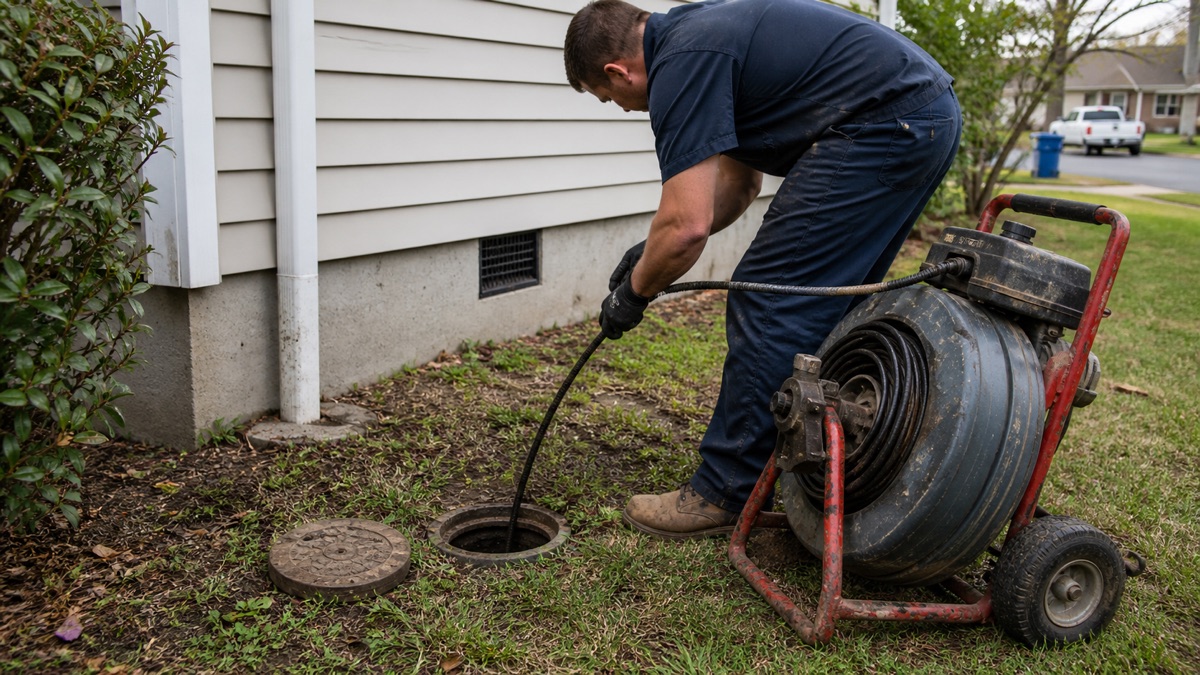
A sewer cleanout is a capped pipe (usually 3 to 6 inches) that gives the plumber direct access to your main line. If your house has one, the plumber arrives, unscrews the cap, and starts work. If your house doesn't have one, the plumber pulls a toilet to reach the line, runs the cable through that opening, then reinstalls the toilet. That extra step adds 45 minutes of labor and a wax ring, which usually adds $200 to $400 to the bill.
Length, diameter, and the 50-foot rule most homeowners don't know
A typical residential sewer line runs 40 to 75 feet from the house to the city main. Anything over 50 feet usually triggers a higher quote because the cable, jetter hose, or liner has to travel farther and the work takes longer. Pipe diameter also matters. A 4-inch lateral cleans faster than a 6-inch commercial line, which costs more per foot.
What Are The Different Sewer Line Cleaning Methods?
Not every sewer clog needs the same fix. Plumbers use four common methods to clean a sewer line, and each one fits a different problem. Some clear simple clogs in 30 minutes for under $300. Others handle major damage and run into the thousands. Knowing which method matches your situation is the difference between a one-time fix and a recurring bill.
Here are the four most common sewer line cleaning methods used in 2026:
Cable Snaking ($285 to $495)
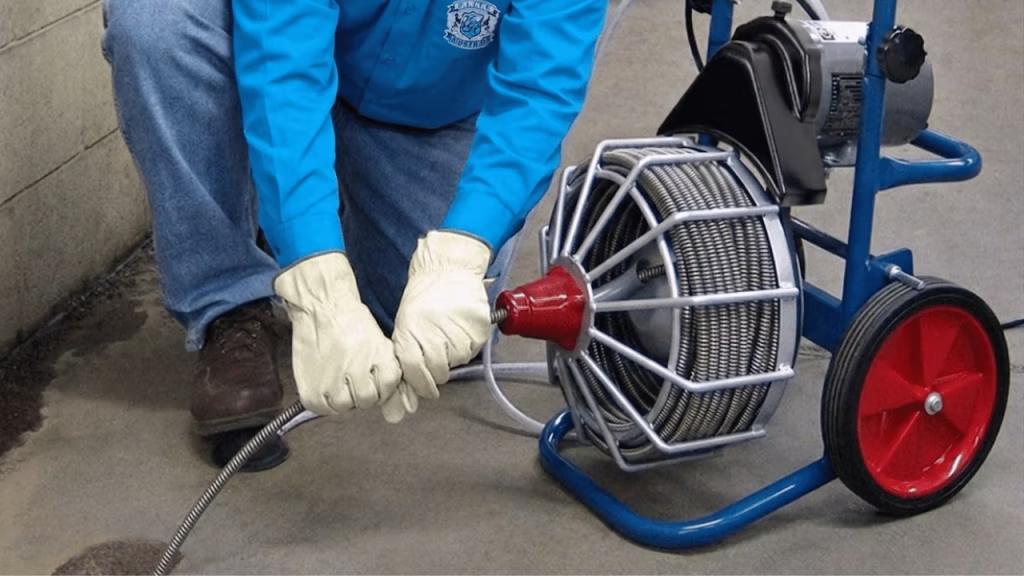
Cable snaking is the entry-level method and the right call for 80% of routine sewer clogs. The plumber feeds a flexible metal cable through your cleanout (or an open access point), works it down the line, and either chops through the clog or pulls it back out. The cable spins at 200 to 500 RPM and uses a cutting head sized to your pipe diameter. Most snake jobs take 30 to 90 minutes from arrival to clear flow.
Here's when cable snaking works and when it doesn't:
When snaking is the right choice
Snaking handles fresh clogs from toilet paper, hair, food scraps, and minor grease buildup. It's the most cost-effective method for one-off problems. The cable can reach 75 to 100 feet down a 4-inch lateral. If the clog clears within the first 30 minutes and water flows freely, the job is done. Expect to pay the lower end of the $285 to $495 range for a simple cleanout-to-clog snake job during business hours.
When snaking won't fix the actual problem
Snaking punches a hole through the clog. It doesn't clean the pipe walls. If the same drain backs up every 3 to 6 months, snaking is treating the symptom and ignoring the cause. Tree roots, hardened grease, and pipe-wall scale all return after a snake job. For those problems, hydro jetting or a drain and sewer camera inspection is the right next step.
Hydro Jetting ($450 to $950)
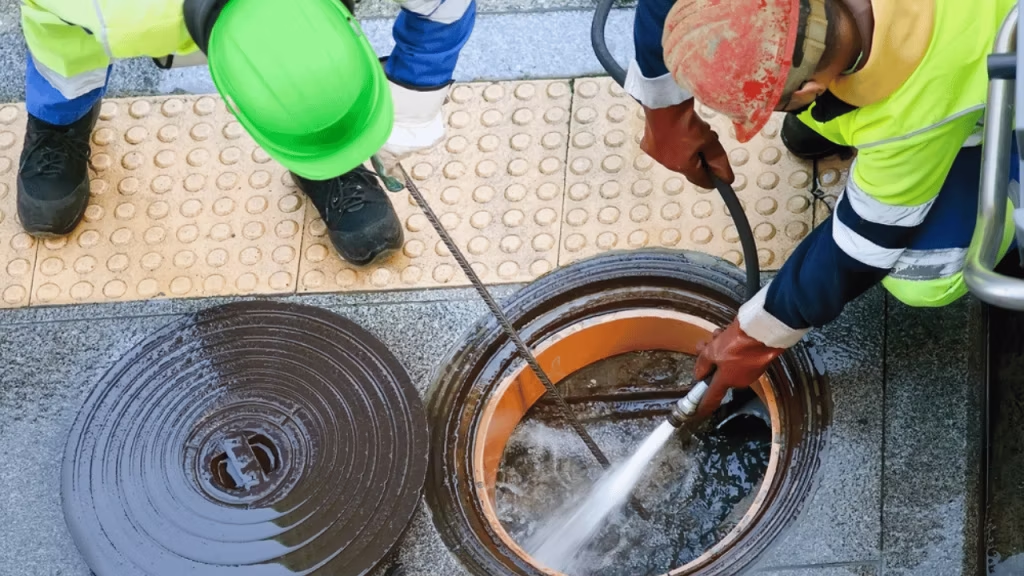
Hydro jetting is the heavy-duty method and the right call for clogs that snaking won't fix. A specialized hose with a multi-directional nozzle goes into the line and pumps water at 1,500 to 4,000 PSI for residential work (up to 35,000 PSI for commercial). The forward-facing jets blast through the clog. The rear-facing jets scour the pipe walls clean as the hose pulls back. Unlike snaking, hydro jetting actually cleans the pipe instead of just punching a hole through the blockage.
Here's what to know before booking a hydro jetting job:
How hydro jetting works (and why it lasts 2 to 3 years vs snaking's 3 to 6 months)
Hydro jetting removes everything coating the pipe interior: grease, soap scum, scale buildup, root hairs, and sediment. A snake punches a 2-inch hole through a clog and water flows again. The clog reforms within months because the pipe walls still have a thick coating that catches new debris. Hydro jetting wipes the pipe back to its original interior diameter. That's why one jetting job lasts 2 to 3 years while a snake job often lasts 3 to 6 months.
When a camera inspection becomes mandatory before jetting
Hydro jetting can crack a damaged pipe. If your sewer line is over 40 years old, has known root intrusion, or has cracked at any point, a camera inspection is mandatory before jetting. The camera identifies pipe condition, joint offsets, and any cracks that high pressure would worsen. Skipping the camera on an old pipe is how a $700 jet job becomes a $9,000 repair job.
The 12-month math: hydro jet once vs snake three times
A snake job at $400 every 4 months adds up to $1,200 per year. A single hydro jetting at $700 lasts 2 to 3 years. For recurring clogs, hydro jetting is the cheaper choice after the first year.
Chemical Drain Treatments ($125 to $225)
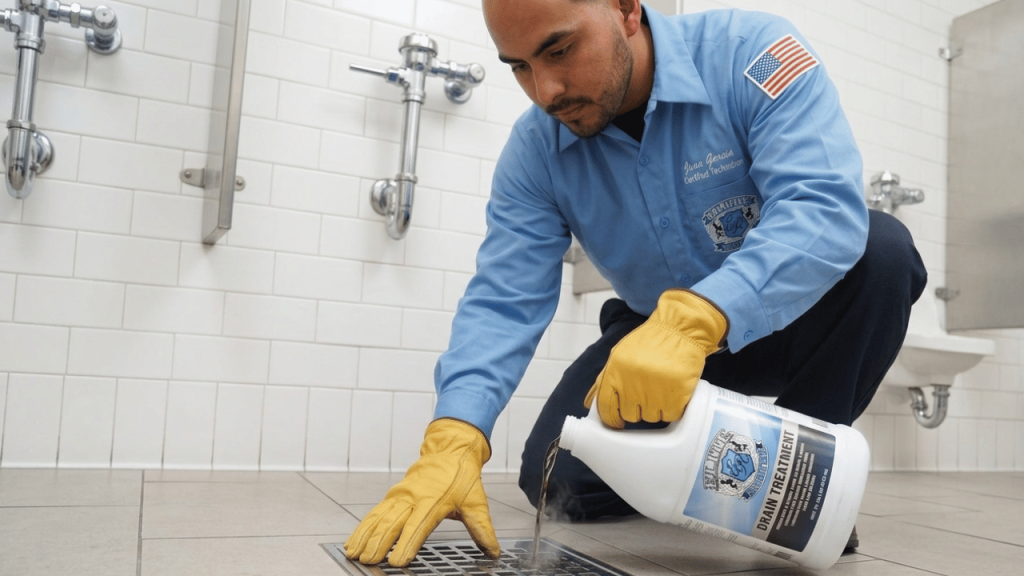
Chemical drain treatments are the cheapest option and the one we recommend the least. Most consumer drain cleaners (the bright-colored bottles at the hardware store) use sulfuric acid or sodium hydroxide. These chemicals dissolve hair, grease, and organic matter, but they also damage the pipe over time, especially in older homes with cast iron or galvanized steel pipes. The professional version costs more, but the long-term damage is the same.
Here's the honest framing on chemical drain treatments:
Why are chemical treatments a temporary fix at best?
Chemicals work fast (10 to 30 minutes) and feel like a win. Then the clog comes back in 3 to 8 weeks because the chemical never removed the buildup, it just softened it enough to flow through temporarily. Each repeat treatment thins the pipe wall a little more. After 5 to 10 chemical treatments, an old cast iron pipe can develop pinhole leaks that turn a $200 problem into a $4,000 repair. For recurring clogs, enzyme-based monthly treatments cost more upfront but cause zero pipe damage. Save the harsh chemicals for emergencies only.
CIPP Pipe Lining ($4,500 to $9,500)
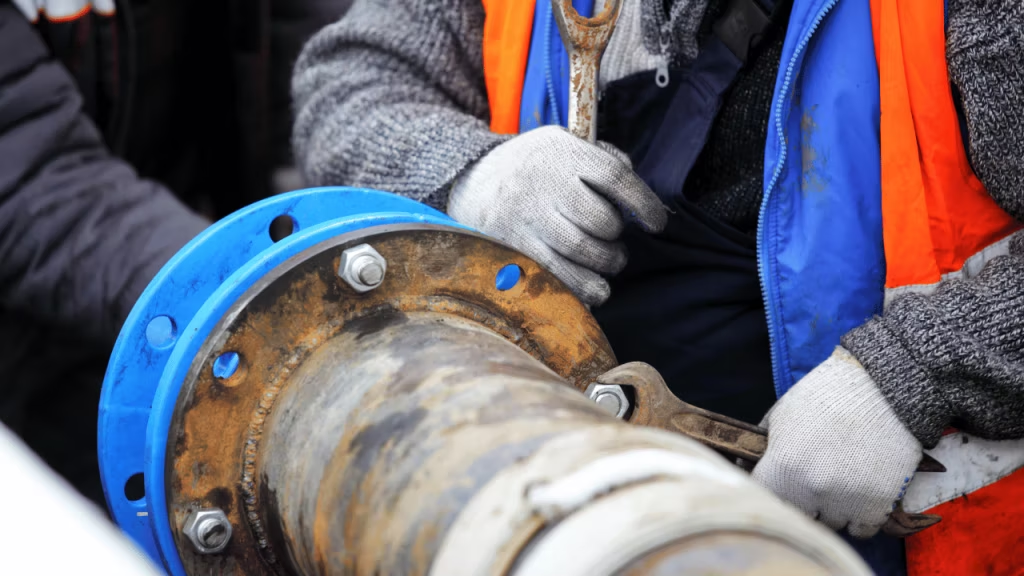
CIPP (Cured-In-Place Pipe) lining is technically a sewer line repair method, but most homeowners end up choosing between hydro jetting and CIPP when a camera inspection reveals cracked or root-damaged pipe. CIPP works by inserting an epoxy-saturated liner into your existing pipe, then curing it with heat or UV light. The result is a direct new pipe inside the old one with a 50-year lifespan. National pricing runs $80 to $250 per linear foot, and a typical residential sewer lateral (40 to 75 feet) lands between $4,500 and $9,500.
Here's when CIPP becomes the better answer than another cleaning:
When sewer cleaning crosses over into sewer repair
Three signs tell you the pipe needs lining, not cleaning. First, the same clog returns every 30 to 60 days no matter how many times you clear it. Second, a camera inspection shows cracks, joint separation, or root intrusion through pipe damage. Third, the line has bellied (sagged) so water pools and debris collects. At that point, repeated cleaning becomes throwing money away. Sewer line repair is the cheaper long-term path.
CIPP vs full pipe replacement: cost and lifespan compared
Full pipe replacement costs $150 to $450 per linear foot and tears up your yard. CIPP costs $80 to $250 per linear foot and uses two small access points instead. For a 50-foot lateral, replacement runs $7,500 to $22,500 with yard restoration. CIPP runs $4,000 to $12,500 with no landscaping damage. Both last 50+ years. CIPP is the better choice when the existing pipe still has 40% structural integrity.
Sewer Line Cleaning Cost by Pipe Length and Diameter
The single biggest reason sewer cleaning quotes vary is what's underground. A short 4-inch residential lateral with a clean access point costs far less to clean than a long 6-inch commercial line with multiple bends. Most quotes you see online give one flat range and assume the average case. Reality is messier. The table below shows the realistic spread based on actual pipe length and diameter.
Here's how the cost scales with pipe length and diameter, by method:
| Pipe Length & Diameter | Cable Snaking | Hydro Jetting | CIPP Lining |
| 25 feet, 4-inch | $285 to $395 | $450 to $650 | $2,000 to $4,500 |
| 50 feet, 4-inch | $325 to $495 | $550 to $800 | $4,000 to $8,500 |
| 75 feet, 4-inch | $395 to $595 | $650 to $950 | $6,000 to $12,500 |
| 100 feet, 4-inch | $495 to $750 | $800 to $1,200 | $8,000 to $16,500 |
| 50 feet, 6-inch (commercial) | $495 to $750 | $750 to $1,200 | $5,000 to $12,000 |
| 100 feet, 6-inch (commercial) | $750 to $1,100 | $1,200 to $2,000 | $10,000 to $25,000 |
Sewer Cleaning Costs by Market: Phoenix, Tucson, Tampa, Ventura
Regional pricing varies more than most cost guides admit. Labor rates, water-quality issues, soil type, and dispatch density all shift the average. Phoenix and Tucson run on Arizona's lower-cost labor market and dry-soil sewer lines. Tampa deals with humidity, root pressure, and frequent recurring service. Ventura sits in California's higher-cost coastal market with strict licensing and code overhead. Here's how the four primary Elite Rooter markets compare.
Here's the average sewer cleaning cost by method in each of the four markets:
| Market | Cable Snaking | Hydro Jetting | CIPP Lining |
| Phoenix, AZ | $265 to $475 | $425 to $900 | $4,200 to $9,000 |
| Tucson, AZ | $275 to $475 | $445 to $895 | $4,300 to $9,000 |
| Tampa, FL | $295 to $525 | $475 to $1,000 | $4,500 to $9,500 |
| Ventura, CA | $325 to $565 | $525 to $1,050 | $5,000 to $10,500 |
Phoenix and Tucson: Arizona market pricing
Arizona sees lower average cleaning costs because labor rates run 8% to 12% below the national average. Dry soil also means tree root intrusion happens less often than in humid climates. The most common job in Phoenix and Tucson is a routine snake on a 4-inch lateral at $275 to $475 during business hours.
Tampa: Florida market pricing
Florida's humidity, sandy soil, and aggressive tree root systems push hydro jetting into routine maintenance territory for many homes. Annual or every-other-year jetting runs $475 to $1,000 in Tampa. Most homeowners with mature trees within 30 feet of the sewer line schedule jetting on a recurring basis.
Ventura: California coastal pricing
Coastal Ventura carries higher labor costs and strict CA C-36 licensing overhead. Add 8% to 12% over Arizona pricing across all methods. Older homes (pre-1960) are more common in coastal Ventura, which also drives more CIPP work than the other three markets.
6 Red Flags in a Low Sewer Cleaning Quote
A $99 sewer cleaning quote is one of the most reliable bait-and-switch traps in the industry. The truck arrives, the tech "discovers" the real problem, and the price doubles before any work starts. Most lowball quotes share the same handful of patterns. Knowing them saves you the upsell and helps you spot the real plumbers in your zip code.
Here are the 6 red flags that should make you call a different number:
- Headline pricing under $150 for a main line. Real sewer cleaning starts around $285. Anything below that on the phone is bait. The truck arrives and the price goes up.
- No camera inspection offered. A real plumber offers or recommends a camera before hydro jetting an older pipe. A quote that skips the camera is gambling with your line.
- Mandatory chemical add-on. Some companies bundle an enzyme treatment into every snake job for $80 to $150 extra. Useful occasionally, mandatory never.
- No written estimate before work starts. Verbal-only pricing is the most common source of billing disputes in plumbing. Real plumbers put it in writing.
- Cash only or "today only" pricing. Both are signs of zero accountability. Reputable plumbers take cards, checks, and ACH, and the price holds for at least 7 days.
- No license number on the truck. Every state requires a plumbing license. Trucks without one usually don't have one either.
How Elite Rooter Handles Sewer Line Cleaning
Elite Rooter operates in 4 states with full licensing in each (AZ ROC C-37, CA C-36, FL CFC, CO MP). Every sewer cleaning call starts with a free or low-cost camera inspection because no plumber should jet a pipe they haven't seen. We quote in writing before any work begins. The four methods (snake, hydro jet, chemical, CIPP) are all in-house, so the recommendation matches the problem, not the upsell.
Here's what every Elite Rooter sewer cleaning job includes:
- Free camera inspection on hydro jetting jobs for pipes over 25 years old
- Written estimate with itemized parts, labor, and total before any work starts
- Flat-rate pricing on standard snake and jet jobs
- 30-day warranty on cleaning, 1-year warranty on CIPP installations
- Same-day dispatch in Phoenix, Tucson, Tampa, and Ventura
- No mandatory add-ons. Chemicals are optional and we never bundle them
To get a quote, book a sewer cleaning visit through any location page above or call directly for emergency service. Pricing matches the matrix in this guide, no surprises after the truck rolls.
Frequently Asked Questions
How much does sewer line cleaning cost in 2026?
Sewer line cleaning costs $125 to $9,500 in 2026 depending on method: cable snaking $285 to $495, hydro jetting $450 to $950, chemical treatments $125 to $225, and CIPP lining $4,500 to $9,500.
What's the difference between hydro jetting and snaking?
Snaking punches a hole through a clog with a spinning cable. Hydro jetting cleans the entire pipe interior with 1,500 to 4,000 PSI water. Snaking lasts 3 to 6 months on chronic clogs. Hydro jetting lasts 2 to 3 years.
Does homeowners insurance cover sewer line cleaning?
Standard homeowners insurance does not cover routine sewer line cleaning. Sudden water damage from a sewer backup may be partially covered under some policies. Sewer line cleaning itself is almost always an out-of-pocket expense.
How often should I clean my main sewer line?
Most main sewer lines benefit from cleaning every 18 to 24 months. Homes with mature trees within 30 feet of the line should schedule hydro jetting every 12 to 18 months. Recurring clogs every few months mean the pipe itself needs inspection.
Can chemical drain cleaners damage my sewer line?
Yes. Sulfuric acid and sodium hydroxide drain cleaners damage old cast iron, galvanized steel, and even some PVC over repeated use. Enzyme-based monthly maintenance products are the safer long-term alternative.
How long does professional sewer line cleaning take?
Cable snaking takes 30 to 90 minutes from arrival to clear flow. Hydro jetting with a camera inspection takes 2 to 3 hours. CIPP pipe lining takes 1 to 2 days from access pit to final cure.
Is hydro jetting safe for old pipes?
Hydro jetting is safe for pipes in good structural condition. For pipes over 40 years old, with known root intrusion, or with prior cracks, a camera inspection is mandatory before jetting. Skipping this step risks turning a cleaning job into a repair job.
When should I choose CIPP lining over cleaning?
Choose CIPP when a camera inspection shows cracked pipe, root intrusion through pipe damage, or joint separation. Choose cleaning when the pipe is structurally sound and the issue is a clog or buildup.
How do I find my sewer cleanout?
Most cleanouts sit within 3 feet of the foundation, near the bathroom or kitchen side of the house. Look for a capped 3 to 6 inch PVC or cast iron pipe sticking out of the ground. Some homes hide cleanouts under a metal access cover at grade level.
What's a fair after-hours rate for emergency sewer cleaning?
Fair after-hours rates run $75 to $150 for the dispatch fee plus 25% to 50% above the standard service rate. Anything above 100% markup is a red flag.
Should I get a camera inspection before sewer cleaning?
A camera inspection is optional for a first-time clog but mandatory before hydro jetting any pipe over 40 years old or with known damage. Inspection costs $125 to $400.
How can I tell if a low sewer cleaning quote is a scam?
Headline pricing under $150 for a main line, no camera inspection offered, mandatory chemical add-ons, verbal-only estimates, and cash-only payment are the most common signs. If 2 or more show up, hang up.