

What you see is a wall of ads, a Google Maps box with three companies, and 47 results below it. Every single one claims 5-star reviews and "emergency service during business hours." You scroll. They all look the same.
You call the first listing because the stars look highest. A friendly voice answers and quotes you "$79 to come out and take a look." Three hours later, the tech hands you a $1,800 invoice. You pay because the kitchen is still flooded.
We have written this blog so that doesn't happen to you. Below are the questions to ask before you hand over your address. Each one takes 30 seconds. Together they save you from the most common plumbing scams of 2026.
Why These Questions Matter More in 2026 Than Ever
The plumbing industry has changed. Big lead-generation companies buy 5-star reviews in bulk, and "plumber near me" Google ads cost so much that small local crews can't afford them. National franchises and call-center operators dominate the top of search results, even when they aren't actually local.
Ask about licensing, insurance, and warranty terms before agreeing to the work. Those answers help you understand who will perform the job, what protection applies, and where to turn if something goes wrong.
Are You Licensed in My State?
This is the single most important question on the list. Every state has its own plumbing license code and its own database where you can verify the plumber in 60 seconds. A licensed plumber has passed an exam, carried a bond, and proven 4+ years of trade experience. An unlicensed one has done none of that. If something goes wrong, your home insurance may not pay because most policies exclude damage from unlicensed work.
Here are the license codes and verification databases for every state Elite Rooter serves:
California: C-36 Plumbing Contractor
California plumbers need a C-36 license from the California Contractors State License Board. Verify any plumber at cslb.ca.gov. The site shows license status, bond information, workers comp status, and disciplinary actions. A current C-36 is the only legal credential for plumbing work in California.
Arizona: ROC C-37 or R-37 Plumbing License
Arizona plumbers need a ROC license (commercial C-37 or residential R-37) from the Arizona Registrar of Contractors. Verify at roc.az.gov. Arizona also runs a $30,000 Residential Contractors' Recovery Fund that reimburses homeowners when a licensed contractor causes harm. That fund covers nothing if your plumber is unlicensed.
Florida: CFC Certified Plumbing Contractor
Florida plumbers need a CFC license from the Department of Business and Professional Regulation. Verify at myfloridalicense.com. Certified Plumbing Contractor (CFC) status allows work statewide. A county-only registered plumber cannot legally work outside their registered county.
Colorado: Master Plumber or Journeyman
Colorado plumbers need a Master Plumber or Journeyman license from the Department of Regulatory Agencies. Verify at apps2.colorado.gov/dora. Colorado is one of the few states that requires a separate municipal contractor registration on top of the state license, so check both.
Do You Carry General Liability and Workers Comp Insurance?
A licensed plumber should also carry full insurance. Two policies matter and a real plumbing company carries both. If a plumber says "we're insured" without specifying which type, ask for proof of each. Most reputable plumbers will email you a Certificate of Insurance (COI) within a few hours.
Here are the two insurance policies every plumber on your shortlist should carry:
General liability covers your property
General liability covers damage to your home if a plumber breaks a pipe, floods a floor, or burns through a wall. Standard coverage is $1 million per occurrence. Anything below that is a red flag for a real plumbing operation.
Workers comp covers their crew on your property
Workers comp covers the plumber's crew if someone gets injured. If a plumber is uninsured and their tech falls off a ladder in your garage, you could be personally liable. All four states Elite Rooter serves mandate workers comp coverage.
Will You Give Me a Written Estimate Before Work Starts?
Verbal estimates are the number one source of billing disputes in the plumbing industry. A real plumber gives you a written estimate before any work begins, with both parties' signatures. The estimate should list parts, labor, permit fees, and any surcharges. Anything that gets added after work starts should require a written change order with your signature. If a plumber refuses to put the estimate in writing or pushes you to "just trust me, it'll be fair," walk away. That's the bait-and-switch signal in plain language.
What's Your After-Hours and Weekend Rate?
Emergency plumbing costs more, but the markup should stay within reason. A fair after-hours rate runs $75 to $150 for the dispatch fee plus $185 to $350 per hour for the work. Anything above $500 per hour before parts is a bait-and-switch trigger and probably means a national lead generation company in the call chain. For genuine 24/7 emergency plumbing, a good local team also tells you the dispatch fee upfront, not after the tech walks in. Always get the rate in writing before you confirm the appointment.
What Warranty Comes With the Work?
Reputable plumbers stand behind their work in writing. Parts warranties usually come from the manufacturer (water heater, faucet, valve) and run 1 to 12 years depending on the brand. Labor warranties come from the plumbing company and tell you everything about how confident they are. Industry standard is 30 days minimum on a service repair and 1 year on a full installation like a water heater or repipe. Anything less than 30 days on labor means the plumber doesn't trust their own work. Get the warranty in writing, on the invoice or estimate.
Is a Camera Inspection Included or an Add-On?
Most plumbers offer a drain and sewer camera inspection as a separate service. It typically runs $200 to $400 on top of the standard service call. The camera is genuinely useful for recurring drain problems, suspected root intrusion, or a home you just bought. It is not useful for a first-time kitchen clog where snaking solves the problem. A real plumber will tell you when the camera is worth the money and when it is not. A plumber who pushes the camera on every visit, even for simple clogs, is upselling. Watch for that pattern in the first 5 minutes of the call.
Where Can I Read Verified Reviews?
Stars don't tell the whole story. Buying fake 5-star reviews is now a $400 million industry, and Yelp, Angi, and HomeAdvisor are not immune. A real plumber will point you to multiple review sources, both the one they look best on. The pattern that tells you a company is real is consistent feedback across Google, and the state license board complaint database. A burst of identical 5-star reviews in one week and nothing else is a red flag.
Here are the three review sources you should check before you book:
Three trustworthy review sources
Start with Google Business Profile for volume and recency. Check the company's profile for complaint resolution history. Then search the state license board for any disciplinary actions on the contractor's license. If all three look clean, the plumber is real.
What's Your Typical Response Time?
Response time tells you whether a plumber is local or just buying ads in your zip code. For an emergency call (active leak, no water, sewer backup), a real local plumber can dispatch a tech in 30 to 60 minutes in metro areas. For a scheduled service call, 24 to 48 hours is reasonable. Anything longer for an emergency means the company is dispatching from far away, or it sold your lead to a contractor who picks up jobs at the lowest bid. Ask for a window in writing, with a guarantee.
Question 9: What Are Your Payment Terms?
Reputable plumbers charge on completion for service calls. They take cards, checks, and ACH. They do not insist on cash. Cash-only is a major red flag because it means no paper trail and probably no tax reporting. For larger jobs ($500+ in materials), a deposit is normal, typically 10% to 30% of the total. Full payment up front is never standard for plumbing work. If a plumber pushes for full payment before any work starts, hang up and call the next number on your shortlist. Also avoid any plumber who demands payment by gift card or wire transfer.
7 Red Flags That Mean Don't Hire This Plumber
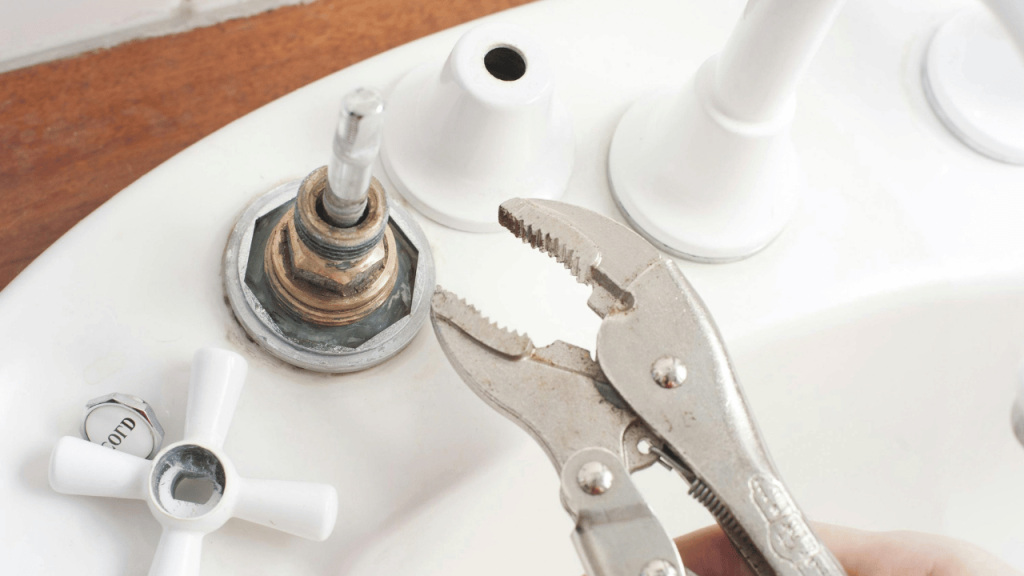
These are signs that show up after you've answered the questions. They tell you to walk away no matter how good the rest of the conversation sounds. Most bait-and-switch operations check 2 or 3 of these boxes by the first phone call.
Here are the red flags that should end the conversation:
- No license number on the truck or website. Hiding it means there isn't one.
- A "today only" discount. Real plumbing pricing doesn't expire by sunset.
- Lowball verbal quote, then on-site upsell. $79 on the phone, $1,800 in your driveway.
- Refuses to pull a permit. Major work needs one and skipping it dumps liability on you.
- No written warranty on labor. They don't intend to honor it.
- Cash only or gift card payment. Zero accountability.
The bait-and-switch playbook
A cheap quote on the phone gets the truck to your house. Once the tech arrives, they "discover" extra problems. The price triples. You either pay or wait a week for another company while your kitchen floods.
What to do if you already paid an unlicensed plumber?
File a complaint with your state license board. If the plumber was unlicensed, also file with your state attorney general's consumer protection division. Document everything with photos and receipts.
How Elite Rooter Answers Each of the Questions?
Elite Rooter operates in 4 states (Arizona, California, Colorado, Florida) with full licensing in each. Every truck displays the state license number. Every tech carries proof of insurance. Every quote comes in writing before work starts. We tell you the after-hours rate and warranty up front, not at the bottom of the invoice.
Here is how Elite Rooter answers each of the questions:
- Licensed: AZ ROC C-37, CA C-36, FL CFC, CO MP, all current and verifiable
- Insured: $2M general liability and full workers comp in every state
- Written estimates: Standard on every call, before work starts
- After-hours rate: Transparent dispatch fee, no on-site surprises
- Warranty: 30 days on labor minimum, 1 year on full installations
- Camera inspection: Available when useful, fair price
- Reviews: Google, license board, all public
- Response time: 45-minute dispatch in our primary Phoenix, Tucson, Ventura, Tampa, San Diego, and Denver markets
- Payment: Cards, checks, ACH; deposits only on jobs over $500
Want to verify all this for yourself? Check our licensing and reviews page, or contact us for same-day service in any of our markets.
Frequently Asked Questions
Here are quick answers to the questions homeowners type into Google most often when searching for a plumber.
How much does a plumber charge per hour?
Plumbers in the US charge $45 to $200 per hour for standard service work, with most jobs landing between $80 and $150. Emergency or after-hours rates run $185 to $350 per hour. Flat-rate pricing on common repairs (toilet rebuild, garbage disposal install) often beats hourly billing.
Are plumber estimates free?
Most plumbers offer free phone estimates for simple jobs. On-site or diagnostic visits usually carry a service fee of $50 to $150, which often applies toward the repair cost if you book the work. Free in-home estimates are common on larger jobs like water heater swaps or repipes.
How can I tell if a plumber is licensed?
Search your state license board's public database. California uses cslb.ca.gov, Arizona uses roc.az.gov, Florida uses myfloridalicense.com, and Colorado uses apps2.colorado.gov/dora. Enter the company name or license number to verify status, bond, and any disciplinary history in under 60 seconds.
Do I need to get multiple plumbing quotes?
Yes, for any job over $500. Three quotes from licensed plumbers will show you the fair price range and flag outliers. For emergency calls (active leak, no water, sewer backup), one trusted licensed plumber is fine. Speed matters more than comparison when water is running.
Are Google reviews reliable for plumbers?
Mostly yes, but check the pattern. A real plumber has reviews spread out over months and years, not a burst of 30 five-star reviews in one week. Cross-check against the company's BBB profile and state license board complaint history. Three clean sources mean a real plumber.
What is the difference between a journeyman and master plumber?
A journeyman plumber has 4+ years of apprenticeship and a state license to do plumbing work. A master plumber has additional years of experience, a separate exam, and can pull permits, supervise apprentices, and run their own company. Both are fully qualified for residential and most commercial work.