
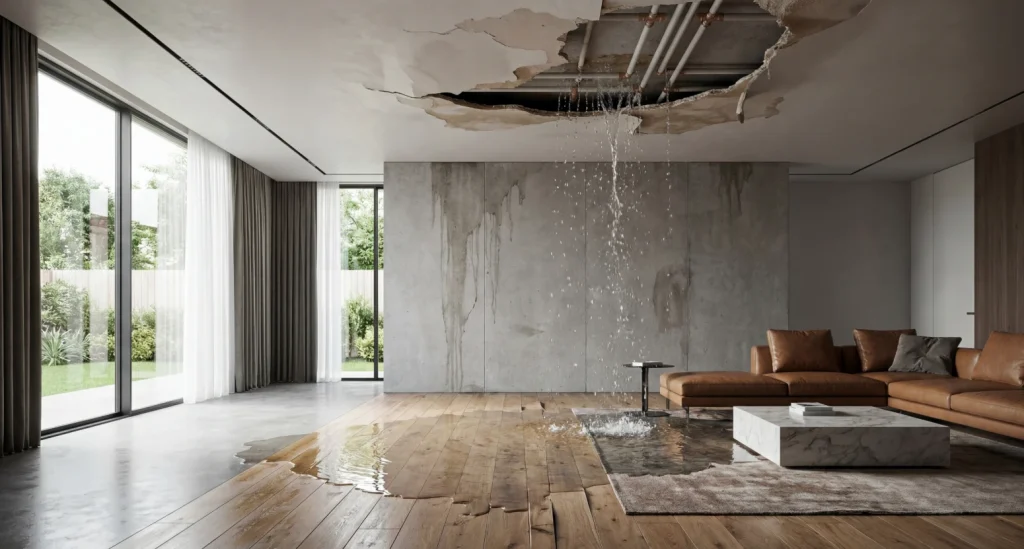
If you ask any seasoned contractor what causes the most expensive damage to a home over time, the answer is rarely fire or theft. It is water. Water is patient and relentless. A slow drip behind a washing machine or a pinhole leak inside a wall can silently rot framing, damage subfloors, and feed mold for weeks before a homeowner ever notices a wet spot on the ceiling.
For decades, residential plumbing was a strictly passive system: pipes carried water in, and drains carried it out. If a pipe burst, the solution relied entirely on luck someone had to be home, notice the problem immediately, and physically turn a valve. Today, relying on luck is no longer a viable strategy. Modern leak protection systems have evolved to give plumbing systems the ability to react autonomously, stopping damage before it begins.
The Reality of “Silent” Leaks
Major floods rarely start with a dramatic explosion of water. More often, they happen in the blind spots of a home: the dark corner of a utility closet, the cabinet beneath a kitchen sink, or the connection behind a refrigerator.
These areas are out of sight and out of mind. By the time a puddle becomes visible to the homeowner, the water has likely already caused significant structural damage. This is why standard visual inspections are good, but continuous, 24/7 monitoring is essential.
Targeted Detection: Watching the Danger Zones
The first step in active protection is placing point leak sensors in high-risk zones. These small devices sit where water has no business being: under the dishwasher, near the sump pump, or behind the toilet.
However, not all sensors are created equal. There is a specific anxiety that comes with using cheap, standalone gadgets. You find yourself wondering: Is it still connected to Wi-Fi? Did the battery die last month? Will I actually hear the notification if I’m sleeping? Instead of removing stress, unreliable technology simply shifts the worry. Effective protection requires industrial-grade reliability—sensors that communicate consistently with a central hub and provide immediate, verified alerts.
The Solution: Automatic Main Shutoff Valves
Detection is only half the battle. Knowing you have a leak while you are on vacation or at the office doesn’t save your floorboards. This is where the automatic shutoff valve becomes critical. Installed directly on the main water line, this device acts as the gatekeeper for the entire house.
The logic is simple and effective: when a sensor detects moisture, it signals the main valve to close instantly. This cuts off the water supply to the entire home in seconds. Whether it’s a burst supply line on a second-floor washing machine or a failed water heater tank in the basement, the flow stops immediately. A potential catastrophe is reduced to a minor cleanup.
Smart Logic and Peace of Mind
Modern systems go beyond simple wet/dry detection. They can monitor flow patterns to catch anomalies, such as a toilet running continuously or a pipe that bursts and flows at a high rate. Furthermore, these systems integrate with the way you live. They can be programmed to automatically shut off the water when the house is set to “Away” mode for a vacation, eliminating the risk entirely while you are gone.
However, the effectiveness of these systems depends heavily on the quality of the installation and the logic behind it. A shutoff valve is a serious piece of plumbing equipment, and the automation rules need to be set up correctly to avoid false alarms or failures. This is why many homeowners prefer to have these systems configured by professionals. Companies like Nestology.pro specialize in designing these integrated safety nets, ensuring that the hardware and software work together seamlessly.
Don’t Leave Your Home’s Safety to Chance
We insure our homes against disasters we hope will never happen, yet we often ignore the plumbing risks that are statistically likely to occur. Appliances fail, pipes freeze, and seals degrade over time. Equipping your home with the ability to detect a leak and stop the water automatically isn’t just a technology upgrade—it is a fundamental layer of protection for your property investment.