
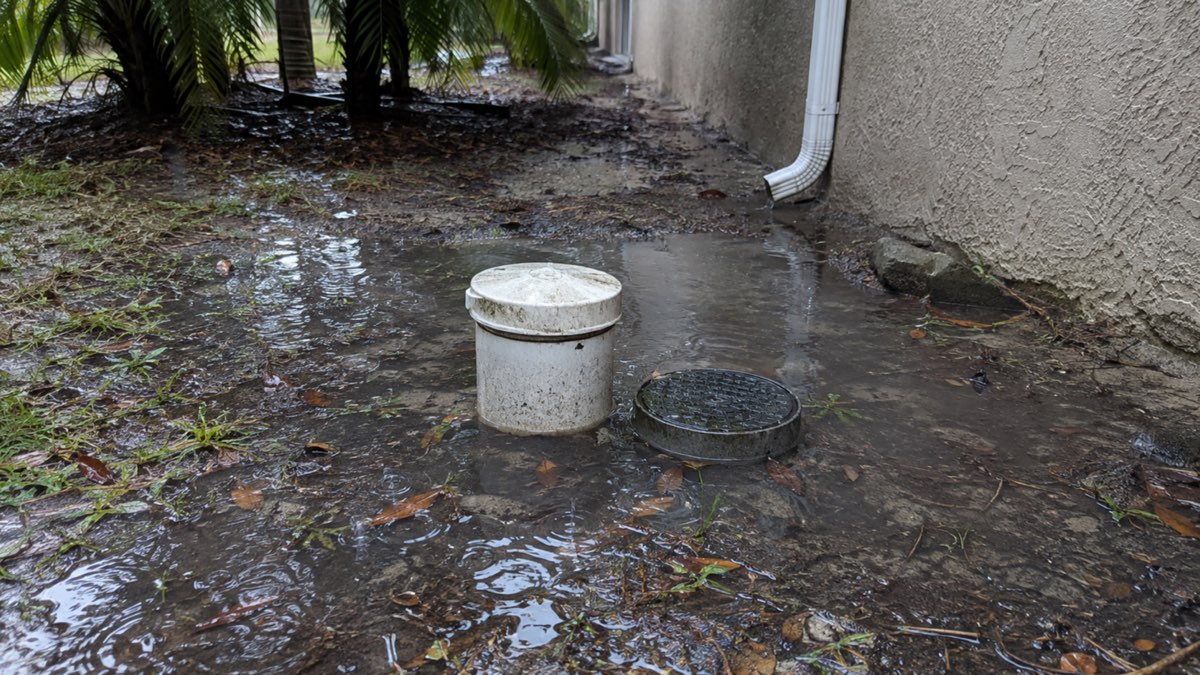
Tampa’s rainy season starts in May, and your plumbing knows it before you do. The Bay area averages 7.5 inches of rain across May and June, and roughly 70% of Hillsborough County’s residential sewer lines were installed before 1980 a combination that makes May the single highest-risk window for sewer backups, slab leaks, and main-line failures in any Tampa home.
The good news: every one of these issues sends warning signs days or weeks before the actual failure. The bad news: most homeowners miss them, and a $250 inspection turns into a $4,000 emergency repair after the first major storm.
In this guide, we walk through the 9 plumbing issues that spike during Tampa’s May rain season, the early signs to spot in your home, neighborhood-by-neighborhood patterns, and the self-diagnosis decision tree that tells you when to call a plumber today versus tomorrow.
Why Is May the Tipping Point for Tampa Plumbing?
Tampa’s plumbing problems do not start in May — they get exposed in May. The issues have been building quietly through the dry season, hidden by low water flow and minimal soil pressure. Then the rain arrives, and the whole system gets stress-tested at once.
Here is what actually changes in those four to six weeks.
How Does 7.5 Inches of Rain in 60 Days Stress Your Sewer Lateral?
Tampa averages 7.5 inches of rainfall across May and June, with the heaviest accumulation typically falling in late May through mid-June. That is roughly five times the rainfall of the dry season months. All that water has to go somewhere, and a lot of it ends up in the same municipal sewer system that handles your home’s wastewater.
When the city main runs at or near capacity, your home’s sewer lateral (the pipe connecting your home to the city’s main sewer line) cannot drain freely. Wastewater that should flow downhill into the city line slows, stalls, or in worst cases reverses direction.
Latent clogs that were “manageable” through the dry season — a partial grease buildup, a small root mass, a hairline crack — suddenly become full blockages. The pipe did not change. The volume of water it has to handle did.
Why Do Pre-1980 Hillsborough County Pipes Fail First?
Roughly 70% of Hillsborough County’s residential sewer lines were installed before 1980, and most of them are made of cast iron, clay, or Orangeburg (a tar-impregnated wood-fiber pipe used heavily through the 1960s).
All three materials degrade over time:
- Cast iron corrodes from the inside out, losing wall thickness and developing rough interior surfaces that catch debris
- Clay cracks at the joints as soil shifts, creating entry points for tree roots
- Orangeburg softens and deforms under sustained moisture, often collapsing into an oval shape that restricts flow by 30% or more
Pipes in this age range have already lost much of their original capacity. They handle dry-season flow because dry-season flow is light. May’s surge is what reveals how little capacity is actually left.
How Do Saturated Soil and Tree Roots Accelerate the Problem?
The third compounding factor is what happens outside the pipe. Tampa’s sandy soil drains quickly under normal conditions, but extended rain saturates the ground around your sewer lateral and shifts soil pressure against the pipe walls.
Two things follow. First, the saturated soil applies uneven pressure to aging pipes — particularly clay and Orangeburg and accelerates the cracking that was already underway. Second, tree roots that were dormant or slow-growing through the dry months explode toward the moisture inside your sewer lateral the moment the soil saturates.
Tampa’s mature live oaks, ficus, and Brazilian pepper trees can grow root mass into a cracked sewer line at a rate of several inches per week during peak rain conditions. Our tree root removal call volume jumps 180% from late April through mid-June for exactly this reason.
The result: a pipe that worked fine in April starts backing up in late May, and homeowners assume it is the rain itself. The rain is the trigger — but the failure was already loaded.
What Are the 9 Plumbing Issues That Spike in Tampa During May?
Tampa homeowners deal with a predictable set of plumbing failures every May rain season, and they almost always start small. The signs below are the ones we see most across our service area, listed in the order they typically appear — from earliest warning to active emergency.
Catch them in the first column, and you are looking at a $200 service call. Miss them until the third, and you are looking at water damage, mold remediation, and four-figure repair bills.
1. Multiple Slow Drains in the Same Day
If your kitchen sink, bathroom sink, and shower all start draining slowly within the same 24-hour window, the clog is not in any one fixture — it is downstream in your main sewer line.
Single-drain slowdowns are normal household issues. Multi-drain slowdowns mean wastewater is hitting a partial blockage in the line that serves your whole home, and the May rain surge is the reason borderline clogs suddenly become noticeable.
Test it yourself: run the washing machine while flushing a toilet. If the toilet bubbles or the tub gurgles, the main line is restricted.
This is the earliest, cheapest moment to call a plumber. Wait two weeks and it becomes Issue #4. Drain cleaning at this stage typically resolves the problem for $200 to $400.
2. Toilet Gurgling or Bubbling When Other Fixtures Run
A toilet should sit silent unless it is flushing. If it gurgles, bubbles, or releases a glug of air when the washing machine drains or the shower runs, that is air being forced backward through the sewer line because waste cannot move forward freely.
The blockage is downstream — usually in the lateral between the house and the city main — and the gurgle is your plumbing trying to equalize pressure around the obstruction. Tampa’s May rain accelerates this fast because saturated soil and overloaded city mains restrict outflow at the same time.
Do not ignore the sound. The window between gurgling and an actual sewage backup is often less than 7 to 10 days during peak rain weeks.
3. Sewage Smell Inside the Home
A sewer odor inside the house means waste gases are escaping somewhere they should not. Three usual culprits: a dried-out P-trap (the curved pipe under sinks and tubs that holds water to block sewer gas) in a guest bathroom or floor drain that has not been used recently, a compromised vent stack (the vertical pipe that lets sewer gases exit through the roof), or — most concerning during May — a crack in the sewer lateral itself.
Tampa’s humidity makes the smell worse because high moisture in the air carries odor molecules further, and homeowners often notice it first in closed bathrooms or laundry rooms.
If running water in an unused fixture for 30 seconds does not fix the smell within an hour, the issue is not a dry trap. Call a plumber to camera-inspect the line before the leak grows into a structural problem. Read more in our complete guide on why plumbing smells bad and how to get rid of sewer smell in the bathroom.
4. Water Backing Up in Tubs, Showers, or Floor Drains
This is the symptom that ends the warning-sign phase and starts the emergency phase. When water comes up through a tub drain, shower drain, or basement floor drain, the main line is fully blocked and wastewater is taking the path of least resistance — which means the lowest drain in your house.
Stop using all plumbing fixtures immediately. Do not run the washing machine, dishwasher, or any sink. Do not flush. Each additional gallon of water you send down the line has nowhere to go but back into your home.
This is a same-day service call, not a “we will see if it clears up” situation. During Tampa’s May rain peak, our emergency response time on this issue averages 1 to 2 hours.
5. Soggy Spots or Sinkholes in the Yard
A patch of grass that is noticeably greener, softer underfoot, or holding standing water after the rest of the yard has dried tells you the sewer lateral underneath has cracked and is leaking sewage into the surrounding soil.
In Tampa’s sandy soil, the leak often appears as a mild surface depression — a soft spot that sinks under your weight or develops a small dip in the lawn. In severe cases, the soil washes away under the pipe and creates a true sinkhole.
This is one of the most underdiagnosed signs in Tampa because homeowners assume it is just rainwater pooling. If the soft spot persists 5+ days after the last rain, the source is below ground. A sewer line repair caught at the soggy-spot stage runs $1,500 to $4,000. Caught after a sinkhole forms, it can exceed $15,000.
6. Sudden Drop in Water Pressure
Most Tampa homeowners blame the city when water pressure drops, but during May rain weeks the cause is usually on your side of the meter. Saturated soil shifts position around supply lines, stressing joints in older galvanized or copper pipes — particularly in homes built before 1985 with original plumbing.
A pinhole leak underground can drop pressure noticeably without producing visible water inside the home.
Check two things first: is the drop in one fixture or the whole house, and does your water bill look unusually high? A whole-house drop combined with a higher-than-normal bill almost always points to an underground supply line leak that needs immediate attention before it undermines a slab or foundation. Pipe leak repair at this stage typically runs $400 to $1,200; left unaddressed, it can lead to slab damage costing $8,000+.
7. Slab Moisture, Warm Floors, or Unexplained Water Bills
Most Tampa homes are built on concrete slabs, with hot and cold water lines running underneath. When May’s saturated soil shifts the slab even slightly, those embedded pipes can crack or develop pinhole leaks — and the symptoms are subtle.
A warm spot on a tile floor from a hot-water line leak, a damp baseboard, hairline cracks appearing in the slab, or a water bill that is 20% higher than normal with no change in usage are all classic slab-leak indicators.
Slab leaks rarely fix themselves and they get exponentially more expensive the longer they run, because water continuously erodes the soil supporting the slab. Get a professional leak detection at the first sign — typically $200 to $400 in Tampa.
8. Backflow at the Lowest Drain in the House
When the City of Tampa’s sewer main becomes overwhelmed during heavy rain — which happens regularly during May storm cells — sewage can flow backward through the system and exit at the lowest available point in your home. That is usually a ground-floor shower, a floor drain, or a basement utility sink.
The water coming up is not yours; it is coming from the city main.
This is a confirmed emergency. If only your home is affected, the blockage is on your sewer lateral and your plumber needs to be the next call. If multiple homes on your block are affected, it is a city main issue — call Hillsborough County emergency services, then document everything for insurance.
9. Wet Walls, Stained Ceilings, or Mold Returning
The slow-burn issue. A small leak that started during the first week of May rain often does not show visible damage for two to three weeks — long enough for homeowners to forget the storm and assume the new ceiling stain came from somewhere else.
Tampa’s humidity supercharges the problem. Mold takes 24 to 48 hours to begin colonizing damp drywall, and by the time you see a stain, there is usually 10 to 50 times more mold growth behind the wall than what is visible.
If a previously remediated mold spot returns after May rain, the underlying leak was never fully fixed. Do not repaint it. Open the wall and find the source, or hire someone who will. Related: is mold in sink drain dangerous.
How Do You Self-Diagnose Tampa Rainy-Season Plumbing Issues?
Use this 60-second decision tree to identify what stage you are in and what action to take next.
Step 1: Where is the problem showing up?
- One drain is slow → localized clog (Issue #1 stage); try DIY before calling
- Multiple drains slow → main line restriction (Issue #1, escalating); call within 7 days
- Water rising at lowest drain → main line fully blocked (Issue #4 or #8); call today
- Yard soft or smelly → buried lateral failure (Issue #5); call within 48 hours
Step 2: When did it start?
- After heavy rain, but improves between storms → main line restriction
- Continuous regardless of weather → structural pipe damage
- Only at night/early morning → city main pressure issue
Step 3: Does running other fixtures make it worse?
- Yes → main line problem (one of Issues #1, #2, #4, #8)
- No → localized fixture issue (probably Issues #3, #6, #7, or #9)
Step 4: Is the water bill unchanged?
- Bill higher than normal + no visible leak → underground supply leak (Issue #6 or #7)
- Bill normal + visible leak → fixture or above-slab leak
When Should You Call a Tampa Plumber Today (Not Tomorrow)?
Some plumbing issues can wait. Some cannot. Here is the rule of thumb during Tampa’s May rain season:
Call today if:
- Water is backing up at any drain (Issue #4 or #8)
- Sewage smell persists after running water in unused fixtures (Issue #3 + structural)
- A soft spot in the yard has lasted 5+ days post-rain (Issue #5)
- Water bill is 20%+ higher with no usage change (Issue #6 or #7)
- A previously-fixed mold spot returned (Issue #9)
- You hear gurgling from drains when other fixtures run (Issue #2)
Call this week if:
- Multiple drains are slow but still flowing (Issue #1)
- Single-fixture pressure has dropped but the rest of the house is normal (Issue #6, localized)
Schedule a routine inspection if:
- You have not had a sewer line camera inspection in 3+ years
- Your home was built before 1985 (cast iron / clay / Orangeburg pipes likely)
- You have mature trees within 30 feet of your sewer lateral
The cost difference between “today” and “two weeks from now” during Tampa rain season is often 5–10x. Same problem, much bigger bill.
How Do Tampa Neighborhoods Compare on May Rain Plumbing Risks?
Different parts of Tampa face different rainy-season plumbing patterns based on home age, soil composition, tree coverage, and elevation.
Westshore and South Tampa (1950s–1970s Bungalows)
Original cast iron everywhere. Westshore Business District commercial properties combined with older residential blocks mean Tampa’s highest cast iron pipe density. Tree roots from mature oak canopies aggressively target these aging laterals. Highest call volume in our service area for Issues #1, #2, and #5.
Hyde Park and Davis Islands (Pre-1940 Historic Homes)
Original clay laterals — many still in service after 80+ years. Joint cracks under saturated soil are the dominant failure mode here. Hyde Park’s mature live oaks compound the problem. Issues #5 and #9 disproportionately common.
Carrollwood, Town ‘N’ Country, and Egypt Lake (1960s–1980s Suburbs)
Mix of cast iron and Orangeburg pipes — the worst of both worlds during rainy season. Orangeburg failures often appear as Issue #1 (slow main line) before progressing to Issue #4. Carrollwood Lakes area particularly prone to Issue #8 backflow due to topography.
Seminole Heights, Tampa Heights, and Ybor City (Pre-1950 Original Construction)
Some of Tampa’s oldest plumbing infrastructure. Cast iron in 60+ year service. Tree root intrusion is the #1 issue here. Slab leaks (Issue #7) less common because most homes are pier-and-beam, but main line failures (Issues #2, #4, #5) are nearly seasonal.
New Tampa, Westchase, and Tampa Palms (Post-1990 Construction)
Mostly PVC drain lines in better condition. May rain risks are lower but not zero. Most common issues are #6 (pressure drops from supply line shifts) and #9 (slab moisture in homes built on slab). Fewer emergency calls, but slab leaks tend to be more expensive when they occur.
Brandon, Riverview, and Plant City (East Hillsborough County)
Mix of newer construction and older rural laterals — wide variation. Higher water table near rivers means more Issue #5 (yard soggy spots) and Issue #8 (backflow during storms). Septic systems in some areas add a different category of May-rain risk.
How Can You Get Ahead of the May Rain Plumbing Spike?
The cheapest plumbing repair is the one you make in April. By the time May rain arrives in Tampa, every plumber in Hillsborough County is booked solid, emergency rates kick in, and the small issues that could have been fixed for $200 in the dry season turn into $2,000 problems with water damage on the side.
Here is the pre-season checklist Elite Rooter technicians actually run on Tampa homes — split into what you can handle yourself and what needs a professional eye before the first major storm.
What You Can Inspect Yourself in 30 Minutes
- Run every fixture for 60 seconds — kitchen, bathrooms, laundry, outdoor spigots — and watch for slow drainage, gurgling, or pressure drops
- Flush every toilet twice and listen for bubbling, slow refill, or unusual sounds in nearby drains
- Check under every sink for moisture, corrosion on supply lines, or active drips at the P-trap
- Walk the perimeter of your home looking for soft spots, lush green patches, or surface depressions in the yard
- Test water pressure at the bathtub spigot — weak flow with the showerhead removed indicates a supply-line issue, not a fixture issue
- Locate your main shutoff valve and sewer cleanout before you need them — most Tampa homeowners cannot find theirs in an emergency
- Read your water meter at night, then again in the morning with no fixtures running — movement equals a hidden leak
What Needs a Tampa Plumber Before May Storms
- Sewer line camera inspection if your home is 35+ years old or you have not had one in 3+ years
- Backflow preventer test if your home has irrigation, pool, or any cross-connection to potable water
- Water heater inspection — anode rod, T&P relief valve, and sediment flush
- Whole-house leak detection if your water bill has crept up over the past 6 months
- Tree root inspection for any home with mature oaks, ficus, or Brazilian pepper within 30 feet of the lateral
- Pressure-reducing valve check if pressure feels inconsistent across fixtures
A complete pre-season audit typically runs $250 to $500 in Tampa a small fraction of what one missed warning sign costs after the first major storm.
Why Do Tampa Homeowners Call Elite Rooter When the Rain Starts?
By now you have seen what May rain does to Tampa plumbing — the warning signs, the neighborhood patterns, and the math on why a $250 inspection in April beats a $4,000 emergency in late May. The hard part is not knowing what to look for. It is finding a Tampa plumber who actually understands the local infrastructure, shows up when the rain has every other crew booked solid, and quotes you the same price at 2 a.m. on a Sunday as they would on a Tuesday afternoon.
That is where Elite Rooter Tampa comes in. We have been working Tampa’s plumbing problems across Westshore, Hyde Park, Carrollwood, South Tampa, Seminole Heights, Westchase, New Tampa, Riverview, and beyond which means we have seen what 1925 cast iron looks like under a Hyde Park bungalow, what saturated clay soil does to a Westshore sewer lateral, and how Carrollwood’s mature oak roots find their way into pre-1985 pipes.
Local knowledge is not a marketing line. It is what separates a plumber who guesses from a plumber who diagnoses.
What we deliver on every Tampa rainy-season service call:
- Upfront pricing same rate at 2 a.m. as 2 p.m.
- 24/7 emergency dispatch with documented response times during peak rain weeks
- Camera inspection included on every main line service
- Written reports with timestamped photos for insurance documentation
- CFC-licensed plumbers — credentials verifiable through Florida DBPR
Related Tampa Plumbing Guides
- How to Prepare Plumbing for Hurricane Season Tampa What to do before June 1
- Common Plumbing Emergencies Tampa FL When something fails mid-storm
- Tampa Pre-Hurricane Commercial Plumbing Audit For property managers
- Drain Cleaning Cost in 2026 Pricing across all our markets
- Why Does My Plumbing Smell Bad? Odor diagnostic guide
Frequently Asked Questions About Tampa May Rain Plumbing
Why does Tampa plumbing fail in May?
Tampa plumbing fails in May because the rainy season triggers three problems at once: city sewer mains run at or near capacity, saturated soil shifts pressure against aging pipes, and tree roots accelerate growth into cracked sewer laterals. Roughly 70% of Hillsborough County residential sewer lines were installed before 1980 in cast iron, clay, or Orangeburg materials — all three degrade over time and reveal their weakness during the May rain surge.
H3: What are early signs of sewer backup in Tampa?
The earliest signs of sewer backup are multiple drains slowing on the same day, toilet gurgling when other fixtures run, and sewage odor inside the home. These appear 7 to 14 days before an actual backup during peak rain weeks. Catching the problem at this stage typically means a $200 to $400 drain cleaning call. Waiting until water backs up through the lowest drain in your house turns it into a $1,500+ emergency.
Does Tampa rain affect water heaters?
Indirectly, yes. May’s saturated soil shifts pressure against supply lines connected to the water heater, which can crack pinhole leaks at the connections. Florida’s high humidity also accelerates corrosion on the water heater’s anode rod, T&P relief valve, and exterior fittings. Most Tampa water heater failures peak in May–June, not because of the rain itself but because the rain accelerates problems that were already developing.
Which Tampa neighborhoods flood first?
Tampa neighborhoods most prone to plumbing flooding during heavy May rain are South Tampa (low elevation + cast iron), Hyde Park (clay laterals + mature trees), Carrollwood Lakes area (topography), and Seminole Heights (1920s–1940s original infrastructure). Flood Zone AE properties anywhere in Hillsborough County face elevated backflow risk — check your zone on the FEMA flood map service.
What does a Tampa plumbing inspection cost?
A standard Tampa pre-rain plumbing inspection runs $150 to $300. A complete pre-rain audit including sewer camera inspection, leak detection, water heater check, and backflow test runs $400 to $750. Compare that to the average emergency repair after a missed warning sign in May — typically $1,500 to $4,000 — and the math is straightforward.
How do I know if I have a slab leak in my Tampa home?
The four classic signs are: a warm spot on a tile floor (hot-water line leak), unexplained moisture along baseboards or in cabinet bases, hairline cracks appearing in the slab or interior walls, and a water bill 20% or more higher than normal with no change in usage. Tampa slab leaks rarely fix themselves and get exponentially more expensive over time. Get professional leak detection at the first sign — typically $200 to $400.
Is sewage backup covered by insurance in Tampa?
Standard homeowners insurance typically does not cover sewer backup. Most Florida carriers offer “sewer backup” or “water backup” endorsements as optional add-ons for $40 to $150 per year. If you have not added this endorsement and you live in Tampa, do it before May. Backup events from city main overflow during heavy rain are a documented annual occurrence in Tampa, and one event without coverage can cost $5,000 to $30,000 out of pocket.
How quickly do tree roots grow into a Tampa sewer line?
During Tampa’s peak rainy weeks (late May through mid-June), live oak, ficus, and Brazilian pepper roots can grow into a cracked sewer lateral at a rate of several inches per week. Once roots establish a foothold, complete blockage typically follows within 4 to 8 weeks. Annual tree root removal for Tampa homes with mature trees within 30 feet of the lateral is far cheaper than reactive emergency clearing.
When should I get a sewer camera inspection in Tampa?
Get a sewer camera inspection if: your home is 35+ years old, you have not had one in 3+ years, you have mature trees within 30 feet of the lateral, you have experienced a sewer backup in the past 24 months, or you are buying a Tampa home built before 1985. Camera inspections cost $150 to $300 and reveal cracks, root intrusion, bellies, and Orangeburg deformation that no other test can catch.
What is the difference between a sewer lateral and a city sewer main?
The sewer lateral is the pipe that runs from your home to the property line — you (the homeowner) are responsible for its maintenance and repair. The city sewer main is the larger pipe under the street that collects wastewater from all the laterals on your block — the City of Tampa is responsible for its maintenance. Most plumbing failures during May rain happen on the lateral side because the lateral is older, smaller, and gets less maintenance attention than the city main.


