
Do you need a plumbing permit? Yes, for any work that moves fixtures, reroutes pipes, adds new plumbing, or connects to the city’s water or sewer system. Like-for-like replacements (same faucet, same toilet in the same location) generally do not require a permit. All plumbing permits must be filed by a Licensed Master Plumber (LMP) through the DOB NOW portal homeowners cannot file on their own.
Why NYC Takes Plumbing So Seriously?
Plumbing work is among the most tightly regulated construction activity in the country and for good reason. A single faulty drain line in a pre-war co-op can flood three apartments below it in under an hour. A cross-connection mistake can contaminate a riser that serves dozens of families. Unlike a suburban single-family home, NYC plumbing ties directly into a dense, vertical, shared infrastructure that the Department of Buildings (DOB) and Department of Environmental Protection (DEP) are legally responsible for protecting.
If you’re planning plumbing work of any size a standalone pipe repair, a kitchen upgrade, or a full bathroom remodel understanding permit requirements before you sign a contract is the single best way to avoid fines, failed inspections, insurance denials, and expensive tear-outs.
This guide walks through exactly when a permit is required, who can file it, what the process looks like, and where homeowners most often go wrong.
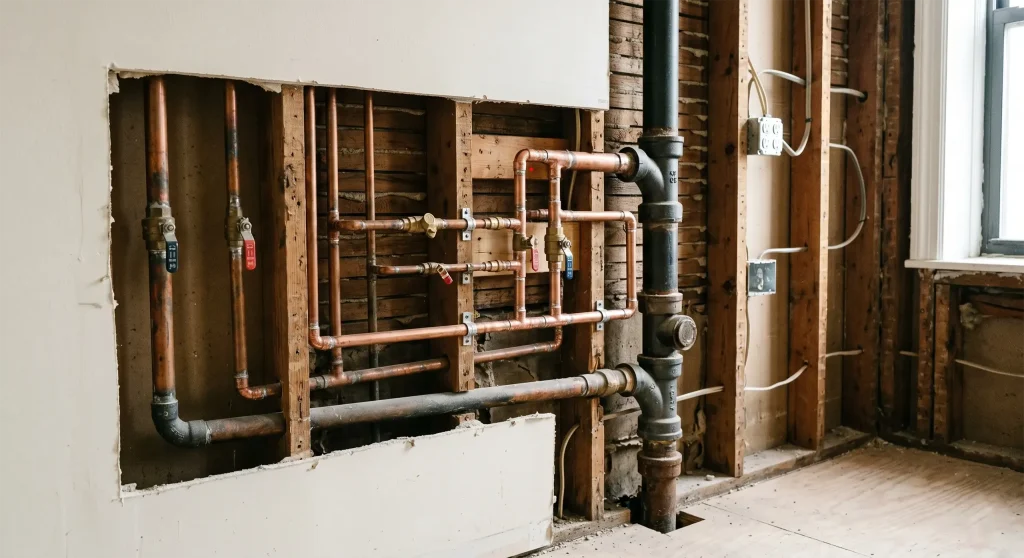
When You Need a Plumbing Permit in NYC
Most substantial plumbing work in New York City requires a permit filed with the NYC Department of Buildings (DOB). A permit is required whenever the work changes the configuration of the plumbing system not just the fixtures attached to it.
You need a DOB plumbing permit if your project involves:
- Moving or relocating fixtures. Shifting a toilet, sink, tub, or shower to a new location changes the drain, waste, and vent (DWV) system and triggers DOB oversight.
- Replacing or rerouting pipes. Swapping galvanized pipes for copper or PEX, extending supply lines, or modifying drain stacks all require proper filings.
- Installing new plumbing systems. Adding a bathroom, wet bar, utility sink, laundry hookup, or a shower where none existed requires a full plumbing permit and inspection sign-off.
- Connecting to the city’s water or sewer system. Any tie-in to the building’s main stack or the municipal water supply falls under permit requirements without exception.
- Gas piping work. Any alteration to gas lines including moving a stove or water heater requires a separate gas permit and dedicated inspection protocol under Local Law 152.
- Backflow prevention device installation. Required in certain commercial and multi-family scenarios and governed by the DEP.
In the context of a bathroom renovation project, this means almost any layout change no matter how small it looks on paper will require permits.
When You Don’t Need a Permit
Not every plumbing job requires filing with the DOB. Minor repairs and true like-for-like replacements generally fall outside permit requirements:
- Replacing a faucet with a similar model
- Swapping out a toilet or sink without changing the rough-in location
- Fixing a leaking supply line, shutoff valve, or trap
- Replacing a showerhead or tub spout
- Clearing a clogged drain
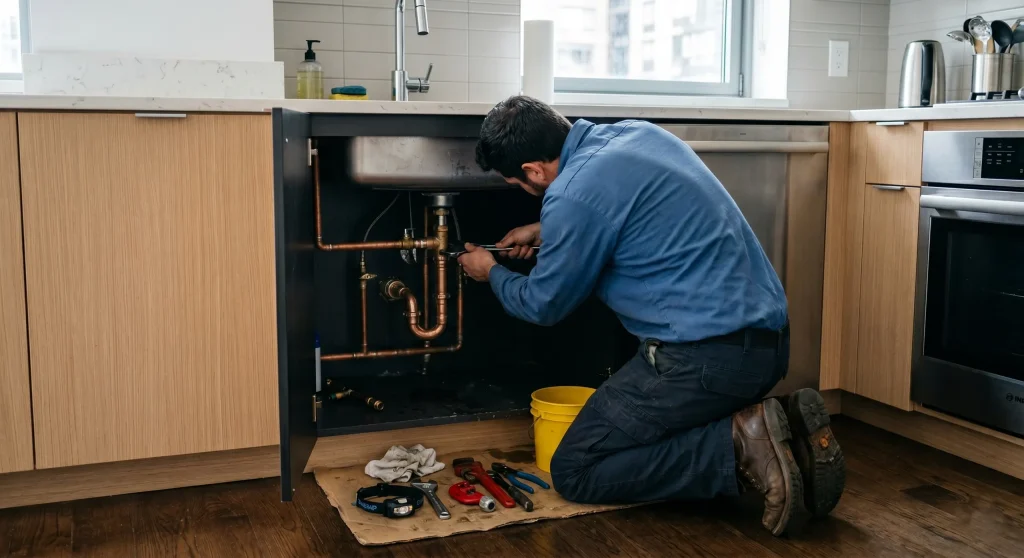
The key distinction is whether the work changes the configuration of the plumbing system. If you’re replacing in place, without rerouting pipes or moving fixtures, you’re typically in the clear.
Common misconception: Many homeowners assume that because work is “inside the walls,” it doesn’t need a permit. That logic doesn’t hold in NYC. Pipe work behind walls often does require a permit especially if it touches the DWV system.
Types of Plumbing Permits and Filings
In New York City, plumbing work is filed under the DOB’s plumbing permit category. Here’s how it works in practice:
1. Licensed Master Plumber (LMP) Requirement
All permit filings for plumbing work in NYC must be submitted by a Licensed Master Plumber. This is a hard requirement under the Construction Codes homeowners, general contractors, and handymen cannot file plumbing permits, regardless of the scope. Only an LMP whose license is active with the DOB can pull the permit and is legally responsible for the work.
2. DOB NOW Filings
Permits are filed through the DOB NOW: Build online portal. The LMP submits the scope of work, supporting documents, and applicable fees. The DOB reviews the application and issues approval before any work can legally begin.
Common filing types you may encounter:
| Filing Type | When It Applies |
|---|---|
| PL (Plumbing) | Standalone plumbing permit for most residential work |
| SP (Sprinkler) | Fire suppression / sprinkler system work |
| LAA (Limited Alteration Application) | Minor work not requiring full plan examination |
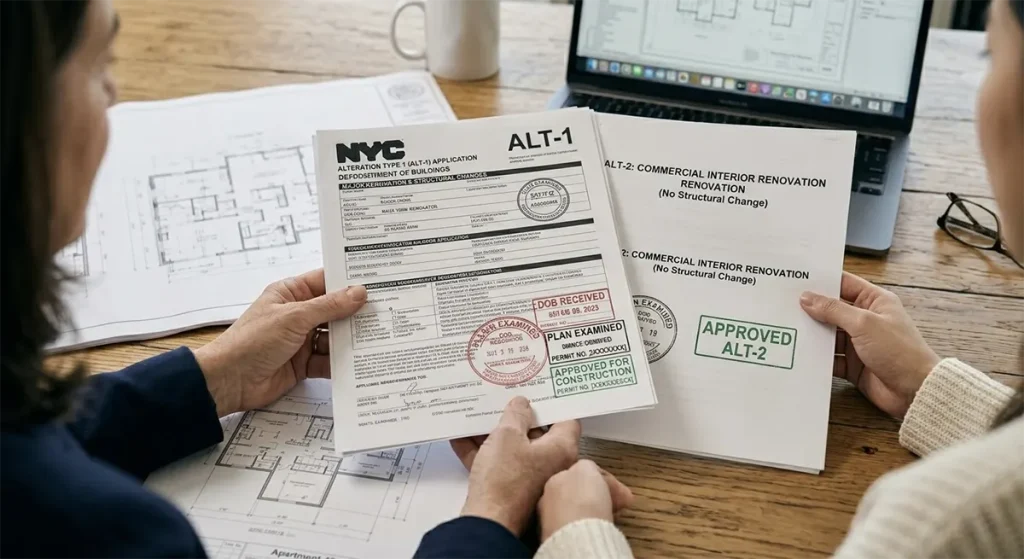
| Alt-2 | Part of a broader renovation involving multiple trades without changing occupancy |
| Alt-1 | Major alterations that change use, egress, or occupancy |
3. Inspections
Once the work is complete, a DOB inspection is required to close out the permit. Depending on scope, this may include a rough-in inspection (before walls close up), a pressure test of the supply lines, and a final inspection once fixtures are set. Gas work requires its own dedicated inspection and, in some buildings, a Local Law 152 certification.
For any bathroom remodel project involving layout changes, this process is mandatory. Budget time for it accordingly skipping an inspection is not an option.
Bathroom Remodels and Plumbing Permits
This is where homeowners most often get tripped up. A bathroom renovation feels contained — it’s one room. How complicated can it be?

The reality: most bathroom remodels involve enough plumbing scope to require permits. The following all involve DWV changes that trigger DOB filings:
- Moving a shower drain even a few inches
- Adding a double vanity where a single sink existed
- Converting a tub to a walk-in shower
- Reconfiguring a half-bath into a full bath
- Relocating the toilet to the opposite wall
- Adding a bidet or secondary fixture
Simple cosmetic upgrades are a different story. Retiling, replacing fixtures in place, updating lighting, and painting do not require plumbing permits. But the moment layout changes enter the picture, permits come with them.
Skipping permits on a bathroom renovation rarely pays off. Unpermitted work can be ordered uncovered, redone, or demolished a far more expensive outcome than pulling the permit correctly from the start.
Co-op and Condo Board Approvals (An NYC-Specific Layer)
Beyond DOB requirements, most NYC co-ops and condos impose their own plumbing rules through an alteration agreement. Expect your building to require:
- Proof of the LMP’s license and insurance
- Architectural drawings stamped by a licensed architect or engineer
- A certificate of insurance naming the building, managing agent, and board as additional insureds
- Working hours restrictions (typically 9 AM–5 PM, weekdays only)
- A security deposit held in escrow until work is signed off
Board approval can take 4–8 weeks on top of the DOB timeline. Start this process the day you decide to renovate not the week before demolition.
How Much Do Plumbing Permits Cost?
Permit fees vary based on scope and estimated cost of work. As of the most recent DOB fee schedule, typical ranges include:
- Minor plumbing filing (LAA): roughly $100–$300 in DOB fees
- Standard residential plumbing permit: roughly $300–$800 in DOB fees
- Larger Alt-2 bathroom renovation: $800–$2,500+ when combined with architectural filings
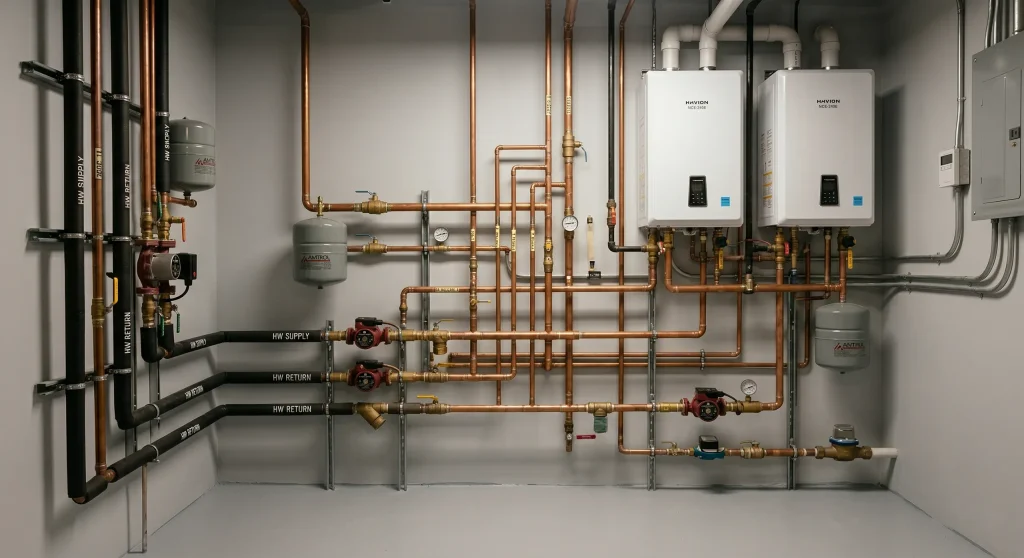
These are DOB filing fees only. Your LMP will charge separately for preparing and submitting the filing typically $1,500–$4,000 depending on complexity. Always get the filing fee broken out in your contract so you know exactly what you’re paying for.
How Long Does Approval Take?
Permit timelines are one of the most misunderstood parts of the process.
Realistic expectations:
- Simple LAA filings: 3–10 business days
- Standard plumbing permits: 2–4 weeks
- Complex filings requiring plan examination: 4–8 weeks, sometimes longer
- Work requiring Landmarks Preservation Commission (LPC) approval: add 6–12 weeks
If a contractor promises “permits in 48 hours” for a significant renovation, treat it as a red flag.
Common Mistakes That Cost Homeowners Money
- Hiring unlicensed plumbers to cut costs. If the work requires a permit, unlicensed labor is not an option and it exposes you as the property owner to direct liability.
- Starting work before permits are approved. Beginning work before the DOB issues approval is a violation. Stop-work orders and fines follow almost immediately in buildings where super or neighbor complaints are common.
- Incorrect or incomplete filings. Poorly prepared applications delay approvals by weeks. An experienced LMP who files regularly with the DOB will know exactly what’s required.
- Not closing out the permit. This is the single most common long-term problem in real estate. Open permits follow the property forever and surface during resale title searches.
- Assuming the building super’s sign-off is enough. It isn’t. The super represents the building, not the City.
Consequences of Skipping Plumbing Permits
- DOB fines and violations. Civil penalties for unpermitted work commonly range from $1,500 to $25,000 depending on scope, with hazardous violations carrying higher amounts.
- Failed inspections and mandatory rework. If unpermitted work is discovered during a later inspection, you may be required to open walls and redo plumbing at your own expense.
- Insurance and liability exposure. If a plumbing failure causes water damage and the work was unpermitted, your homeowner’s or co-op insurance claim can be denied. You’re on the hook personally.
- Resale complications. Open permits, ECB violations, or unresolved DOB complaints trigger delays, price renegotiations, and deal collapses at closing. Buyers’ attorneys specifically search for these.
- Co-op board action. Boards can fine shareholders, revoke alteration privileges, and in extreme cases pursue legal action for unauthorized work.
How to Get It Right
- Hire a Licensed Master Plumber. Verify their license at the NYC DOB license lookup before signing anything. Confirm the person filing the permit is the same LMP overseeing the work on-site.
- Plan permits early. Permit approval should be built into the project timeline from day one not treated as paperwork to rush at the end.
- Coordinate between trades. Plumbing permits are often part of a broader scope involving general contractors, tile setters, and electricians. The LMP needs to sequence work so rough-in inspections happen before walls close up.
- Keep records. Maintain copies of all filings, approvals, and inspection sign-offs. These become part of your property’s compliance record and matter at resale.
- Close out every permit. Do not pay final invoices until the LMP confirms the permit is closed in DOB NOW and a Letter of Completion (where applicable) is on file.
Frequently Asked Questions
Do I need a plumbing permit to replace a toilet in NYC?
Not if you’re replacing it in the same location without modifying the rough-in or drain. A straight swap is considered a minor replacement and does not require a DOB filing. If the toilet is moving to a new position as part of a bathroom renovation, a permit is required.
Can a homeowner pull their own plumbing permit in NYC?
No. Under NYC plumbing regulations, all plumbing permit applications must be filed by a Licensed Master Plumber. Homeowners do not have legal authority to file plumbing permits on their own behalf, regardless of the scope of work.
How long does it take to get a plumbing permit approved in NYC?
Timelines vary by filing type. Straightforward DOB NOW plumbing filings can be approved in 3–10 business days. Standard permits typically take 2–4 weeks, and filings requiring plan examination can take 4–8 weeks or longer. Factor permit lead time into your project schedule before any work begins.
How do I verify that my plumber is licensed in NYC?
Use the NYC Department of Buildings license lookup tool at nyc.gov/buildings. Search by name or license number, and confirm the license is active. Always verify before signing a contract, and make sure the person filing the permit is the same licensed professional overseeing the work.
What’s the difference between an LAA and a full plumbing permit?
A Limited Alteration Application (LAA) is used for minor plumbing work that doesn’t require plan examination for example, a straightforward pipe replacement. Full plumbing permits are used for larger scopes, new fixtures in new locations, or any work tied into an Alt-1 or Alt-2 filing.
Do I need a permit to move a washing machine hookup?
Yes. Adding or relocating a washer/dryer hookup involves changes to supply lines, the drain, and often the vent — all of which require a plumbing permit and, in many buildings, board approval.
Will my home insurance cover damage from unpermitted plumbing work?
In most cases, no. Insurers routinely deny claims where the underlying cause was unpermitted, non-code-compliant work. This is one of the most financially damaging consequences of skipping the permit process.
Can I get a permit after the work is already done?
Sometimes — through a process called a legalization filing. It’s expensive, slow, and the DOB may require you to open walls for inspection. It’s always cheaper to permit the work correctly the first time.
Conclusion
Plumbing regulations exist for good reason, and compliance isn’t optional. Whether you’re doing a targeted pipe repair or a full bathroom remodel, the rules apply. Working with a Licensed Master Plumber who understands the DOB filing process is the most reliable way to keep your project compliant, on schedule, and free from costly surprises.
Plumbing permits in aren’t an obstacle. They’re protection for the building, for the homeowner, and for the work itself.