

Phoenix pipe expansion from heat is one of the most predictable plumbing problems in the country, and almost nobody warns homeowners about it until the leak shows up. The science is simple. Every degree the temperature rises pushes your pipes a fraction of an inch longer. Over a 50-foot run with a 50°F daily swing, that adds up to real movement at the joints.
Why Phoenix Pipes Crack When the Heat Hits?
Phoenix pipe expansion from heat happens because every material expands when temperature rises. Copper expands 0.0000094 inches per inch per degree Fahrenheit. On a 50-foot pipe run with Phoenix's typical 50°F daily swing, that's 0.28 inches of movement every single day. Multiply that by 6 months of May to October heat, and the result is stress at every joint, fitting, and connection. Combined with Phoenix's expansive clay soil that shifts in heat and humidity, this is why water mains and supply lines fail in May.
How Much Phoenix Heat Actually Moves Your Pipes?
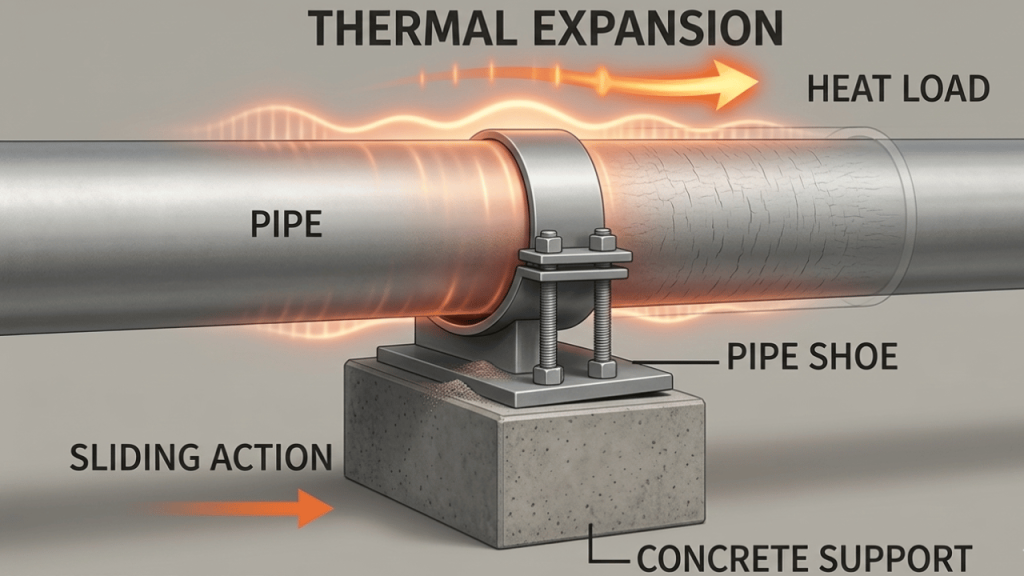
Pipe expansion is not theoretical. It's measurable in inches. Every plumbing material has a thermal expansion coefficient, which is a number that tells you exactly how much it stretches per degree of temperature change. In Phoenix, where May highs hit 105°F and overnight lows drop into the mid 60s, that daily swing puts real physical force on every joint in your plumbing system.
Here's the math that explains why Phoenix pipes crack in May:
The thermal expansion coefficient for copper, PEX, and PVC
Copper expands 0.0000094 inches per inch per degree Fahrenheit. PEX expands roughly 2 times that rate. PVC expands roughly 3 times that rate. CPVC sits between them at about 1.8 times copper's rate. Numbers look small until you multiply by pipe length and temperature change.
Phoenix's 50°F daily swing: midday to midnight math
A May day in Phoenix runs from 65°F at sunrise to 105°F by 3 p.m. That's a 40 to 50°F swing depending on the day. By June and July, the swing widens to 70°F or more. According to the NIST, this kind of cycling is what fatigues plumbing materials over years.
Why a 50-foot pipe moves 0.28 inches every single day?
Take a 50-foot copper main running from the meter to the house. Multiply 50 feet (600 inches) by the coefficient (0.0000094) by the 50°F swing. The answer is 0.28 inches of daily movement. Over a 6-month summer, that's the same joint flexing back and forth roughly 180 times. Most copper fittings don't survive that kind of stress.
Which Pipe Types Suffer Most in Phoenix Heat?
Not all pipes fail equally. The material in your walls and underground determines how quickly Phoenix heat damages your plumbing. Most Phoenix homes built between 1960 and 1990 use copper. Newer homes after 2000 use PEX. Older homes before 1960 might still have galvanized steel. Each has a different vulnerability pattern.
Here's how the three most common pipe materials hold up under Phoenix heat:
Copper Type L vs Type M in Phoenix conditions
Copper comes in two thicknesses for residential use. Type M is thinner and cheaper. Type L is thicker and more durable. In Phoenix's water chemistry (high pH, dissolved minerals from the Salt River and Central Arizona Project), Type M copper develops pinhole leaks in 15 to 25 years. Type L lasts 30 to 40 years on average. If you have a 1980s or 1990s Phoenix home, you likely have Type M.
Why are early installations failing?
PEX handles thermal expansion better than copper, but Phoenix attic temperatures can exceed 150°F in July. Early PEX fittings (pre-2010) used brass crimps that fail under sustained heat. Newer PEX-A installations with expansion fittings handle Phoenix conditions well, but anything installed before 2010 deserves an inspection.
Why is PVC banned for hot water lines in Maricopa County?
PVC pipe softens above 140°F. Phoenix hot water lines routinely run hotter, and attic ambient temperatures can push PVC past its failure point. Maricopa County building code requires CPVC, copper, or PEX for hot water. PVC is fine for cold water, drain lines, and irrigation only.
7 Early Warning Signs of Heat-Damaged Pipes
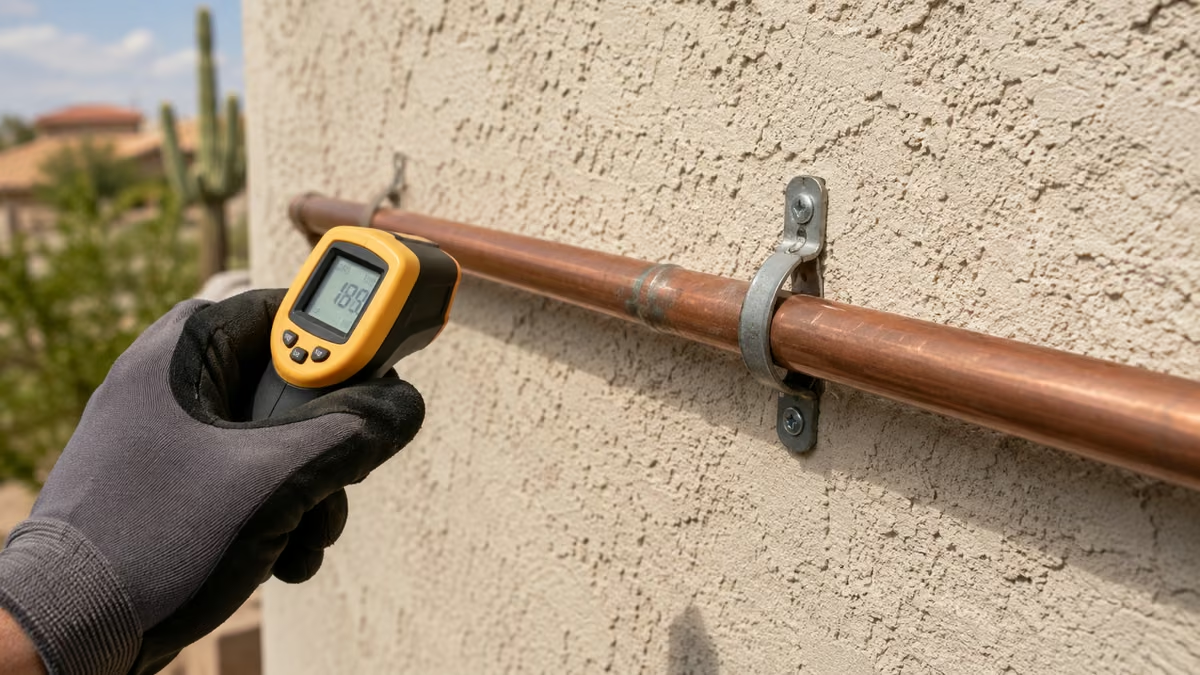
Most Phoenix homeowners only call a plumber after they see water. By then, the damage has been building for weeks or months. The signs of heat-stressed plumbing actually start small and progress in a predictable order. Knowing what to look for during each stage saves you from the surprise leak at the worst possible moment.
Here are the 7 warning signs in the order they typically show up:
- Ticking sounds inside walls when the AC cycles. That's metal pipes expanding and contracting against framing or fittings.
- Green or blue stains around copper joints. Pre-corrosion. The copper is reacting with mineral-rich water at points where heat stress has opened the surface.
- Tiny wet spots on walls or ceilings that dry within hours. Pinhole leaks that temporarily seal with mineral deposits, then reopen.
- Unexplained water bill increase of 10 to 30%. A slow leak is running somewhere you can't see.
- Warm spots on slab floors or tile. Classic slab leak signal. Water from a damaged hot water line is heating the concrete from below.
- Low water pressure or air bursts when you turn on a faucet. Air entering a damaged main or supply line.
- Foundation hairline cracks, soil settling near the house, or visible standing water in the yard. Major main line failure. Same-day plumber call.
Phoenix-Specific Soil and Heat Factors That Make It Worse
Pipe expansion from heat is bad enough. Phoenix also stacks two extra problems on top. The soil itself moves with temperature and moisture, which puts external force on underground water mains. And the building era of your neighborhood determines what pipe material you're working with. A 1950s Arcadia home and a 2015 Ahwatukee home can both crack in May for different reasons.
Here's what makes Phoenix uniquely tough on plumbing:
The Arcadia, Scottsdale, and old Phoenix copper problem
Homes built between 1950 and 1990 in Arcadia, Scottsdale, central Phoenix, and older Glendale almost all use copper supply lines. Many still have the original copper the builder installed decades ago. After 35 to 60 years of Phoenix heat cycling and hard-water mineral attack, those copper pipes sit at or past their expected service life. If you live in one of these areas, your plumbing is on borrowed time.
How does the monsoon season make summer pipe damage worse?
Phoenix's monsoon (June 15 to September 30 officially) drops sudden heavy rain on baked, drought-stressed soil. The clay expands fast, pushing against underground water mains. Then the heat dries the soil within days, and the clay contracts back. That push-pull cycle creates lateral force on buried pipes that already have internal expansion stress. Buried copper mains often fail at the joint nearest to the meter during or right after a monsoon storm.
Caliche, expansive clay, and your underground water main
A lot of Phoenix sits on a caliche layer, a hard mineral crust about 1 to 3 feet underground that acts like a buried concrete shelf. Water mains running through caliche feel the squeeze when the soil above expands. Add Tempe, Mesa, and Chandler's expansive clay to the mix, and you see why so many Phoenix water main failures happen at predictable depths and angles.
Repair Options When Phoenix Heat Cracks Your Pipe
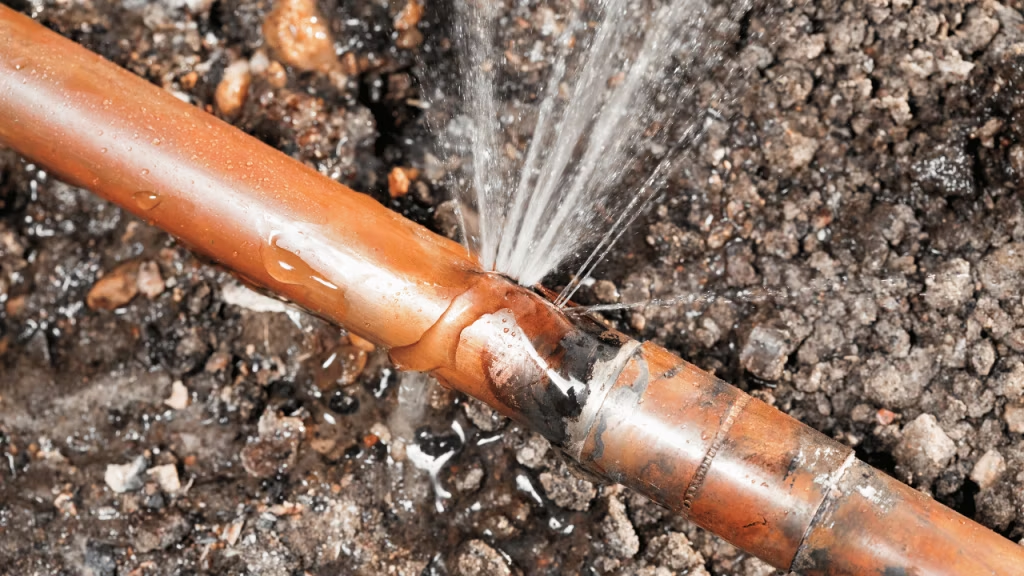
A leak doesn't always mean a full repipe. The right repair depends on where the damage is, how widespread it is, and what kind of pipe you have. Most Phoenix homes can get years of additional life from spot repairs and sectional replacements before a full repipe makes sense.
Here are the three main repair tiers and when each one fits:
Spot repair vs sectional vs full repipe (decision tree)
Spot pipe leak repair fits when one pinhole leak appears on otherwise healthy pipe. A plumber cuts out the damaged section, sweats in a new fitting, and pressure-tests the line. Sectional replacement fits when a 5 to 20-foot run shows multiple leaks. Full repipe makes sense when more than 3 pinhole leaks appear in 12 months, or when copper has reached 30+ years.
Trenchless water main replacement for buried lines
If the leak is in your underground water main, trenchless replacement avoids tearing up your yard. The plumber pulls a new PEX or copper line through the existing path using two small access pits. Trenchless costs more per foot but saves $1,500 to $6,000 in landscape restoration. For identifying buried leaks, water leak detection uses camera scopes and acoustic listening.
Real Phoenix price ranges by repair tier
Spot repair runs $300 to $800. Sectional replacement runs $1,500 to $5,000. Full repipe of a 2,000 sq ft Phoenix home runs $4,500 to $12,000 for PEX, $6,500 to $16,000 for copper. Trenchless water main replacement runs $3,500 to $9,000 for a typical 40 to 60-foot run.
How to Prevent Phoenix Heat Damage Before It Starts?
The cheapest plumbing repair is the one you never need. Phoenix heat damage builds gradually, which means a few hours of prep in late spring prevents most of the failures that show up in late summer. None of this requires a contractor. Most of it costs less than $200 in materials.
Here are the prevention steps that actually work in Phoenix conditions:
The May pre-heat plumbing checklist (4 items)
Insulate exposed pipes in the attic, garage, and along exterior walls with foam pipe sleeves ($1 per linear foot). Install a pressure regulator at the meter if you don't have one (most Phoenix municipal water arrives at 80+ PSI). Schedule a pre-heat leak inspection in late April or early May. Check your water meter for slow leaks by turning everything off and watching the dial for 15 minutes.
When a whole-house repipe pays for itself
If your home dates from 1960 to 1995 and still has the original copper, the math usually favors a planned PEX repipe over waiting for emergency repairs. Phoenix homeowners who repipe before age 40 spend 30 to 50% less than those who wait until multiple pinhole leaks force the issue.
When Phoenix Heat Damage Becomes an Emergency?
Not every heat-damaged pipe is an emergency. Some can wait a few days for a scheduled appointment. A few cannot. The difference comes down to whether water is actively damaging your home, and whether the system can handle a few more cycles before failure.
Call a plumber within 24 hours if you notice any of these:
- Warm spots on your slab floor. Active slab leak. Damage compounds every hour.
- Sudden 30%+ water bill spike. A hidden leak is running 24/7.
- No water pressure or air bursts at faucets. Air entering a damaged main.
- Standing water in the yard near the meter or main shut-off. Water main failure.
- Foundation cracks that appeared this season. Soil settling around a leaking buried pipe.
Final Thoughts: What Phoenix Homeowners Should Do This May?
Phoenix heat damage to plumbing is predictable and largely preventable. The math is real. A 50-foot copper main moves 0.28 inches a day in May, and 0.4 inches a day in July. Over a 6-month summer, that's the same joints flexing back and forth thousands of times. The homes that survive are the ones where someone caught a small problem before it turned into a flooded slab.
For Phoenix homeowners, the practical answer is a late-April or early-May pre-heat inspection. At Elite Rooter we offer leak inspections for under $200, often free if you book a repair afterward. We hold an AZ ROC C-37 plumbing license and dispatch most Phoenix calls within 45 minutes through our Phoenix location.
If your home dates from before 1995 and still has original copper, the inspection matters even more. Catching one pinhole leak now beats finding three at once in August. That's the rule of Phoenix plumbing.
Frequently Asked Questions
Here are quick answers to the questions Phoenix homeowners search for most often when their plumbing acts up in May.
Why do pipes crack in Phoenix heat?
Plumbing materials expand in heat and contract in cool weather. Phoenix's 50°F daily temperature swing in summer causes pipes to move up to 0.28 inches per 50-foot run every day. Over months, this stress fatigues joints and fittings until something cracks.
How much does copper expand at 115°F?
Copper expands 0.0000094 inches per inch per degree Fahrenheit. On a 50-foot pipe run going from 65°F to 115°F (a 50°F swing), that's roughly 0.28 inches of total movement. Phoenix's summer cycle repeats this daily for 6 months.
What are signs of a heat-damaged pipe in Phoenix?
Early signs include green or blue staining at copper joints, ticking sounds in walls when the AC cycles, unexplained 10 to 30% water bill increases, and warm spots on slab floors. Visible water, foundation cracks, and low pressure are late-stage warnings.
Does homeowners insurance cover Phoenix heat pipe damage?
Most homeowners policies cover sudden pipe failure and the resulting water damage, but exclude gradual damage from wear and corrosion. Phoenix heat damage often falls in the gray area. Document the failure with photos and call your insurer the same day.
Can I prevent Phoenix pipe expansion damage?
Yes. Insulate exposed attic and garage pipes, install a pressure regulator at the meter, and schedule a pre-heat inspection in late April or early May. Homes with original copper over 30 years old should plan a PEX repipe before the next major failure.
How much does pipe repair cost in Phoenix?
Spot repair for a single pinhole leak runs $300 to $800. Sectional replacement of a 5 to 20-foot section runs $1,500 to $5,000. Full repipe of a typical Phoenix home runs $4,500 to $12,000 for PEX or $6,500 to $16,000 for copper.