ClickCease

Phoenix Plumbing in May 2026: 11 Heat-Prep Tasks Before Monsoon Season

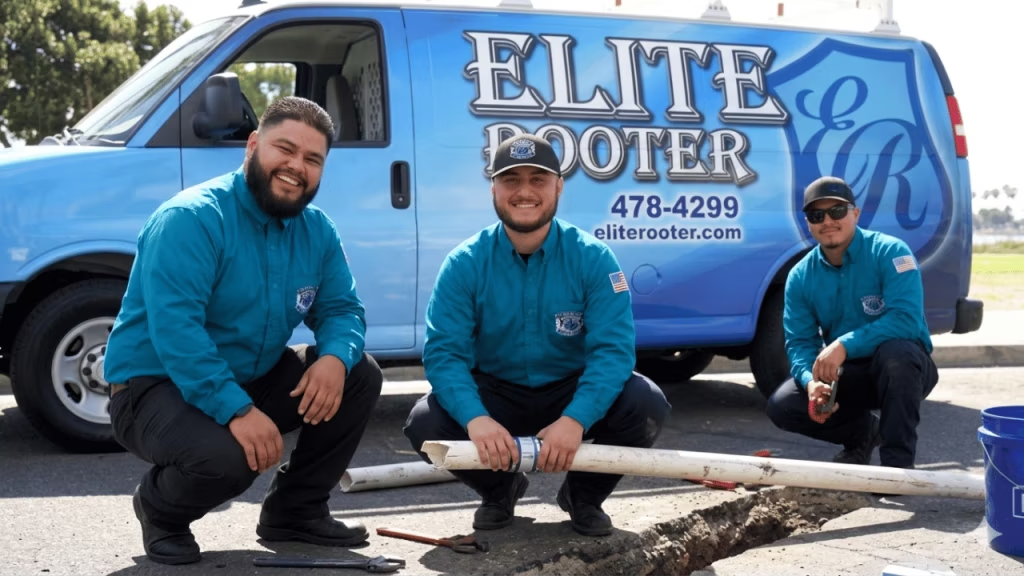
Elite Rooter drain cleaning technician working in the field

Heavy rain, clogged drains, sewer backups, and sudden leaks are common problems Phoenix homeowners deal with when monsoon season arrives. In Phoenix, the extreme heat in May already puts stress on your pipes. When monsoon storms hit, those weak spots can quickly turn into serious plumbing issues. That is why preparing early makes a big difference. A simple phoenix plumbing checklist helps you catch small problems before they become costly repairs.

Many homeowners wait until they notice a leak or blockage. By then, the damage has already been done. Taking a few steps now can protect your home, save money, and avoid emergency plumbing repair calls.

In this blog post, we walk you through a practical checklist used by many plumber Phoenix professionals. It focuses on what actually matters for local homes. Whether you live in an older property or a newer build, these steps help you stay ready before the first storm hits.

What Plumbing Prep Does Phoenix Need Before Monsoon Season?

Phoenix homes need simple but timely plumbing prep before monsoon season to avoid water damage, sewer backups, and costly emergency calls during the June-through-September storm window. Start with a phoenix plumbing checklist that covers both indoor and outdoor systems. Clear debris from drains, gutters, and yard catch basins so rainwater flows away from your home. Check for small leaks, loose fittings, and signs of pipe stress caused by heat. Flush your water heater to remove hard water buildup. Inspect your sewer line if you have a history of backups.

According to the Arizona Department of Water Resources (ADWR), Phoenix receives roughly 60-70% of its annual rainfall during the monsoon months. That volume of water hitting dry, compacted desert soil creates enormous pressure on residential drainage and sewer systems.

Many plumber Phoenix experts also recommend checking irrigation systems and yard grading to prevent flooding during heavy storms. The Phoenix Water Services Department advises homeowners to keep storm drains clear of debris year-round, but especially before monsoon season.

Why May Is Critical for Phoenix Plumbing (Heat + Monsoon Risk Explained)

May is the most important time to check your plumbing in Phoenix. The heat starts to rise fast, and your pipes begin to expand under pressure. If there are small cracks or weak joints, they can get worse before you even notice. When monsoon storms arrive, all that stress shows up at once. Heavy rain and sudden pressure changes can turn minor issues into leaks or backups.

Data Point: Phoenix’s May–October temperature swings can cause copper pipes to expand by up to 0.7 inches per 100 feet — roughly 3x the winter baseline. This constant expansion and contraction weakens plumbing joints over time.

How Phoenix Heat Affects Pipes Before Monsoon Season

In May, temperatures often go above 100°F. This heat causes pipes to expand during the day and contract at night. Over time, this movement puts stress on joints and connections. Small leaks can start forming without clear signs. If you follow a phoenix plumbing checklist early, you can catch these issues before they grow. Licensed plumbers Phoenix homeowners trust recommend scheduling inspections in May, not June, because the first storms can arrive earlier than expected.

What Happens When Monsoon Hits Already-Weakened Plumbing?

When monsoon storms begin, heavy rain adds pressure to your drainage and sewer systems. If your pipes are already weak, they may not handle the extra load. This can lead to sewer backups, slow drains, or even pipe bursts. Many plumber Phoenix professionals see a sharp rise in emergency plumbing calls during the first few storms because homeowners skipped their pre-season checks.

Phoenix Temperature Swings and Pipe Expansion Risks

Phoenix has large temperature swings between day and night often 30°F or more in a single day during May. This repeated expansion and contraction weakens pipes over time. Copper and older galvanized materials are most at risk. Without regular checks, these stress points can fail when monsoon season starts. The ADWR notes that Arizona’s extreme climate conditions make preventive plumbing maintenance more critical than in moderate climates. Taking action in May helps reduce these risks and keeps your plumbing system stable.

Phoenix Plumbing Checklist: 11 Heat-Prep Tasks Before Monsoon Season

Getting your home ready before monsoon season does not have to be complicated. A simple phoenix plumbing checklist can help you spot small issues early and avoid bigger problems later. In Phoenix, heat already puts stress on your plumbing, so taking action in May gives you a clear advantage. These steps focus on the most common problem areas that plumber Phoenix professionals deal with every year.

Follow them one by one to keep your system running smoothly when the first storms arrive:

1. Inspect Outdoor Drains Before Monsoon

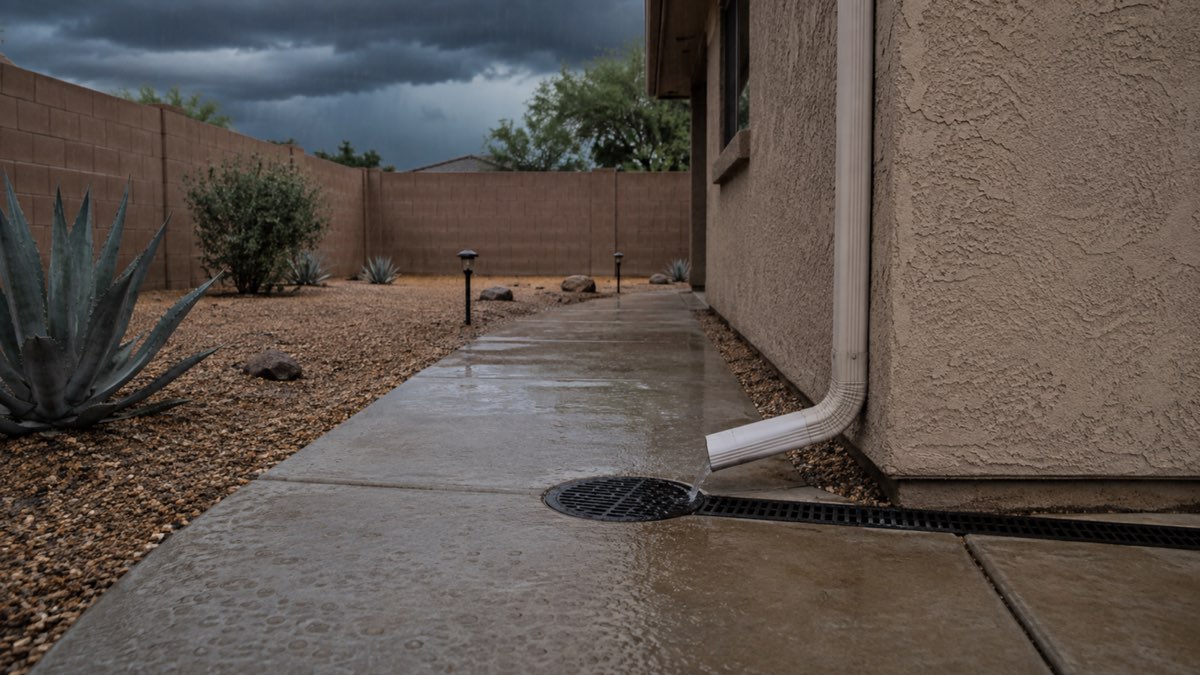
Pour a bucket of water into each outdoor drain — if it drains slowly, you have a blockage that needs clearing. Check all outdoor drains for debris, slow flow, or standing water. Make sure water moves away from your home without blockage. Dust, leaves, and dirt build up quickly in dry months. When heavy rain starts, blocked drains can cause flooding around your foundation. If clearing debris doesn’t fix the flow, call a plumber Phoenix professional before monsoon hits.

2. Clean Gutters and Downspouts

Clogged gutters are the number one cause of foundation water damage during Phoenix monsoons. Sudden storms can overflow blocked gutters and push water toward your home’s base. Clean all gutters and check that downspouts direct water at least 3-4 feet away from the foundation. In Phoenix’s dusty climate, gutters can fill up with fine desert sediment even without visible debris.

3. Flush Your Water Heater (Hard Water Buildup)

Phoenix has some of the hardest water in the country, which leaves mineral buildup inside water heaters. This reduces efficiency and causes damage over time. Flushing the tank removes sediment and helps your system run better before peak usage during monsoon season. The Phoenix Water Services Department reports that local water hardness averages 15-25 grains per gallon well above the national average.

4. Schedule a Sewer Line Inspection

Yes, especially if your home is older than 20 years. A sewer camera inspection can find cracks, roots, or blockages that are invisible from above ground. Many phoenix plumber professionals recommend this step because heavy rain can overload damaged sewer lines and cause backups into your home. Elite Rooter offers drain and sewer camera inspections using HD video technology to pinpoint issues before they become emergencies.

5. Test Your Drainage or Sump System

Run water through your drainage system and time how quickly it clears. If you have a sump pump, test it by adding water to the pit. Make sure it turns on and removes water fast. A slow or non-responsive sump pump during monsoon season can mean the difference between a dry home and a flooded one. This is one of the most overlooked steps on any phoenix plumbing checklist.

6. Fix Small Pipe Leaks Now

Small leaks do not stay small in Phoenix heat. Heat causes pipes to expand and contract daily, and those small leaks or weak joints grow under this stress. When storms hit, added pressure can turn a minor drip into a major pipe leak or burst. Fixing a small leak now costs a fraction of what emergency pipe repair costs during monsoon season.

7. Check Your Irrigation System

Turn on your irrigation system zone by zone and look for leaks, broken heads, or uneven water flow. In Phoenix, poor irrigation can lead to water pooling near your home, which increases flood risk during monsoon rains. Pay special attention to connections near the foundation — any pooling there is a red flag.

8. Evaluate Yard Grading

If your yard slopes toward your home, rainwater will collect near your foundation during every storm. In heavy monsoon rains, this can lead to flooding, foundation cracks, or water damage inside your home. Walk your property and check that the ground slopes away from the house on all sides. If you notice low spots or pooling areas, address them before June.

9. Clear Catch Basins and Storm Drains

Remove dirt, leaves, and debris from every catch basin and nearby storm drain around your property. These areas collect significant buildup during Phoenix’s long dry months. Clearing them ensures water flows freely when storms arrive. This five-minute task can prevent hours of cleanup after a monsoon downpour.

10. Check or Install Backflow Prevention

Backflow devices stop contaminated water from flowing back into your clean water supply. During heavy rain, pressure changes in the municipal system can cause backflow issues in residential properties. The Phoenix Water Services Department requires backflow prevention devices on certain types of connections. Checking or installing a device adds an important layer of protection for your household water quality.

11. Insulate Exposed Pipes

Yes, insulation matters even in Phoenix heat. Insulation protects pipes from extreme temperature swings not just cold. Exposed pipes in attics, garages, and exterior walls weaken faster under Phoenix’s daily heat cycling. Insulation reduces thermal stress and helps maintain stable water flow during seasonal changes. It is an inexpensive step that plumbers Phoenix-wide recommend as part of any pre-monsoon prep.

Outdoor Plumbing Checks Phoenix Homeowners Often Miss

Many homeowners focus on indoor fixes but overlook outdoor areas where most monsoon problems actually start. In Phoenix, poor drainage outside your home can quickly lead to flooding, foundation damage, and sewer issues. Adding these checks to your phoenix plumbing checklist helps you stay ahead of problems that plumber Phoenix professionals commonly see during storm season.

Drainage Around Foundation

Water should always flow away from your home, not toward it. In Phoenix, dry soil can shift and create low spots where water collects near the foundation. During heavy rain, this can lead to cracks or water entering your home. Walk around your house and check for pooling areas after watering or light rain. If you spot any, a plumbing repair professional can help assess whether foundation drainage needs improvement.

Roof Runoff and Downspout Direction

Your roof sends a large amount of water down in a short time during storms. If downspouts are blocked or pointed toward your home, water can build up around the base. Make sure downspouts are clear and extend at least 3-4 feet away from the foundation. Consider adding splash blocks or downspout extensions if water is landing too close.

Landscaping and Water Flow Issues

Plants, soil, and hardscaping can affect how water moves around your home. In Phoenix, poorly planned landscaping can trap water instead of directing it away. Check for areas where mulch, rocks, or plants block natural drainage paths and adjust them before monsoon season starts. Desert landscaping (xeriscape) should still allow water to flow naturally away from your home’s foundation.

Indoor Plumbing Checks Before Phoenix Monsoon Season

Indoor plumbing problems often start small but can get worse fast during monsoon season. In Phoenix, heat already puts pressure on your pipes, so it is important to check inside your home before storms arrive. Adding these steps to your phoenix plumbing checklist helps you catch hidden issues early and avoid sudden breakdowns that plumber Phoenix professionals deal with during peak season.

Leak Detection Under Sinks and Fixtures

Check under sinks, around toilets, and near appliances for any signs of moisture. Even a small drip can turn into a bigger leak when pressure increases during storms. Look for water stains, damp spots, or a musty smell. Fixing these early can save you from costly repairs later.

Pressure Issues from Heat Expansion

Phoenix heat causes water pressure to fluctuate as pipes expand and contract. This can strain your plumbing system over time. If you notice sudden pressure changes, noisy pipes, or slow water flow, it could be a sign of stress in the system that needs attention from a licensed phoenix plumber.

Signs Your Pipes Are Already Stressed

Watch for these warning signs:

  • Discolored water (brown or rusty tint)
  • Unusual sounds (banging, whistling, or gurgling)
  • Frequent minor leaks in the same area
  • Visible corrosion on exposed pipes
  • Water pressure dropping during hot afternoons

These issues often mean your pipes are already under stress. Addressing them before the monsoon season can prevent larger problems when heavy rain and added pressure hit your system.

Water Heater Heat Tune-Up for Phoenix Homes

Your water heater works harder during Phoenix summers than most homeowners realize. Rising ground temperatures heat the incoming cold water supply, which changes how your system operates. Combined with Phoenix’s notoriously hard water, mineral scale builds up faster in summer months. This section of your phoenix plumbing checklist focuses specifically on keeping your water heater efficient and safe before monsoon season adds extra strain.

Why Phoenix Hard Water Destroys Water Heaters Faster

Phoenix water contains 15-25 grains per gallon of dissolved minerals — calcium and magnesium primarily. This scale coats heating elements and tank walls, reducing efficiency by up to 25% over time. During summer, higher water temperatures accelerate mineral deposition. Flushing your tank in May removes this buildup before it hardens further in the summer heat.

Tankless vs Tank Water Heaters in Phoenix Heat

Tankless water heaters handle Phoenix heat differently than traditional tanks. They do not store hot water, so mineral scale builds up on the heat exchanger instead. Both types need maintenance before monsoon season, but the approach differs. Tank-style heaters need a full flush and anode rod check. Tankless units need a vinegar descaling flush. If your water heater is over 8 years old, ask a plumber Phoenix trusts whether replacement makes more sense than repair.

Water Heater Maintenance Steps for May

  1. Turn off the gas or electricity to the heater
  2. Connect a garden hose to the drain valve at the bottom
  3. Open the drain valve and let water flow until it runs clear
  4. Check the pressure relief valve — lift the lever and let it snap back
  5. Inspect the anode rod (replace if more than 50% corroded)
  6. Turn the system back on and check for leaks

If you are uncomfortable performing these steps, schedule a service call with a licensed phoenix plumber.

When to DIY vs When to Call a Phoenix Plumber

Not every task on this phoenix plumbing checklist requires a professional. Some are simple enough for any homeowner, while others carry real risk if done incorrectly. Knowing the difference saves you both money and potential damage.

Tasks You Can Safely DIY

  • Cleaning gutters and downspouts
  • Clearing outdoor drains and catch basins
  • Testing sump pump operation
  • Checking yard grading and water flow direction
  • Flushing a standard tank water heater (if comfortable)
  • Inspecting visible pipes for leaks or corrosion
  • Adjusting irrigation system heads

Tasks That Need a Licensed Plumber

  • Sewer line camera inspection
  • Backflow prevention device testing or installation
  • Any repair involving gas lines or water heater gas connections
  • Pipe leak repair behind walls or under slabs
  • Water pressure regulator adjustment
  • Tankless water heater descaling (if unfamiliar)
  • Any issue involving the main water line

Cost of Waiting vs Acting Early

Many Phoenix homeowners skip pre-monsoon prep to save money. But the numbers tell a different story. A basic pre-monsoon plumbing inspection costs a fraction of an emergency sewer backup cleanup. Plumbers phoenix-wide report that emergency calls during July and August run 2-3x higher than scheduled appointments in May. Getting ahead of the season is always the more affordable option.

Pro Tip: If you are unsure whether a task is DIY-safe, call Elite Rooter Phoenix at 866-805-5325 for a quick assessment. We are available 24/7.

Phoenix Neighborhood Plumbing Notes

Not every home in Phoenix faces the same plumbing risks. Different neighborhoods have different soil, pipe age, and water conditions. Adding local checks to your phoenix plumbing checklist helps you stay prepared based on where you live. Many plumber Phoenix professionals adjust their recommendations depending on the area.

Arcadia: Older Pipes and Flood Risk

Arcadia has many homes built in the 1950s-1970s with original cast-iron and galvanized plumbing. These pipes may already have internal corrosion and small cracks. During monsoon storms, heavy rain can increase the risk of leaks and flooding. According to Phoenix Water Services, older neighborhoods like Arcadia often have aging municipal connections as well. It is a good idea to check for corrosion, weak joints, and drainage around the home. If you live in Arcadia and have not had a sewer line inspection in over 5 years, schedule one before June.

Scottsdale: Hard Water + Pressure Issues

Scottsdale homes often deal with the strongest hard water in the metro area. This can clog pipes and reduce water flow over time. Heat also affects pressure, which adds extra stress to the system. The ADWR reports that Scottsdale’s water supply relies heavily on Colorado River water, which carries higher mineral content. Regular flushing and pressure checks help keep plumbing stable before monsoon season.

Glendale and Tempe: Drainage and Sewer Concerns

These areas can face drainage problems due to clay-heavy soil conditions and older sewer lines. Heavy rain can overload the system and cause backups. Glendale, in particular, has sections where the municipal sewer system is nearing capacity. Cleaning drains and checking sewer lines early can prevent major issues when storms hit. Plumbers phoenix residents in these areas rely on often recommend annual sewer camera inspections.

Ahwatukee Elevation and Runoff Patterns

Ahwatukee has higher elevation areas where water runoff moves quickly during storms. If your yard is not graded properly, water can rush toward your home at speed. Checking drainage paths and redirecting water flow helps reduce flood risk during monsoon season. Ahwatukee homes built on slopes need extra attention to their drainage systems what works in flat terrain may not be sufficient here.

Book a Phoenix Pre-Monsoon Plumbing Inspection

Getting your home ready before monsoon season is the best way to avoid stress, damage, and costly repairs. A full inspection can catch hidden issues that are easy to miss during a basic phoenix plumbing checklist walkthrough.

At Elite Rooter Phoenix, we focus on real problems that Phoenix homes face every year. Our team checks drains, sewer lines, water pressure, leaks, and outdoor drainage to make sure your system can handle heavy rain and extreme heat.

We use the right tools — including HD camera inspections, pressure testing, and leak detection equipment — to find issues early and fix them before they turn into emergencies.

What our Phoenix pre-monsoon inspection includes:

  • Full indoor and outdoor drainage check
  • Sewer line camera inspection
  • Water heater performance evaluation
  • Water pressure testing
  • Leak detection under sinks, fixtures, and slabs
  • Irrigation system review
  • Backflow prevention check

Ready to prepare your home?

Call us now: 866-805-5325 available 24/7 Schedule your Phoenix inspection online

Licensed (ROC #358482) | BBB Accredited | 1421+ Google Reviews | Serving Phoenix since 2017

FAQs | Phoenix Plumbing Checklist Before Monsoon Season

1. What plumbing prep does Phoenix need before monsoon season?

Phoenix homes need a basic inspection before monsoon season. This includes cleaning outdoor drains, checking for leaks, flushing the water heater, and inspecting drainage around the foundation. A proper phoenix plumbing checklist helps prevent flooding, backups, and pipe damage. Start in May for the best results — waiting until June means you are already behind schedule.

2. When does the monsoon season start in Phoenix?

Monsoon season in Phoenix officially runs from June 15 through September 30 each year. Most heavy storms begin after the first few weeks of summer heat, which is why May is the best time to prepare your plumbing system. The first storms often arrive with little warning, so early preparation is key.

3. How does hot weather affect plumbing in Phoenix?

Extreme heat causes pipes to expand during the day and contract at night. Phoenix’s May-October temperature swings can cause copper pipes to expand by up to 0.7 inches per 100 feet — roughly 3x the winter baseline. This repeated movement puts stress on joints and weak spots, leading to leaks or cracks over time.

4. Do I need a sewer line inspection before the monsoon season?

Yes, especially if your home is older than 20 years or has a history of clogs and backups. A sewer camera inspection can find hidden cracks, tree root intrusions, or blockages. Many plumber Phoenix professionals recommend this step because heavy monsoon rain can overload damaged sewer lines and cause raw sewage backups into your home.

5. How often should I clean my drains in Phoenix?

Clean your drains at least once before monsoon season starts, and ideally twice a year — once in May and once in October after monsoon ends. Regular cleaning removes dirt, mineral buildup, and debris that can block water flow during storms. If you notice slow drainage at any point, address it immediately rather than waiting.

6. What are early signs of plumbing problems before monsoon?

Look for slow drains, low water pressure, small leaks under sinks, strange noises in pipes (banging or gurgling), discolored water, or wet spots on walls and ceilings. These signs often mean your system is already under stress and may fail during heavy rain. A licensed phoenix plumber can diagnose the specific issue.

7. Can heavy rain damage plumbing systems?

Yes. Heavy rain can overload drainage and sewer systems, especially in older Phoenix neighborhoods. If pipes are already weak or partially blocked, monsoon rain can cause backups, leaks, foundation flooding, or even complete pipe failure. This is why preventive checks before monsoon season are so important.

8. Is DIY plumbing prep enough before monsoon season?

Basic steps like cleaning gutters, clearing drains, and checking for visible leaks are good starting points. But DIY prep may not catch hidden problems like cracked sewer lines, slab leaks, or internal pipe corrosion. A professional inspection gives a much more complete picture of your system’s health. Plumbers phoenix homeowners trust use camera technology and pressure testing that DIY methods cannot replicate.

9. How much does a Phoenix pre-monsoon plumbing inspection cost?

A standard pre-monsoon inspection in Phoenix typically costs between $150-$350, depending on the scope. Basic drain and leak checks are on the lower end, while comprehensive inspections that include sewer camera work and pressure testing are higher. This investment is small compared to the cost of emergency plumbing repair during monsoon season, which can run into thousands.

10. Which Phoenix neighborhoods have the oldest plumbing?

Arcadia, Encanto, Willo, Coronado, and parts of central Phoenix have some of the oldest residential plumbing — many homes date back to the 1940s-1960s with original cast-iron or galvanized pipes. These neighborhoods face higher risk during monsoon season because aging pipes are more vulnerable to pressure changes and root intrusions. If you live in one of these areas, a sewer line inspection is especially important. Contact Elite Rooter Phoenix for an assessment specific to your neighborhood.

Sources and methodology
Picture of Grayson Davis

Grayson Davis

Grayson is a Division Manager at Elite Rooter, where he’s been a key part of the team for over five years. Known for his leadership, attention to detail, and commitment to customer satisfaction, Grayson plays a critical role in overseeing daily operations and ensuring his division runs smoothly. His ability to motivate teams and streamline processes has helped drive Elite Rooter’s continued success across California.

About Us

At Elite Rooter, we provide reliable plumbing and drain repair services across the USA. Our experienced, licensed team is committed to fast, affordable solutions and exceptional customer service. Whether it’s a clogged drain or a major repair, you can count on us to get the job done right.

Contact Us

Need plumbing help fast? Our team is ready to assist you with any plumbing or drain emergency. Reach out today and get the reliable service you deserve.