
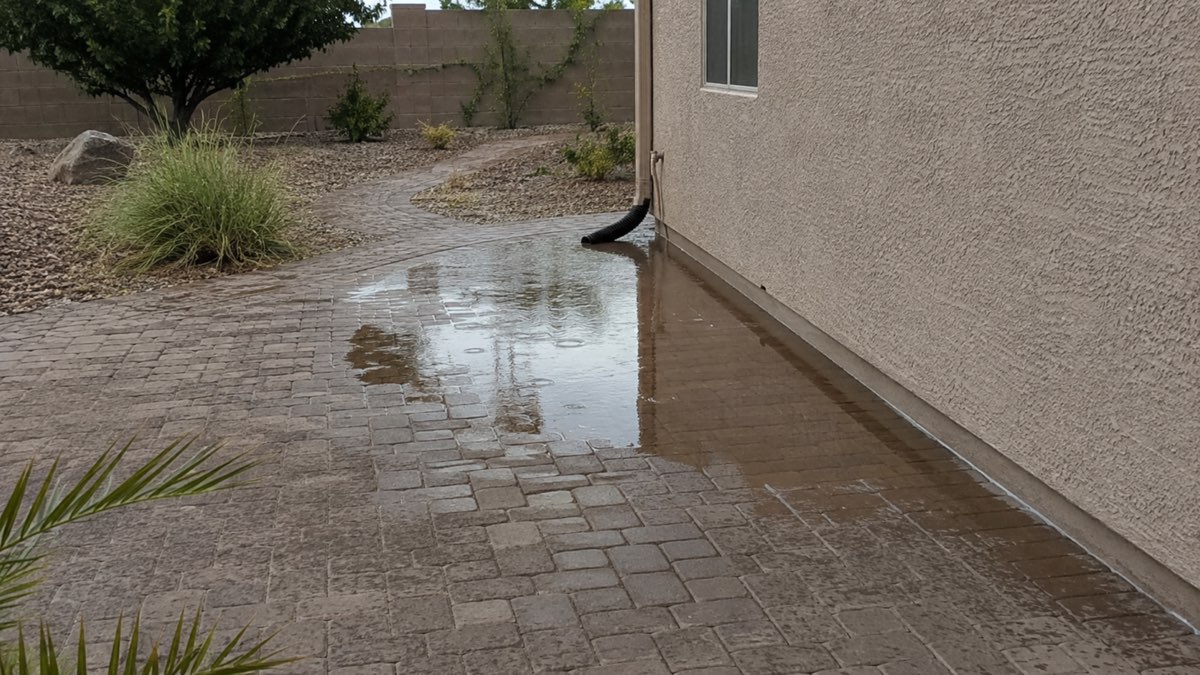
While a new patio may appear flawless on installation day, the first heavy rain or a plumbing leak often reveals hidden drainage issues. Common warning signs include water pooling near the foundation, sand eroding from paver joints, or sections beginning to settle and sink. Without proper grading, water that should flow freely across the yard can become trapped. This leads to stagnant pools and structural instability.
The mistake is simple: the pavers were installed before anyone understood the path of the water.
Pavers Change the Way a Yard Works
Pavers are often seen as a surface upgrade something that makes a patio, walkway, or driveway look cleaner. But they do more than change how a yard looks. They change how it works.
Before pavers go in, water already has a path. It may run along a side yard, pass through a shallow low spot, drain through a wall opening, or collect briefly in one area before moving on. That path is not easy to see on a dry day. Once pavers are added, the ground height changes. Base material goes in, edges are built, and turf, gravel, walls, and planters often go in around it. To you, the yard looks more finished. However, to water, the yard may now have a new wall in its way. That's why paver work in Scottsdale should start with water flow.
The Problem Isn't Always the Paver Work
When pavers sink, shift, or collect water, it's easy to blame the install and sometimes that's fair. A weak base, poor slope, or bad edge causes real problems. But more often, the bigger issue is that the project changed the old water path.
Picture a side yard where water once moved away from the house. Add pavers, and the new edge sits just slightly higher than the old dirt. Now the water has nowhere to go, so it backs up near the wall or heads toward the garage. Or picture a flat, neat backyard patio that roof water now spills onto with no clear path away. In that case, it sits near the door. In both cases the patio looks great. However, the real problem is that water was never part of the plan.
Why This Matters in Scottsdale
Yards can fool you. Most days the yard looks dry, so it's easy to forget it still has to handle water. But when rain comes, it comes fast a single summer monsoon can test the entire yard in one afternoon.
Homes also have a lot working against clean drainage: desert rock, block walls, washes, narrow side yards, pools, turf, drip lines, roof runoff, and compacted soil. All of it affects where water goes. A yard can look dry for months and still drain poorly. This happens because a dry yard is not the same as a yard that drains well.
Small Height Changes Create Big Water Problems
One of the most common mistakes is raising the surface too much near the house. A paver patio needs base material, sand, and the pavers themselves, so the finished surface often sits higher than the old ground. If it ends up too high, too flat, or sloped the wrong way, water moves toward the home instead of away. It then shows up at sliding doors, garage entries, pool decks, side yards, and patio walls.
A perfectly level patio feels nice for chairs and tables, but water still needs somewhere to go. Before the project starts, you should know whether the new surface will move water away from the house. This is a question that's far easier to answer before the pavers go down.
Roof Water Can Be More Than the Patio Can Handle
Roof water is easy to overlook during a paver project, yet a roof can dump a lot of water into one small area. If that water lands on a new patio with no escape path under roof edges, patio covers, scuppers, or low spots near the home, it pools fast. In this case, the patio isn't the source; it's just where the water gets trapped.
The fix depends on the yard: a better slope, a drain, a swale, a dry well, a wall opening, or a new layout. The key is planning for roof water before the surface is covered.
Decorative Rock and Hardscape Edges Can Trap Water
Decorative rock fits the desert style and looks clean, but placed in the wrong spot, it blocks drainage. If a shallow low area carries water during a storm and rock or fill gets piled on top of it, that space no longer moves water the same way. Instead, the water backs up, spreads toward the patio, or runs toward a wall, pool, or house.
The same goes for the other features a paver project adds seat walls, turf borders, planter curbs, and side-yard edging. They make a yard look finished, but each one can act like a small dam. Even wall openings clog with leaves, mud, and gravel over time. That's why pavers, rock, turf, walls, and drainage can't be planned as separate things. They all touch the same water path and a yard can look better and drain worse at the same time.
Irrigation Can Cause Trouble Under Pavers
Not all water problems come from rain. In Scottsdale, irrigation can be just as big an issue. Most yards have sprinkler lines, drip lines, valves, filters, and old pipes underground. Some are active, some are capped, and some are forgotten. Install pavers over those lines, and a small leak becomes hard to find. A leak under dirt usually shows itself fast. By contrast, a leak under pavers softens the base first, then a section sinks, the edge stays wet, the water bill climbs, and plants stop getting water.
That's why irrigation should be mapped before pavers go in. Know where the valves are, where the lines run, and which lines will stay, move, or be capped. Also keep filters, valves, and pressure parts easy to reach. A paver patio shouldn't hide the parts of the yard that may need repair later.
Permeable Pavers Still Need a Plan
Some homeowners ask about permeable pavers because they sound like an easy fix. They can help in the right yard but they aren't magic. Water doesn't pass through the top and vanish; instead, the whole system has to work, from the joints between pavers to the base, the soil, and the path water takes after it moves down.
If the soil below is hard or slow to drain, water still sits. If the joints fill with dirt over time, the pavers drain less. Permeable pavers are a useful tool, but they're only one part of a drainage plan they don't replace smart design.
A Better Way to Plan a Scottsdale Paver Project
A good paver project starts with a slow walk through the yard. Look at where water sits after the sprinklers run, where mud or sand collects, and what happens around the side yard, wall openings, pool, and the ground near the house.
Then think about what the new project will change:
- Will it raise the surface? Block a low path?
- Catch roof water? Trap water behind a wall or border?
- Cover irrigation lines?
- Will water still have a safe way out if a drain clogs?
These are simple questions, but they prevent a lot of trouble. Good drainage planning doesn't mean a plain yard it means the good-looking parts are built around how water actually moves.
When Design and Drainage Should Be Planned Together
The best Scottsdale yards aren't built one piece at a time. The pavers, turf, plants, irrigation, walls, lighting, pool, and drainage should all work together and that matters even more on a larger backyard project. If you're adding pavers alongside turf, planting, outdoor seating, irrigation changes, or a built-in grill, drainage belongs in the very first design conversation.
For a full outdoor living project, plan the surface, irrigation, and drainage together. The finished yard should keep moving water safely after storms, irrigation cycles, and everyday use.
A Patio Should Look Good and Drain Right
Pavers can be a great upgrade for a Scottsdale home, making a backyard cleaner, more useful, and more comfortable. But the best paver projects aren't planned around looks alone, they're planned around water. Before choosing the pattern, learn the water path, raising the surface, know where runoff will go, covering irrigation lines, know how they'll be reached later.
The mistake isn't installing pavers. It's installing them without respecting how water already moves through the yard. A beautiful patio can still fail if it traps roof water, blocks a low path, hides an irrigation leak, or sends water toward the house. Therefore, before the pavers go down, every homeowner should ask one simple question: after this project is finished, where will the water go?