
Most people don’t think twice about their kitchen faucet until it starts causing trouble. A slow drip, a loose handle, a weaker stream it all seems like something that can wait until next weekend. Unfortunately, that’s exactly how a lot of expensive plumbing repairs begin.
Your kitchen faucet is one of the hardest-working fixtures in the house. It runs dozens of times a day, and because it connects directly to your plumbing system, a small problem at the sink can sometimes point to something happening behind the walls or under the cabinet.
Many neighborhoods are full of homes built decades ago, and while they’ve been beautifully maintained, their plumbing hasn’t always aged as gracefully. Older supply lines, mineral buildup, shifting water pressure, and years of daily use all change how a faucet performs. Knowing what deserves attention and what doesn’t saves you both money and frustration.
1. A Drip That Never Seems to Stop
Almost everyone has lived with a dripping faucet. It’s easy to ignore, because it starts small — one drop every few seconds hardly feels like an emergency.
But faucets rarely start leaking without a reason. Usually the cartridge inside is worn out, or the rubber seals have hardened with age. Occasionally, continuous dripping signals unusually high water pressure stressing fixtures throughout the house. Waiting months rarely makes the fix easier — it usually just means replacing more parts than you would have at the start.
2. Water Pressure Isn’t What It Used to Be
When pressure drops, homeowners often assume the faucet is failing. Sometimes they’re right the aerator at the tip of the spout collects minerals over time and can usually be cleaned in a few minutes.
But gradual pressure loss tells a different story. In many older homes, galvanized steel pipes slowly narrow from the inside as corrosion builds up over decades. By the time you notice weaker flow at the sink, the restriction has often been developing for years. That’s why plumbers rarely judge the problem by the faucet alone they look at the whole system.
3. Water Around the Base of the Faucet
A small puddle near the faucet doesn’t always come from splashing dishes. Sometimes water escapes underneath the faucet every time it’s turned on, running below the sink instead of across the counter — so the leak isn’t obvious.
Over time, even a slow leak can warp cabinets, loosen laminate, stain wood, and create the damp conditions mold loves. Replacing a worn seal is cheap. Replacing a ruined cabinet because the leak went unnoticed for months is not.
4. The Faucet Has Started to Wiggle
A faucet should feel solid. If it rocks back and forth while you’re washing dishes, something underneath has loosened and most homeowners keep using it without a second thought.
The problem is that constant movement strains the flexible supply lines and threaded connections hidden below the sink. What starts as a loose mounting nut can turn into a leak inside the cabinet. Caught early, it’s a simple repair.
5. Strange Sounds When You Turn On the Water
Kitchen faucets aren’t supposed to whistle, hum, or bang. If you’ve started hearing unusual noises, don’t assume the faucet is just getting old.
Those sounds can come from excessive water pressure, loose pipes inside the wall, worn shut-off valves, trapped air, or internal faucet parts beginning to fail. Because several different issues create nearly identical symptoms, swapping the faucet without diagnosing the cause often solves nothing.
6. Rusty or Cloudy Water
Brown water from the kitchen faucet gets anyone’s attention. If it clears after a few seconds and only happens at one fixture, the faucet itself may be corroding internally. If several faucets run discolored, the source is usually deeper in the plumbing system.
Thousands of older homes where galvanized pipes are still in service well past their expected lifespan. As those pipes deteriorate, rust particles affect water quality and gradually reduce flow — and the faucet is often where homeowners first notice it.
7. The Pull-Down Sprayer Doesn’t Work Like It Used To
Modern pull-down faucets are convenient, but they’re also more complex than traditional ones. If the spray head won’t retract smoothly, keeps switching modes, leaks from the hose, or loses pressure, the culprit is usually the diverter valve or the flexible hose under the sink.
These parts wear naturally after years of daily use. Ignoring the symptoms typically leads to bigger leaks inside the cabinet instead of simply replacing a relatively inexpensive part.
| Symptom | Most Likely Cause | DIY or Call a Plumber? |
|---|---|---|
| Dripping faucet | Worn cartridge or O-ring | DIY or plumber |
| Low water pressure | Clogged aerator or old pipes | Depends on cause |
| Water around the base | Worn seals | Usually plumber |
| Loose faucet | Loose mounting hardware | DIY if accessible |
| Rust-colored water | Corroded pipes | Plumber recommended |
| Strange noises | Water pressure or pipe issues | Plumber |
| Pull-down sprayer problems | Hose or diverter wear | Depends on repair |
Why Experienced Plumbers Look Beyond the Faucet
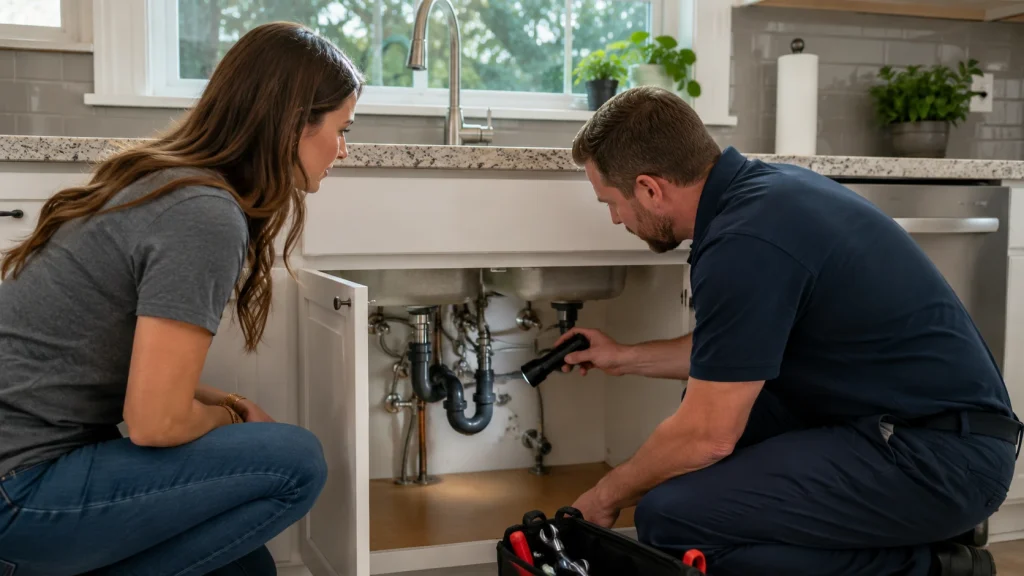
Here’s what surprises most homeowners: many faucet problems aren’t actually faucet problems. Weak pressure can start inside aging supply pipes. Repeated leaks may come from excessive household water pressure. Discolored water can point to deteriorating plumbing rather than a faulty fixture. That’s why a good plumber spends more time diagnosing the cause than replacing parts.
In a city like Chicago where homes range from new builds to century-old brick houses no two plumbing systems are alike. Knowing the age of the home, the pipe materials, past repairs, and local water conditions leads to a far more accurate fix than simply installing a new faucet. If several of these warning signs show up at once, it’s worth having the whole system evaluated. Homeowners looking for reliable plumbing services in Chicago benefit most from an inspection that finds the root cause before a small issue becomes a costly repair.
Simple Habits That Prevent Bigger Repairs
Kitchen faucets don’t need much maintenance, but a few habits extend their life:
- Clean the aerator every few months, especially if flow has dropped.
- Check under the sink now and then moisture, stains, or a musty smell usually appear long before a leak becomes obvious.
- Act on changes early. If a faucet starts behaving differently, even slightly, don’t wait it out. Plumbing problems almost never fix themselves.
Conclusion
A kitchen faucet is easy to overlook it’s just part of everyday life. Yet it often gives the first clues that something in your plumbing is changing. A drip. Lower pressure. A strange noise. A loose handle. Individually they seem minor; together they can tell a much bigger story.
Paying attention to those early signs helps you avoid emergency repairs, protect your cabinets and countertops, and keep your plumbing running reliably for years to come.