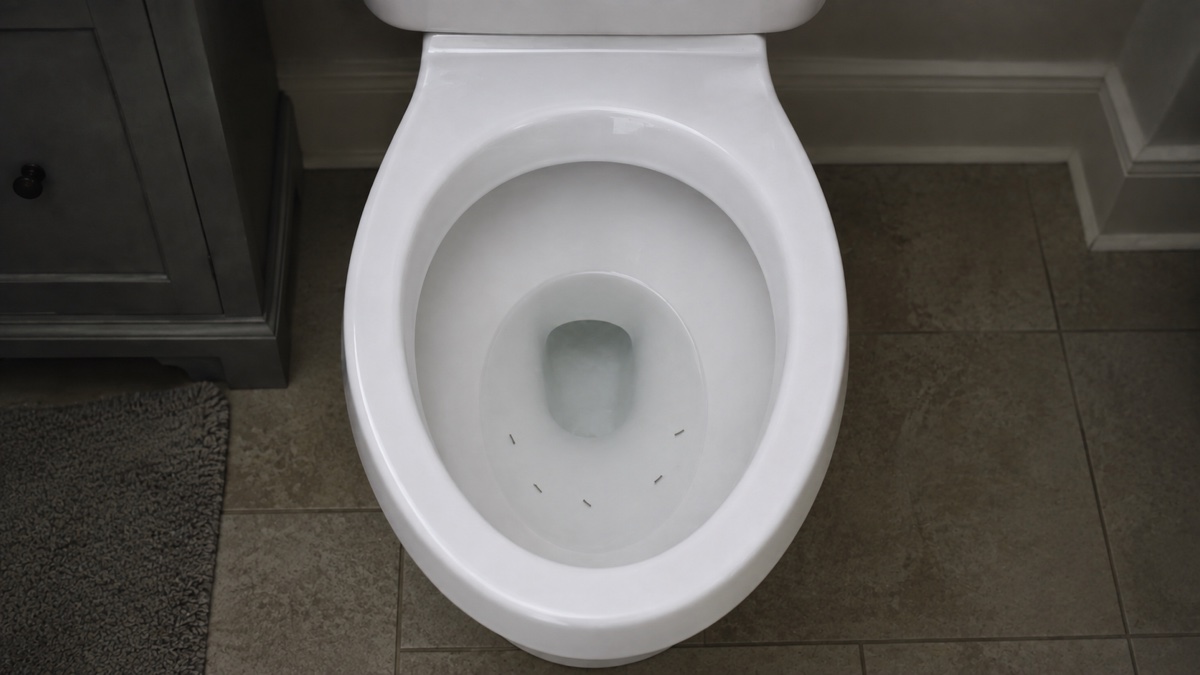
Before cleaning, take one close photo and another that shows where you found it. A larva in the tank suggests something different from a worm on the floor, so get a rough sense of its size before you flush it.
Start with where you found it
A photo can narrow the possibilities, but it cannot confirm the species. According toUniversity of Maryland Extension, drain-fly larvae grow in the wet film inside drains and traps. An earthworm or horsehair worm usually reaches the fixture by a different route.
| Likely organism | What it looks like | Common source | First step | Get help when |
|---|---|---|---|---|
| Drain-fly larvaMoth-fly larva | Tiny and slender. Usually black, gray, or translucent. Up to about 3/8 inch. | Wet film inside a drain, trap, overflow passage, or unused toilet tank. | Take a photo. Check the tank and nearby drains. Brush away reachable slime with a mild cleaner. | It returns after cleaning, the fixture drains poorly, or sewage-contaminated moisture is present. |
| Non-biting midge larvaOften called a bloodworm | Thin, segmented, red, or pink. Often under 1/2 inch, though species vary. | Standing water with sediment or decaying matter. | Take a photo. Check the toilet tank and other standing water. | It returns after standing water is removed or the source remains unclear. |
| Earthworm | Clearly segmented, often pink or brown. Common soil species are often 1 to 5 inches. | Damp soil or an opening above the waterline. One sighting does not prove pipe damage. | Look for gaps near the floor and check nearby plants. | It appears during a backup or near sewage-contaminated moisture. |
| Horsehair wormGordian worm | Extremely thin and several inches long. It may coil into a knot and can exceed 14 inches. | An infected cricket may carry it indoors. The worm can emerge when the insect reaches water. | Remove it. Look for insects or an opening into the room. | Call a pest professional if insect activity continues. Call a plumber only for separate drainage symptoms. |
Tiny black larvae often come from wet buildup
Drain flies need wet organic film where their larvae can feed, and that film often clings to the wall of a drain or trap. It can also collect in a sink overflow or a toilet tank that has sat unused. Cleaning the bowl will not solve the problem if the film is somewhere else.
TheUniversity of Georgia extension guidereports that moth flies may lay eggs in a toilet tank that has gone unflushed for a long time. The larvae can then wash into the bowl. Maryland's extension guide also lists sewer leaks and backups as possible breeding areas. That does not mean every larva signals a broken pipe. A plumber should find an actual leak or drain problem before anyone reaches that conclusion.
The video shows one detail many homeowners miss: the larvae and the moth-like flies on the wall are part of the same life cycle. It demonstrates covering the drain after the shower is used. A clear cup over the opening can serve a similar purpose by showing whether adult flies emerge. This is a way to trace the source, not a cure. The wet film inside the drain still has to be removed.
Red larvae and true worms need a different check
Red larvae
People often call red midge larvaebloodworms.Mississippi State University Extensionexplains that hemoglobin gives some of them their color and helps them live in low-oxygen water. Since these insects usually develop in standing water, check the toilet tank before you assume there is a plumbing failure. A red body alone does not point to a parasite or a broken drain.
Earthworms
Earthworms have obvious segments and are usually much larger than insect larvae. TheUniversity of Minnesota extension guidedescribes common groups that range from about 1 to 5 inches. Look around the floor and any nearby plant for a route into the room. Consider a plumbing inspection only if the sighting repeats while the toilet is leaking or backing up.
Horsehair worms
An infected cricket can carry a horsehair worm indoors, andColorado State University Extensionexplains that the mature worm may emerge when the insect reaches water. Horsehair worms are extremely thin and can be much longer than drain-fly larvae. CSU reports that they are harmless to people. Crickets appearing alongside them point toward a pest problem first.
What to do before calling anyone
Begin at the toilet by checking both the bowl and the tank before moving to the nearest sink or shower drain. Leave the plumbing assembled and keep your hands out of contaminated water. When drain flies seem likely, follow UGA Extension's suggestion: place a clear cup upside down over the suspected drain to see whether adults emerge.
If you can reach the film inside the drain, brush it away with a mild cleaner used according to the label. Give the area a few days, then look again. A returning larva matters more when the fixture also drains slowly or leaks, and that pattern will help you decide who to call.
What Elite Rooter checks
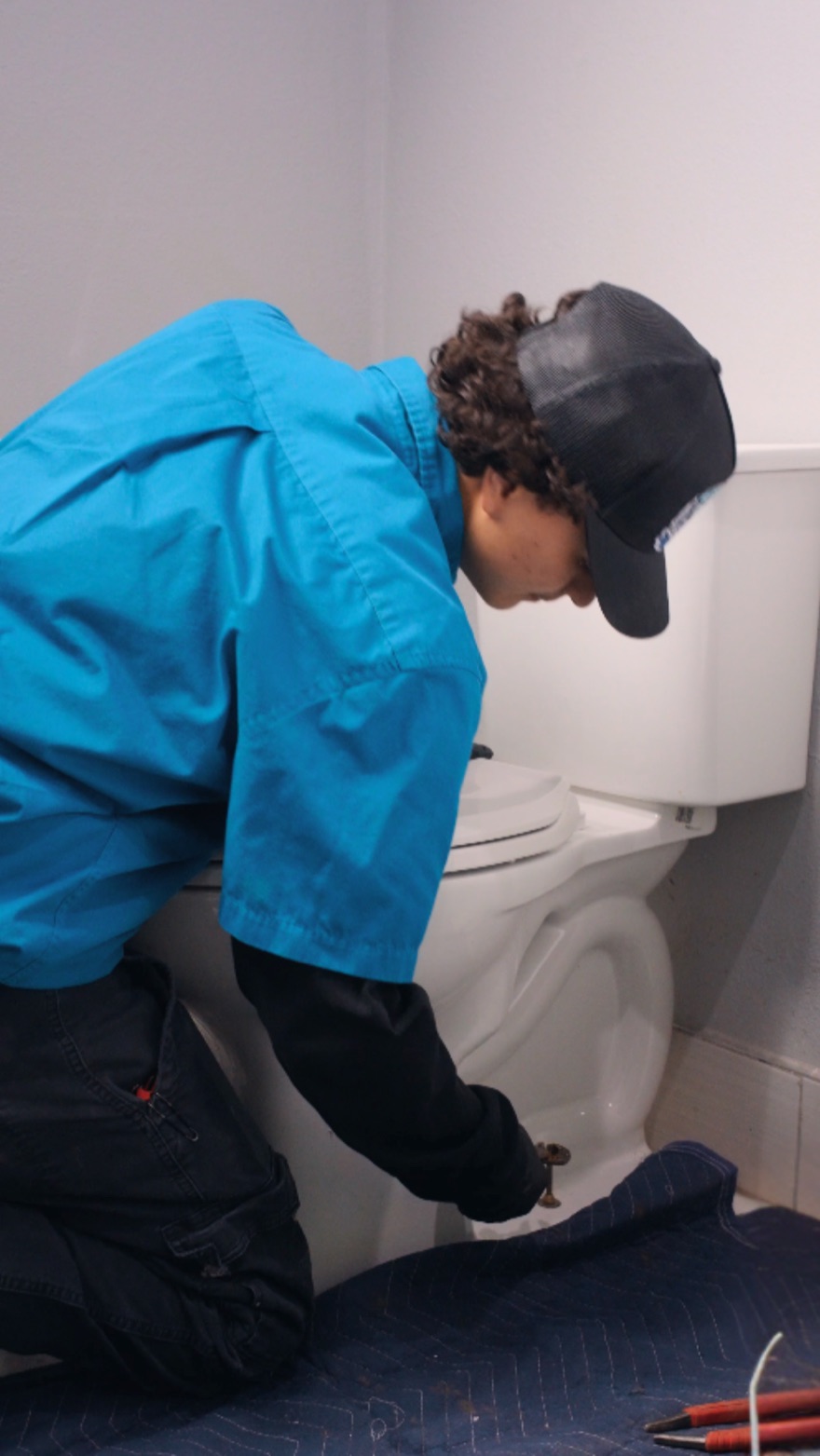
Where the material appears guides the inspection. A technician can start at the bowl and tank before checking the nearest drain or overflow passage. The next question is whether the fixture leaks or drains abnormally. That may include checking accessibletoiletandbathroom plumbingfor a defect.
A problem that returns after reachable breeding film has been removed may call fordrain cleaning. Asewer camera inspectionis usually more useful when several fixtures drain poorly or other evidence points to thesewer line. One unidentified larva in a normal toilet is not enough reason by itself.
Who should you call?
Call a plumber if the fixture is part of the problem
Call a plumber when the material returns after cleaning and the toilet also drains poorly. Call sooner if you find a leak or sewage-contaminated moisture. The plumbing symptoms matter more than the organism's color.
Call a pest professional if the plumbing works normally
A pest professional is the better route when adult drain flies keep appearing but the plumbing works normally. Crickets alongside horsehair worms point in the same direction. A photo of the location will help, but insecticide should stay out of the plumbing.
Contact a healthcare professional if it came from a person
Material that appears to have come from a person should be discussed with a licensed healthcare professional, and a photo may help that conversation. Neither this article nor a plumber or pest professional can identify a parasite or interpret symptoms.
Keep it from coming back
Once you find the source, remove it instead of repeatedly treating the bowl. Regular use helps idle fixtures keep water in their traps. Clean only the film you can reach, and repair a leak rather than letting the area stay wet. After cleaning, check whether the material returns. Bathroom humidity alone cannot tell you where it came from.
When a plumbing inspection makes sense
For material that keeps returning while the toilet drains poorly, use Elite Rooter'sservice-area directoryto find your local team. Share the photo and say exactly where you found it so the technician has a useful place to start without assuming the sewer line is at fault.
Frequently asked questions
Can worms really come up through a toilet drain?
A worm-like organism can reach a toilet in several ways, so one sighting does not show that it traveled through the drain. Check whether it was in the bowl or tank, then look for slow drainage, leaks, odors, or a backup.
Why do larvae return after I clean the bowl?
The breeding source may be wet film inside a nearby drain, trap, overflow passage, or unused toilet tank. Cleaning the bowl will not remove film somewhere else. Trace the source, brush away reachable buildup, and check again after a few days.
Can drain-fly larvae live in a toilet tank?
They can develop in wet buildup. University of Georgia Extension notes that moth flies may lay eggs in a toilet tank that has gone unflushed for a long time. Check under the tank lid before assuming the sewer line is involved.
Should I pour bleach or insecticide down the drain?
Do not use insecticide in the plumbing. Brush away reachable film with one mild cleaner used according to its label. Never mix bleach with ammonia or an acid cleaner such as vinegar.
Does an earthworm mean the sewer pipe is broken?
No. One earthworm does not prove pipe damage. A plumbing inspection makes more sense when the sighting repeats during a backup or appears near a leak or sewage-contaminated moisture.
Should I call a plumber, pest professional, or healthcare professional?
Call a plumber when the fixture drains poorly, leaks, or backs up. A pest professional is a better fit when adult drain flies or crickets keep appearing while the plumbing works normally. If the material appears to have come from a person, contact a licensed healthcare professional.
Sources and methodology
- University of Maryland Extension: Drain Flies (updated October 17, 2024)
- University of Georgia Extension: Insect and Arthropod Pests of Southeastern Neighborhoods
- Colorado State University Extension: Weird Worms (peer reviewed; reviewed August 2025)
- University of Minnesota Extension: Earthworms (reviewed 2023)
- Mississippi State University Extension: Chironomid Midge
- New Mexico State University: Stream Biomonitoring Using Benthic Macroinvertebrates
- CDC: Cleaning and Disinfecting with Bleach (April 24, 2024)
- Visual reference: Little Black Drain Worms in shower, how to get rid of them (Rusty Stainless, October 22, 2012)