

California's Plumbing Code requires a backflow preventer on every outdoor hose bib connected to your irrigation. Skip it, and rental owners face $500+ fines. Most folks find out the hard way, usually right before guests show up.
Ventura pool irrigation plumbing isn't complicated once you know what to check. A cracked drip line. A drain covers its service life. A vacuum breaker that snapped off in last summer's heat. Small things turn into a soaked yard or a flooded equipment pad fast.
What Ventura Homeowners Should Check Before Memorial Day Weekend
Before Memorial Day weekend, Ventura homeowners should check 8 plumbing items: the pool main drain cover, pressure loop, auto-fill backflow, irrigation backflow assembly, every hose bibb vacuum breaker, irrigation zone leaks, drip lines, and your watering schedule. These line up with California Plumbing Code §1505.10 and the federal VGB Act for pool drains.
Most items take 5–10 minutes. A few you can knock out with a wrench and a flashlight. Two or three need a licensed plumber, anything tied to your backflow assembly or pool main drain.
Skip the checks and you risk a soaked yard, a $500 code fine, or a missed pool entrapment hazard. Better to catch problems now than at 6 p.m. with 20 guests over.
Why is Ventura's Pre-Summer Plumbing Window Different From the Rest of California?
Ventura isn't Phoenix. Pipes don't crack from 115°F heat here. But the coastal climate creates its own list of problems most California plumbing guides ignore. Salt air. Strict watering windows. Soil that hides irrigation leaks for weeks. If you're following a generic "California pre-summer plumbing checklist," you're missing half the picture.
Coastal humidity and salt-air corrosion on outdoor plumbing
Living within 5 miles of the coast wears out outdoor plumbing fast. Brass hose bibbs corrode at the threads. Vacuum breakers seize up. Galvanized pipe near the pool equipment pad rusts from the outside in. Most Ventura outdoor plumbing has a shorter lifespan than the manufacturer's label suggests. Plan on inspecting outdoor metal parts twice a year, not once.
Ventura's watering windows: before 10 a.m. / after 6 p.m. (and the 48-hour post-rain rule)
Ventura River Water District allows landscape irrigation only before 10 a.m. or after 6 p.m. The district also bans outdoor watering during, and within 48 hours after, measurable rainfall. These windows matter for leak detection too. If your irrigation runs at 2 p.m. on a Tuesday, that points to a broken controller or a bypass valve that won't close. Both cost you money and a possible fine.
Why Memorial Day weekend is the wrong time to find a problem
Most Ventura plumbers book out a week ahead of Memorial Day. If your pool pump fails Friday afternoon, you're looking at a Tuesday repair at the earliest. Same goes for an irrigation backflow that fails its annual test. Checking now, three weeks out, gives you room to fix things before the weekend you actually want your yard ready.
The 8-Point Pre-Summer Pool & Irrigation Checklist
Here's the full pre-summer checklist for Ventura homes with a pool and irrigation. Work through it in order. Plan on a Saturday morning for the DIY checks, and call a licensed plumber for anything backflow-related.
- Inspect the pool main drain cover: Look for cracks, missing screws, or a service-life date past 5 years. A failed cover is the leading cause of pool entrapment accidents. Replace it before you swim.
- Pressure-test the pool plumbing loop: Run the pump and watch the gauge for 15 minutes. A pressure drop without a visible leak means you have a slow leak underground. (Hint: the soil around the equipment pad will feel cool and damp.)
- Check the pool auto-fill line backflow: The auto-fill valve connects your potable water supply to the pool. If the backflow preventer fails, dirty pool water can siphon back into your drinking line. Test the small vent for clean drainage.
- Test your irrigation system backflow assembly: California requires a certified tester to inspect your assembly once a year. If your last test was more than 12 months ago, book one now. Ventura Water and Casitas MWD both track these records.
- Verify every outdoor hose bibb has a working vacuum breaker: Twist the device. If it spins freely or leaks at the base, replace it. A $12 part keeps you in code and avoids a $500 fine.
- Walk every irrigation zone for visible leaks: Run each zone one at a time. Look for spray patterns hitting the sidewalk, geysers from cracked PVC, and soggy spots in the grass. An irrigation leak in Ventura's dry coastal soil can waste 50+ gallons an hour without showing up on the surface.
- Flush and inspect your drip lines: Open the end caps. Run the system for 5 minutes. Sediment, root chunks, or no flow at the last emitter means the line needs cleaning or replacement.
- Match your controller schedule to Ventura's watering rules: Before 10 a.m. or after 6 p.m. only. No watering within 48 hours of rain. A smart controller solves this automatically. An old timer needs a manual reset every spring.
Pool Drain & Suction Outlet Inspection (VGB Act + APSP-16 2017)
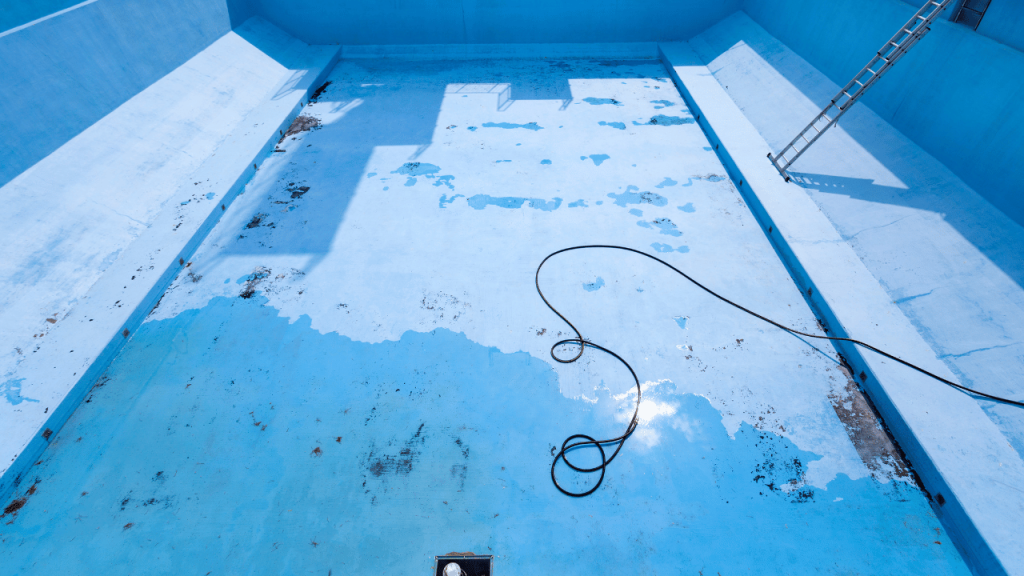
The pool drain is the single most important plumbing check on the list. A failed or cracked drain cover can trap a swimmer underwater. The federal Virginia Graeme Baker Act (VGB) and its successor standard, APSP-16 2017, set the safety bar for all public pools in California. For your home pool, follow the same standards. Your insurance company expects it, and the price difference is small.
How to read your drain cover's compliance label (VGB-2008 vs VGBA-2017)
Every approved drain cover carries a stamp on the top. Look for one of two markings. "VGB-2008" covers meet the original ASME/ANSI A112.19.8-2007 standard. "VGBA-2017" covers meet the newer APSP-16 2017 standard, which added stricter flow and hair-entrapment testing. Both are legal through their service life. The cover also lists a flow rate for floor mount or wall mount installation. Match it to your pump.
Single-drain vs split-drain pools: what the difference means for entrapment risk
Older Ventura pools often have a single main drain at the deep end. Newer pools have split drains spaced at least 36 inches apart. The difference matters. A single blockable drain creates strong suction if the cover fails. Federal code requires a backup safety device on these setups, like a Safety Vacuum Release System (SVRS). Split drains share the load and lower the risk. If you don't know which type your pool has, check the original plans or call a pro.
When to replace the cover yourself vs call a licensed plumber
Cover replacement looks simple. Two or three screws, lift the old cover, drop the new one in. But the cover has to match your sump, your pipe size, and your pump's flow rate. Get any of those wrong and the new cover passes on paper but fails in real use. If your pool is older than 2008, has a single drain, or shows strong suction near the cover, hire a CA C-53 swimming pool contractor.
Irrigation Backflow Test: California Code §603 and the SWRCB Cross-Connection Policy
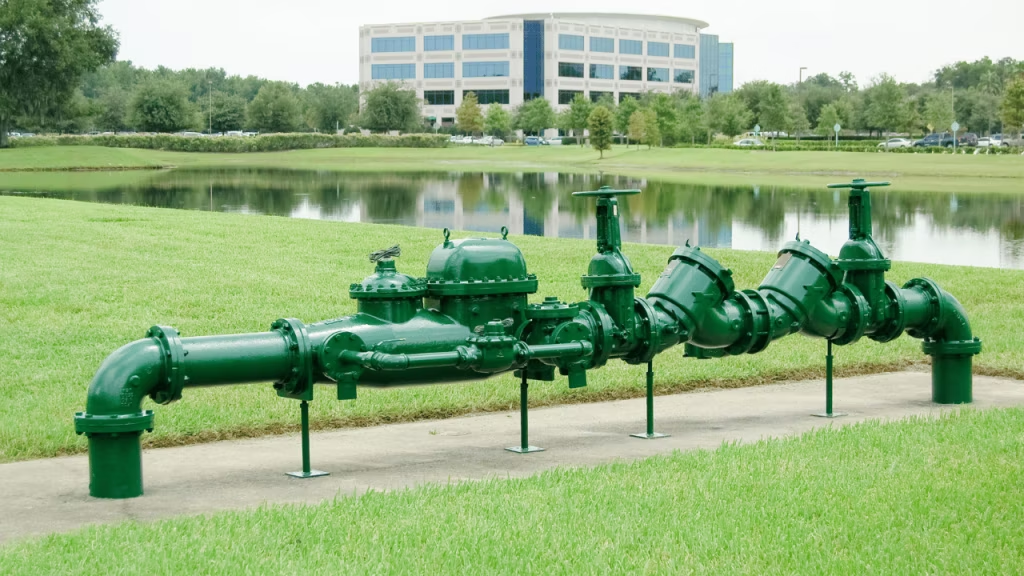
Irrigation backflow is the rule everyone breaks without knowing. California Plumbing Code §603 and the State Water Resources Control Board's Cross-Connection Control Policy Handbook (CCCPH) both require backflow prevention on any irrigation system tied to your drinking water line. The reason is simple. Fertilizer, pet waste, and stagnant pipe water can siphon back into your house if pressure drops. Your annual test is what catches the failure before that happens.
AVB, PVB, DCVA, or RPZ: which device does your Ventura property need?
The four common devices look similar but protect against different things. An AVB (Atmospheric Vacuum Breaker) works on simple hose bibbs with no chemical use. A PVB (Pressure Vacuum Breaker) handles standard irrigation with continuous pressure. A DCVA (Double Check Valve Assembly) covers moderate hazards and can sit below grade. An RPZ (Reduced Pressure Zone) is the top tier. You need one when you inject fertilizer or chemicals into the line. When you're unsure, Ventura Water will tell you which type your address requires.
Annual testing requirement: what Ventura Water and Casitas MWD enforce
California Code of Regulations Title 17 §7583 to 7605 requires annual testing of every field-testable backflow assembly. Ventura Water and Casitas Municipal Water District both keep records. They mail a notice 60 days before your test deadline. Miss it, and you risk a shut-off notice on your water service. The test itself costs $35 to $75. A certified tester does it in 20 minutes.
Common reasons backflow assemblies fail their May test
After 12 months in the Ventura sun, three things usually go wrong. The internal check valves crack from temperature swings. The shut-off ball valves seize up from mineral buildup. The relief valve on an RPZ vents constantly because of grit in the spring. None of these mean you need a new assembly. A certified tester can rebuild most failures with a $40 repair kit on the spot.
Hose Bibb Vacuum Breakers: The $10 Part That Triggers a $500 Fine
This is the cheapest fix on the list and the one most Ventura homes flunk. California Plumbing Code §603.5.7 requires a nonremovable vacuum breaker on every outdoor hose bibb. The part costs around $10 at any hardware store. The fine for skipping it can run $500 per violation. Rental property owners take the biggest hit because building inspectors check this first.
What a code-compliant hose bibb vacuum breaker looks like
A code-compliant unit threads onto your spigot and stays there. The set screw breaks off after install, so it's "nonremovable" by design. The top has a small atmospheric vent. When water flows forward, the vent stays closed. When water tries to siphon back, the vent opens and breaks the suction. Look for an ASSE 1011 stamp on the brass. No stamp means no compliance, regardless of where you bought it.
Rental property exposure: why landlords get hit hardest
Rental property inspections in Ventura County trigger plumbing checks at tenant turnover, code complaint, or annual safety inspection. The hose bibb is one of the first items the inspector looks at. A missing or broken vacuum breaker shows up on the report with a 30-day correction window. Ignore the notice and the fine jumps to $500 and climbs from there. Insurance carriers also flag it during property condition reviews.
Coastal Ventura corrosion: when to replace vs rebuild
Coastal humidity wears out hose bibb vacuum breakers fast. Salt air corrodes the brass threads. The spring inside loses tension after 3 to 5 years near the coast. Inland Ventura properties get 7 to 10 years from the same part. There's no rebuild kit for residential units. When the spring fails or the threads strip, replace the whole device. Five minutes with a pipe wrench is the whole job.
What a Professional Pool & Irrigation Plumbing Inspection Costs in Ventura (2026)
Pool and irrigation plumbing inspections in Ventura run a wide range. The price depends on what you're checking, who you hire, and whether a permit is involved. Below is the honest 2026 range for the most common inspection types. Quotes far below this range usually skip something. Quotes far above usually bundle work you don't need yet.
| Inspection Type | Typical Ventura Price (2026) | What's Included |
| Basic pool plumbing inspection | $150 to $250 | Visual check, pressure test, drain cover inspection |
| Full pool + equipment pad | $250 to $450 | Above plus pump, filter, and heater diagnostics |
| Irrigation backflow test (annual) | $35 to $75 | Certified tester, official report to water district |
| Combined pool + irrigation walkthrough | $300 to $500 | Both systems, written report, photos |
| Pool/drain camera inspection | $250 to $550 | Camera through pool plumbing or main line, video file |
What's included in a standard inspection?
A standard pool and irrigation plumbing inspection runs through five things. The plumber checks pump pressure and flow. They inspect the drain cover and suction line. They test the auto-fill backflow and any irrigation backflow. They walk the property for visible leaks and soft spots. They give you a written report with photos. Anything beyond this list, like a camera run or a backflow rebuild, costs extra.
When is a camera inspection worth adding?
A camera inspection adds $200 to $400 on top of the standard fee. It's worth the cost when you notice slow drains, see roots in the yard near the pool plumbing, or have a pool older than 25 years with original PVC. For a brand-new system with no symptoms, skip the camera. For a recurring problem you keep treating but never solve, the camera is what finds the cause.
Permit and AHJ involvement for repairs
Some repairs trigger a permit from the Authority Having Jurisdiction (AHJ). In Ventura, that means the City of Ventura Building & Safety division or Ventura County, depending on your address. A new backflow assembly install needs a permit. A drain cover swap usually doesn't. Repiping the pool's equipment pad does. Your plumber should pull the permit, not you. If they push the paperwork to you, that's a red flag.
How Elite Rooter Handles Ventura Pre-Summer Plumbing Checks
Pre-summer plumbing checks are easier when you start three weeks out. Most of the 8 items are DIY. A few need a licensed plumber. Elite Rooter handles the pro side of the list. We're a CA C-36 licensed plumbing company headquartered in Ventura at 4893 McGrath Street. Our team runs backflow tests, drain cover compliance checks, irrigation diagnostics, and pool equipment pad inspections. Same-day dispatch in most of Ventura County, with a written report and photos after every call.
Two ways to use us this Memorial Day weekend. Book a full pre-summer inspection on our Ventura plumbing service page for a top-to-bottom run. Or call us if something on your checklist already failed and you need a fix before Friday.
Related guides: Find a Plumber in California.