
ClickCease

Ventura Dry-Season Plumbing Stress: Hard Water, Hose Bibs & Irrigation Leaks

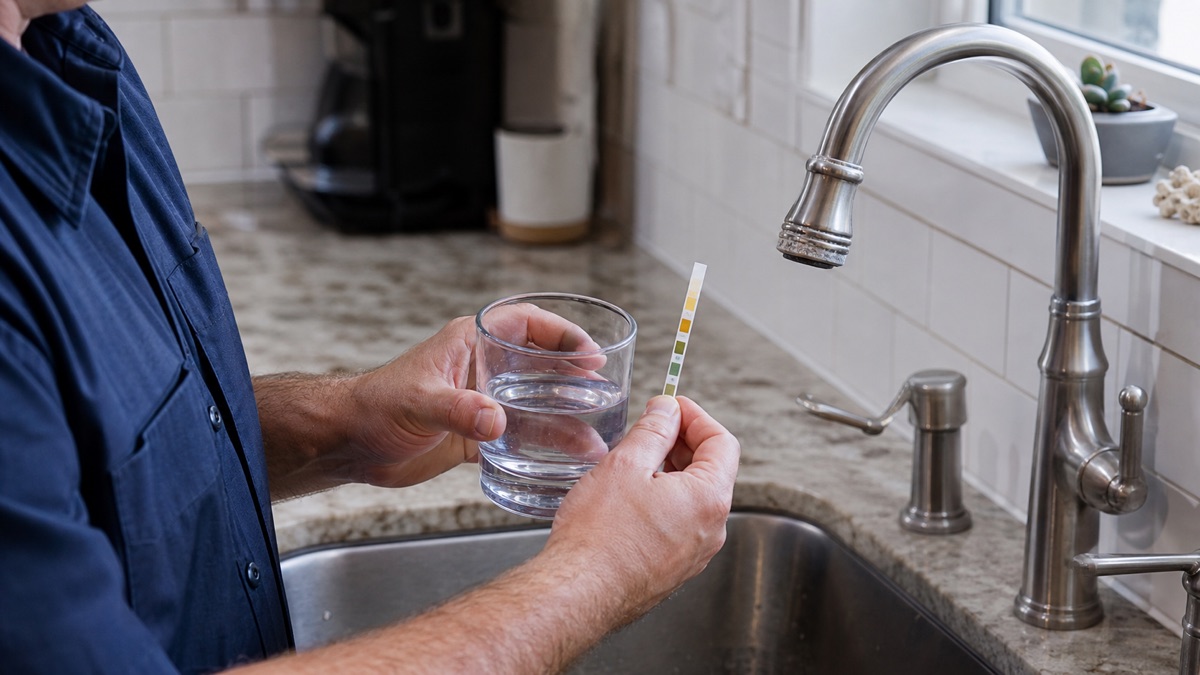
Elite Rooter local plumbing technician in the field

City of Ventura tap water averages 27 grains per gallon (472.7 ppm) more than 2.5 times what the U.S. Geological Survey officially classifies as “very hard.” From May through October, that mineral load combines with daily irrigation, sun-baked hose bibs, and overworked water heaters to create Ventura’s most predictable plumbing failures of the year. Every Ventura neighborhood from Pierpont and Downtown to East Ventura, Saticoy, Montalvo, and Ondulando sees the same pattern by August.

Here is what most homeowners do not see coming. The Water Quality Association classifies 0 to 3.5 grains per gallon as “soft” Ventura runs about 8 times higher. That mineral load chews through hose bib seals, clogs irrigation drip lines, and quietly wears out water heaters every dry season.

In this guide, we cover the real Ventura plumbing hard water problems, three quick tests you can run yourself, the five damage signs to watch for, neighborhood-by-neighborhood breakdowns, and what your options actually look like before you call a Ventura plumber or shop for a water softener.

What Does Dry Season Actually Do to Ventura’s Plumbing System?

Ventura’s dry season runs from May through October. During those months, three things hit your home’s plumbing at the same time: water use goes up, heat stresses pipes and fixtures, and Ventura’s very hard water leaves more mineral buildup behind because flow rates drop.

That combination creates three predictable failure points every dry season:

  1. Water heater scale buildup: Hard water minerals settle inside the tank and around heating elements, dropping efficiency and shortening the unit’s life
  2. Hose bib seal failure: Minerals stiffen the rubber washers and packing inside the bib, leading to drips, weeping, or full failure
  3. Irrigation leaks: Sun-baked drip lines crack, mineral-clogged emitters burst, and underground laterals develop slow leaks at fittings

Where Does Ventura’s Hard Water Come From?

Ventura’s hard water is not a fluke. It comes from the geology and the water sources the region depends on. The City of Ventura draws its drinking water from three places: Lake Casitas, the Ventura River, and local groundwater basins.

According to the City of Ventura’s water quality reports, average hardness sits around 27.6 grains per gallon (472.7 ppm). The U.S. Geological Survey classifies anything above 180 ppm as “very hard,” which puts Ventura more than 2.5 times above the cutoff.

Three things change between the rainy season and the dry months:

  1. Surface sources draw down reservoirs like Lake Casitas evaporate, concentrating minerals in what is left
  2. Providers shift to harder backup sources local groundwater usually carries more calcium and magnesium than surface water
  3. Lower flow rates inside your home let minerals settle faster slow-running fixtures and water heaters build scale much faster in summer than in winter

Hardness Levels by Ventura County Zone

City / ZonePrimary Water SourceApproximate Hardness
City of VenturaLake Casitas, Ventura River, groundwater27 gpg average
Pierpont / Ventura Keys (93001)City of Ventura system26–28 gpg
Midtown / Downtown Ventura (93001)City of Ventura system27–28 gpg
East Ventura / Saticoy (93004)Mixed City + groundwater25–30 gpg
Montalvo / Ondulando (93003)City of Ventura system26–28 gpg
OxnardLocal groundwater17–30 gpg
Port HuenemeMixed sources18–24 gpg
CamarilloGroundwater + State Water Project12–22 gpg
OjaiCasitas MWD (Lake Casitas)15–25 gpg
Santa PaulaLocal wells and surface water18–28 gpg
Thousand OaksState Water Project + local10–18 gpg

How Does Hard Water Affect Different Ventura Neighborhoods?

Hard water hits every Ventura neighborhood, but the failure patterns differ by location, home age, and proximity to water sources.

Downtown Ventura & Ventura Avenue District (93001)

Many homes here are pre-1950 with original galvanized or early copper plumbing both materials trap mineral scale faster than modern PEX or copper. The Downtown / Ventura Avenue corridor sees the highest rate of hose bib failures and water heater sediment issues because of pipe age combined with City of Ventura’s hardest water levels.

Pierpont, Ventura Keys & Ventura Pier Area (93001)

Coastal salt air accelerates corrosion on hose bibs, vacuum breakers, and outdoor metal fittings. Combined with 27 gpg hard water, Pierpont homes see hose bib failures every 18–24 months on average roughly twice the inland rate. Properties near Ventura Harbor and the Pierpont Lanes face the worst combined corrosion + scale damage.

Midtown Ventura, Ondulando & Hillside Homes

These mid-century neighborhoods built between 1950 and 1980 typically have copper supply lines that have been collecting scale for decades. Homes uphill toward Arroyo Verde and Ondulando often face additional pressure regulation issues because the city water system has to push water up the slope and pressure changes accelerate scale deposition.

East Ventura & Saticoy (93003, 93004)

Newer construction (mostly 1980s–2000s) with better materials, but East Ventura’s mixed water supply partly City of Ventura, partly local groundwater can swing higher on hardness. Homes near Pacific View Mall and along Telephone Road see particularly heavy irrigation system load because of larger lot sizes.

Montalvo (93003)

Older neighborhood with mature trees that complicates underground irrigation. Root intrusion combined with hard water mineral buildup creates compound failures — leaks that look like simple irrigation issues are often sewer lateral cracks that need camera inspection to diagnose properly.

College Park (Near Ventura College)

A mix of original 1960s–1970s homes and newer remodels. College Park sees seasonal water-use spikes when students return, stressing already-scaled water heaters. Homes near Ventura College along Loma Vista Road frequently call us between August and October for water heater failures.

Surrounding Cities Oxnard, Camarillo, Ojai & Santa Paula

CityHard Water ProfileMost Common Dry-Season Issue
OxnardHigh variance (17–30 gpg)Water heater scale, hose bibs
Port HuenemeModerate (18–24 gpg)Coastal corrosion + scale combo
CamarilloLower (12–22 gpg)Irrigation system clogging
OjaiVariable (15–25 gpg)Septic interaction + scale
Santa PaulaHigh (18–28 gpg)Well water + agricultural runoff
Thousand OaksLowest (10–18 gpg)Minimal scale; pressure issues dominate

What Are the 5 Signs Hard Water Has Already Hurt Your Ventura Plumbing?

Hard water does not just leave spots on dishes. Over time, it damages real plumbing parts and costs you real money. Walk through your Ventura home with this list, check each item, and count how many you spot. Three or more, and your plumbing is already showing wear.

1. White, Chalky Scale on Faucets, Showerheads, and Glassware

This is calcium carbonate buildup. If you can scratch it off with your fingernail or a vinegar-soaked cloth removes it, that is hard water leaving its mark every time you use the tap. Most Ventura homes show this within 6 months of moving in.

2. Soap and Shampoo That Will Not Lather

Ventura’s hard water minerals react with soap to form a sticky film instead of suds. You end up using more product, your skin feels coated after a shower, and your laundry comes out stiff. This is the most underappreciated daily cost of hard water most Ventura families spend an extra $200 to $400 per year on detergents, soaps, and conditioners just to compensate.

3. Slower Flow at Bathroom Faucets and Showerheads

Mineral scale narrows aerators (the small mesh screen at the tip of a faucet) and showerhead nozzles before it reaches the rest of the house. Unscrew the aerator on a faucet that runs slow. If you see white crust inside, hard water is the cause. This is the cheapest fix on the list soak in vinegar for 30 minutes and the flow returns to normal.

4. A Water Heater That Takes Longer or Makes Noise

Sediment from hard water settles at the bottom of the tank, forcing the heating element to work through a layer of mineral buildup. Popping or rumbling sounds during heating, longer wait times for hot water, and rising energy bills all point to scale damage. Most Ventura water heater failures we service from May through October come down to scale damage that was preventable with annual flushing.

5. Stiff Shutoff Valves and Weeping Hose Bibs

Calcium deposits build up inside valve stems, freezing handles in place and damaging seals. The shutoff under your kitchen sink that will not turn, or the hose bib that drips even when closed, usually has years of mineral buildup behind it.

Why Do Hose Bibs Fail Faster During Ventura’s Dry Season?

Most hose bib advice online is about winter freeze damage. That is a Midwest and Northeast problem. Ventura hose bibs fail for different reasons, and the dry season is when most of them give out.

From May through October, your hose bib runs almost daily for irrigation, car washing, and plant watering. Every time you turn the handle, hard water minerals leave a thin film inside the valve. Heat from the sun dries out the rubber packing washers. The vacuum breaker (a device that prevents contaminated water from flowing back into your home’s supply) on top of the bib slowly clogs with calcium. After two or three peak seasons, something fails.

What Are the Warning Signs of a Failing Hose Bib?

  • The handle gets harder to turn mineral buildup is binding the valve stem
  • Water keeps weeping from the spout after you close it the packing washer or seat seal has failed
  • Water sprays from the top of the bib, not just the spout your vacuum breaker has failed
  • Pressure drops noticeably when the bib is on the internal opening is mineral-clogged
  • White crust shows up around the threads where you connect your hose calcium leaving an outside trace of what is happening inside

Which Hose Bib Issues Can You Fix Yourself?

  • A weeping spout usually means a worn packing washer (cheap part, basic tools)
  • You can swap a leaky vacuum breaker on its own without touching the bib body
  • A stiff handle sometimes loosens after you tighten or replace the packing nut

When the bib body itself is corroded, the wall connection is leaking, or you have multiple bibs failing at once, call a Ventura plumber a full hose bib replacement runs $150 to $350 depending on access.

How Do Irrigation Leaks Drain Money From Ventura Yards?

Irrigation leaks are sneaky. They run underground, they do not show up indoors, and they waste water month after month before anyone notices.

The EPA WaterSense program reports that an irrigation leak about the thickness of a dime can waste 6,300 gallons per month. In Ventura’s dry season, your system runs longer and leaks waste more plus Ventura County water-waste rules turn a slow leak into a compliance issue.

Where Do Ventura Irrigation Leaks Usually Start?

  1. The valve manifold: Calcium buildup makes solenoid valves stick partially open
  2. Drip emitters and bubblers: UV cracks the plastic and hard water clogs the heads
  3. Lateral pipe fittings: Soil shifting and root pressure pull glued joints apart
  4. Sprinkler heads: A stepped-on head or stripped riser leaks at every cycle
  5. The backflow assembly: Hard water minerals quietly damage assemblies you cannot see

How Do You Find an Irrigation Leak Without Digging Up the Yard?

  1. Turn off everything inside the house. Check your water meter. A moving dial means an outdoor leak.
  2. Run each irrigation zone for 5 minutes one at a time. Watch for misting around heads and wet spots far from any sprinkler.
  3. Look for green patches when the rest of your yard is dry that is a slow leak feeding one spot.
  4. Walk around your valve manifold and backflow assembly. Soggy ground is the giveaway.
  5. If you still cannot find it, Ventura leak detection service uses listening equipment to pinpoint underground breaks without trenching.

What Are Ventura’s Water-Waste Rules?

Ventura County has permanent water conservation rules that stay in effect year-round. A first violation gets a written warning. A second violation within twelve months can cost $100 or more.

A running irrigation leak counts as water waste. The meter does not lie, even if you did not know about the leak. Fixing leaks fast keeps you compliant, drops your water bill, and protects your landscape from oversaturation.

What Water Softener Options Work Best for Ventura Homes?

Three options work for Ventura’s hard water. Each one solves a different part of the problem, and each comes with a real trade-off. Pick the one that matches your goals and your budget — not the one a salesperson points at.

Salt-Based Ion-Exchange Softeners

The classic water softener. Sodium beads swap out calcium and magnesium as water passes through the tank, leaving true soft water at every tap.

For Ventura’s 27+ grain-per-gallon water, salt-based is the most effective option. The catch: the system discharges salty wastewater when it regenerates, and California regulates that discharge. Some cities restrict residential salt softeners outright.

Salt-Free Conditioners (TAC Systems)

Salt-free systems use template-assisted crystallization (TAC) a technology that changes how minerals behave instead of removing them. Calcium and magnesium stay in the water but form tiny crystals that do not bond to pipes or fixtures.

You get scale prevention without the brine discharge. The catch: your water will not feel “soft.” Soap still will not lather like it does with a true softener.

Whole-House vs. Point-of-Use Filtration

Whole-house filtration combines a softener or conditioner with sediment and carbon filters. One system protects every fixture and appliance.

Point-of-use (POU) filters protect specific fixtures only. POU is cheaper but covers less of your plumbing.

OptionBest ForTrade-Off
Salt-based softenerTrue soft water in very hard zonesBrine discharge, CA restrictions
Salt-free conditionerScale prevention without saltWater does not feel “soft”
Whole-house filtrationFull home protectionHigher upfront cost
Point-of-use filterProtecting one tap or applianceDoes not help the rest of the house

What Should Ventura Homeowners Know Before Installing a Softener?

A water softener is a real plumbing modification — not just an appliance you plug in. Before you buy one for your Ventura home, three things matter: California’s discharge rules, your local permit path, and getting the system sized correctly.

California Brine Discharge Rules (AB 1366)

California has been tightening rules on residential salt-based softeners for years. Under state law (AB 1366, 2009), local water and sewer agencies can restrict or ban salt softeners that interfere with recycled water programs. Several California cities have already done so.

Check directly with your water provider and city before you buy a salt-based system. The rules vary by jurisdiction. A salt-free conditioner avoids the discharge issue entirely.

Ventura County Permit and Install Requirements

Most Ventura County jurisdictions require a plumbing permit for a new softener install. The permit process typically covers:

  • Proper backflow prevention where the softener ties into your main line
  • Discharge routed to the sanitary sewer — never to a storm drain or septic system
  • A licensed plumber doing the install (DIY installs often fail inspection)

Homes on septic systems should be especially careful. Brine discharge damages septic biology and costs thousands in remediation. A salt-free conditioner is usually the safer call.

If your home sits in an HOA community in Camarillo, Ojai, or elsewhere in the county, check the CC&Rs before you install an outdoor tank. Some HOAs prohibit them.

Why Should a Ventura Plumber Size Your System?

Equipment sellers earn a commission on whichever softener they sell you. They have a built-in reason to upsell.

A licensed Ventura plumber sizes a softener using three inputs: your actual water hardness (tested at your address), your household water use, and the grain capacity that matches both. Wrong-size systems waste salt and water, or fail to keep up.

A plumber also handles the permit, the backflow protection, and the install. When something goes wrong five years from now, you have one number to call — verifiable through the California Contractors State License Board.

When Should You Call a Ventura Plumber (Today vs. This Week)?

Hard water problems escalate at different speeds. Here is the rule of thumb for Ventura dry-season plumbing:

Call a Plumber Today If You See:

  • Water heater leaking, popping loudly, or producing rust-colored water same-day emergency call
  • A hose bib that will not shut off water is running 24/7, racking up your bill
  • A visible green spot in the yard expanding daily irrigation leak in active mode
  • Multiple fixtures dropping pressure simultaneously possible main supply leak
  • Water meter spinning with all fixtures off confirmed hidden leak

Schedule This Week If You Notice:

  • Aerator clogging on more than one faucet
  • Water heater taking noticeably longer to deliver hot water
  • A weeping hose bib that has not progressed to a steady drip
  • Soap not lathering as it should
  • Energy bills creeping up with no usage change

Annual Maintenance Items:

  • Water heater flush (recommended every 6 months in Ventura’s 27+ gpg water)
  • Aerator cleaning at every fixture
  • Hose bib packing washer inspection
  • Irrigation system valve and emitter check before May
  • Hardness test if it has been 2+ years since the last one

Where Does Elite Rooter Service in the Ventura Area?

Elite Rooter Ventura operates throughout Ventura County, with dispatch coverage that includes:

City of Ventura neighborhoods: Downtown, Midtown, East Ventura, Pierpont, Ventura Keys, Saticoy, Montalvo, Ondulando, College Park, Hillside, Ventura Avenue district, Arroyo Verde

Surrounding cities: Oxnard, Port Hueneme, Camarillo, Ojai, Santa Paula, Thousand Oaks, Newbury Park, Fillmore, Moorpark, Westlake Village

ZIP codes served: 93001, 93003, 93004 (Ventura) — 93030, 93033, 93035, 93036 (Oxnard) — 93010, 93012 (Camarillo) — 93023 (Ojai) — 93060 (Santa Paula) — 93041 (Port Hueneme) — 93063 (Simi Valley)

Whether you are near Pacific View Mall, Ventura College, Community Memorial Hospital, the Ventura Pier, or Ventura Harbor we maintain consistent response times across the service area.

How Does Elite Rooter Help Ventura Homeowners?

Elite Rooter helps Ventura homeowners across the area handle exactly the dry-season problems this guide covers — from hard water testing and water softener installation to hose bib repair, irrigation leak detection, and water heater service.

Our licensed Ventura plumbers know the local water sources, the County’s permit rules, and how Ventura’s 27+ grain water actually wears out plumbing.

We provide written diagnostics and honest recommendations. If a salt-free conditioner is the better fit for your septic system, we will tell you. If a quick packing washer swap fixes your hose bib, we will not sell you a full replacement.

The dry season runs from May through October. The right time to test your water and tighten up your outdoor plumbing is before the bills and the leaks add up.

Frequently Asked Questions About Ventura Hard Water and Dry-Season Plumbing

How hard is Ventura’s water exactly?

City of Ventura tap water averages 27.6 grains per gallon (472.7 ppm), per the City’s published water quality reports. The U.S. Geological Survey classifies anything above 180 ppm as “very hard” — Ventura runs 2.5 times above that threshold. The Water Quality Association defines “soft” water as 0–3.5 grains per gallon, meaning Ventura’s water is approximately 8 times harder than soft.

Why is Ventura’s water harder in dry season (May–October)?

Three factors converge. Surface reservoirs like Lake Casitas draw down and concentrate minerals in remaining water. Local providers shift to harder groundwater backup sources as surface supply drops. And lower in-home flow rates during summer let minerals settle and accumulate inside fixtures and water heaters faster than in winter.

H3: Which Ventura neighborhoods have the worst hard water damage?

Downtown Ventura and the Ventura Avenue district (93001) see the worst combined damage because of pre-1950 plumbing combined with the city’s hardest water. Pierpont and Ventura Keys face accelerated hose bib failure due to salt air + hard water combination. East Ventura and Saticoy (93004) see the most irrigation system damage because of larger lots and mixed water sources.

How much does a water softener cost in Ventura?

Salt-based ion-exchange softeners cost $1,500 to $3,500 installed. Salt-free conditioners (TAC systems) run $1,000 to $2,500 installed. Whole-house filtration with softening adds $500 to $1,500 to the system cost. Most Ventura homeowners spend $2,000 to $3,000 for a properly sized system with professional installation and permit fees included.

Salt-based softeners are legal in most Ventura County jurisdictions but must comply with California AB 1366 discharge regulations. Some California cities have restricted residential salt softeners outright to protect recycled water programs. Verify with your specific city or water provider before purchasing. Salt-free conditioners avoid this issue entirely.

Do I need a permit to install a water softener in Ventura?

Yes. Most Ventura County jurisdictions require a plumbing permit for water softener installation. The permit covers proper backflow prevention, sanitary sewer discharge routing, and licensed plumber requirements. DIY installations frequently fail inspection. A licensed Ventura plumber typically handles the permit as part of the installation cost.

How often should I flush my water heater in Ventura?

Every 6 months for Ventura homes — twice the national recommendation because of the 27 gpg water hardness. Sediment buildup is faster here than in soft-water markets, and proactive flushing extends water heater lifespan by 2 to 4 years on average. Annual flushing is the minimum; semi-annual is the standard for Ventura.

Why do hose bibs fail more often in Ventura than other places?

Three reasons. Hard water leaves calcium deposits inside the valve stem and packing washers. UV exposure during long dry-season usage dries out rubber components. Pierpont and other coastal neighborhoods add salt air corrosion to the mix. Most Ventura hose bibs last 5–8 years vs. 15+ years in soft-water inland markets.

How can I detect an irrigation leak before my water bill arrives?

Turn off all indoor fixtures and watch your water meter for 15 minutes any movement indicates an outdoor leak. Run each irrigation zone for 5 minutes and look for misting at heads or wet spots far from sprinklers. Check for green patches when the rest of the yard is dry these mark slow underground leaks. Professional leak detection uses acoustic equipment to pinpoint exact locations without digging.

Does Ventura have water restrictions for irrigation?

Yes. Ventura County water conservation rules remain in effect year-round. A first violation typically results in a warning. A second violation within 12 months can cost $100 or more. A running irrigation leak counts as water waste regardless of intent — the meter is the deciding factor, not whether you knew about the leak.

Is a salt-free water softener as effective as a salt-based one?

It depends on your goal. For preventing scale buildup on pipes, water heaters, and fixtures, salt-free TAC systems work effectively. For producing water that feels “soft”with lathering soap, softer skin, and reduced detergent use only salt-based ion-exchange systems deliver that result. Most Ventura septic-system homes choose salt-free; homes on city sewer with non-restricted areas often choose salt-based for the full soft-water experience.

Sources and methodology
Picture of Connor Jimenez

Connor Jimenez

Connor is the Operations Manager at Elite Rooter, bringing over a decade of dedication and hands-on experience to the team. Starting out in an entry-level role, Connor worked his way up through persistence, skill, and a commitment to excellence that embodies Elite Rooter’s values. His deep knowledge of plumbing operations and team leadership has made him an indispensable part of the company’s success and growth over the years.

About Us

At Elite Rooter, we provide reliable plumbing and drain repair services across the USA. Our experienced, licensed team is committed to fast, affordable solutions and exceptional customer service. Whether it’s a clogged drain or a major repair, you can count on us to get the job done right.

Contact Us

Need plumbing help fast? Our team is ready to assist you with any plumbing or drain emergency. Reach out today and get the reliable service you deserve.