
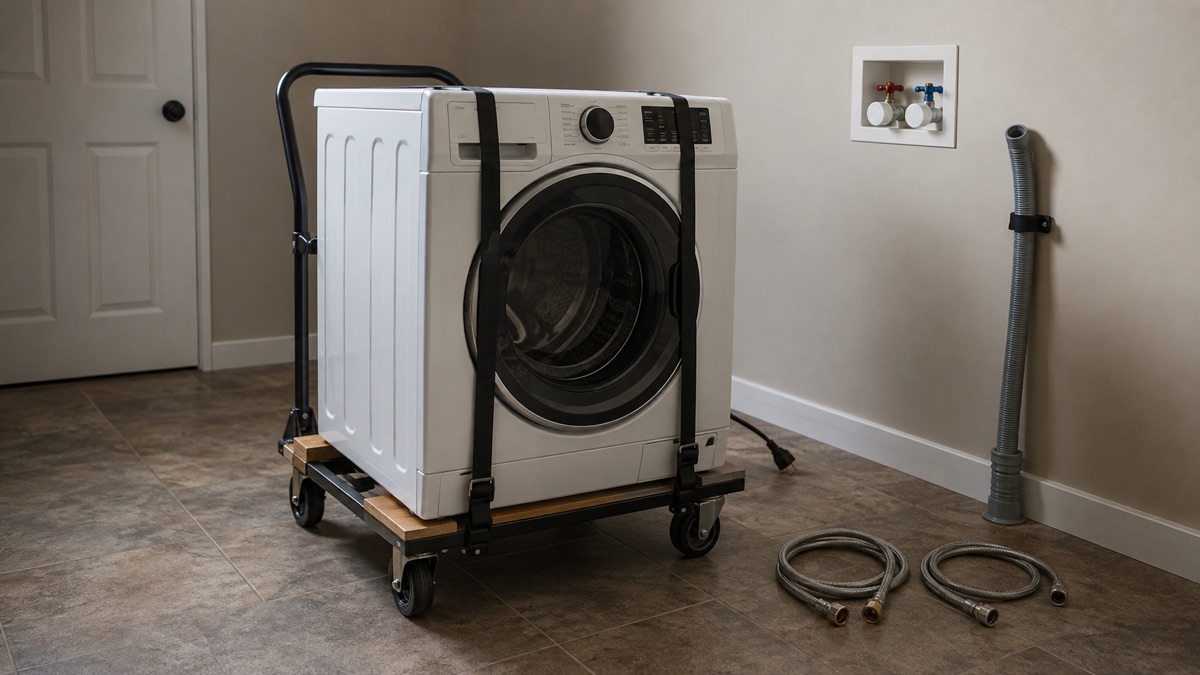
Step 1: Unplug, Disconnect, and Drain Everything
Before touching anything, shut off the water supply valves behind your washer. Unplug the appliances and carefully disconnect the hot and cold water hoses. Use a bucket to drain any remaining water from the hoses and the washer drum even a small amount can leak onto the floor and cause damage.
Don't forget the drain hose remove it gently and let any trapped water flow into your bucket. Place a towel underneath to catch drips.
For dryers, unplug the unit. If it's gas-powered, call a licensed plumber or gas fitter to safely disconnect the gas line. Never try to handle gas connections on your own even a minor leak can be dangerous.
Step 2: Prepare the Washer for Safe Transport
Once drained, slightly tilt the washer forward to release any leftover water from the pump. This prevents future mold or mildew growth. If your model has a lint trap or filter, clean it now to keep your plumbing system clear of clogs when reconnected.
Reinstall the washer's shipping bolts if available, or tightly wrap the appliance in moving blankets to stabilize the drum. Secure the lid with tape to prevent it from opening mid-move.
Step 3: Prepare the Dryer and Vent Line
Detach the dryer vent hose from the wall and clean out any lint or dust buildup, this step improves ventilation and reduces fire risk. Roll up the vent hose and tape it to the back of the dryer for easy reconnection later.
Wipe down the exterior and wrap the dryer in a moving blanket to prevent scratches.
Step 4: Use Proper Lifting Techniques
Washers and dryers can weigh up to 200 pounds, so never lift them alone. Use a moving dolly and secure each appliance with straps to prevent slipping. Avoid dragging, as this can damage water supply pipes or flooring near plumbing connections.
Step 5: Loading and Unloading the Truck
When loading the washer and dryer onto a truck, place them upright and near the front to prevent sliding. Use straps to anchor them to the wall of the truck. Never stack heavy boxes on top.
If your move includes other large appliances (like a refrigerator or dishwasher), try to keep them together, it makes unloading and setup easier later.
Step 6: Reconnecting at the New Home
Once in place, make sure the floor is level and the area is dry. Connect the water supply hoses, matching hot and cold correctly, and tighten them with pliers just enough to prevent leaks (don't over-tighten).
Turn the water valves back on slowly and inspect for any drips. Plug the washer in and run a short rinse cycle to ensure it fills and drains correctly.
For the dryer, reconnect the vent hose securely to the wall and check for airflow blockages. If it's a gas dryer, hire a licensed plumber or technician to safely reattach the gas line and test for leaks.
Step 7: Post-Move Plumbing Maintenance
After installation, run a quick inspection of the surrounding area. Look for any damp spots near the valves, drain, or hose connections. A small drip can quickly turn into a major leak if left unchecked.
Clean your washer drum using a mix of hot water and white vinegar to remove buildup, and vacuum around the dryer vent for better airflow. Regular maintenance keeps your plumbing lines clear and your appliances efficient.
Why It's Smart to Call Plumbing Professionals
Moving a washer and dryer is about heavy lifting, it's about protecting your home's plumbing system. Poorly connected hoses or loose drain fittings can lead to leaks, water damage, or even mold growth.
Professional plumbers and appliance movers have the right tools, fittings, and experience to safely disconnect, transport, and reinstall your machines without damaging water lines or gas connections.
The Bottom Line
A smooth washer and dryer move starts with proper plumbing care. Always shut off water valves, drain lines completely, and reconnect fittings carefully to prevent leaks. If you're not confident in handling plumbing hookups yourself, call a licensed plumber or moving professional.