
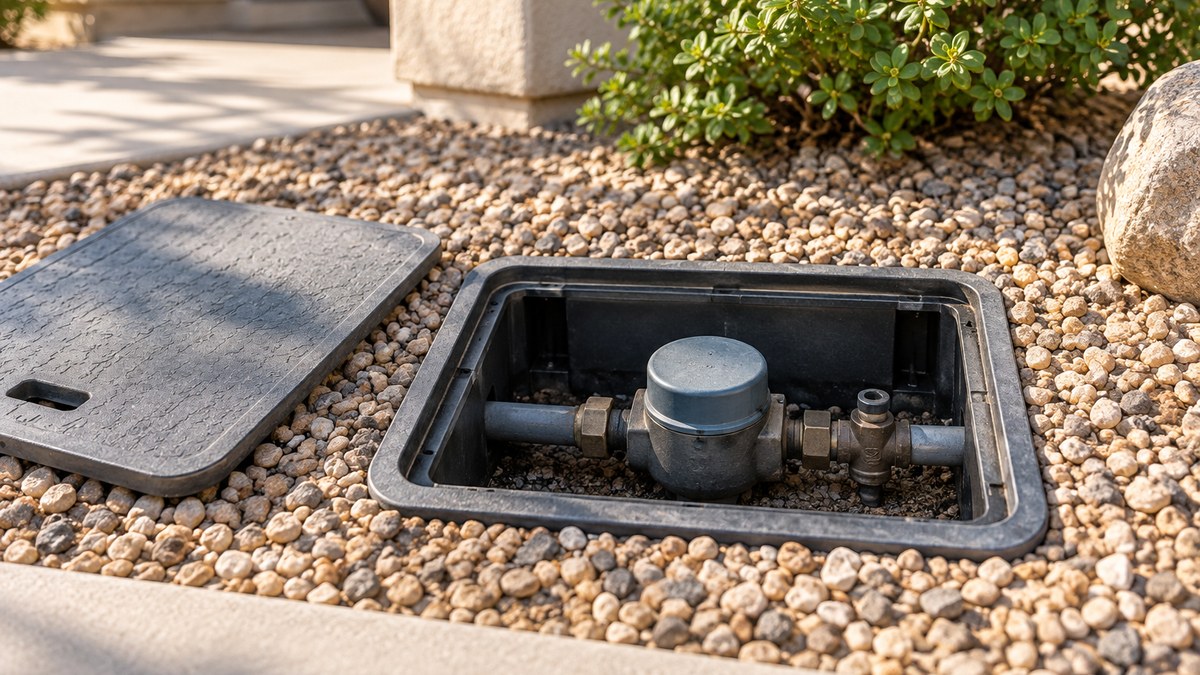
This sequence applies to homes on a metered water supply. If you share a meter, rent your home or cannot safely access the meter, ask your property manager or water provider to help with the first check.
Start with a no-use meter check
Choose a quiet period when nobody needs water. Stop indoor and outdoor use, then photograph the meter reading and note the time. Keep the meter supply on. The EPA recommends comparing readings over two hours with no water use; an increase points to a probable leak.
Check automatic users before interpreting that result. An icemaker, pool autofill or water softener can draw water even when every faucet is closed. AMWUA's meter-reading guide explains these hidden uses and the difference between a meter's cumulative reading and its flow-rate display. Record the units shown on your own meter.
A still meter during one short test does not explain a recurring wet patch. Repeat the check when the problem appears, and note whether it follows an irrigation cycle. If the display is unreadable or the box is locked, contact the water provider rather than opening or forcing equipment.
Rule out the easier leaks first
Look at exposed fittings, under sinks and around outdoor faucets. Test each toilet separately: add a few drops of food coloring to the tank, wait 10 minutes without flushing, and look for color in the bowl. The EPA advises flushing immediately after the test to avoid staining. Color transfer confirms a tank-to-bowl leak; repairing it may explain the unexplained meter use.
Walk the yard before watering and again while irrigation runs. The AMWUA outdoor inspection guide makes this distinction because some irrigation leaks appear only during operation. Note a broken sprinkler, persistent pooling or an unusually wet strip along a supply route. Take photos from firm ground and record when each symptom occurs.
A higher water bill or low water pressure deserves investigation, but neither identifies the broken pipe. Compare billed water volume as well as the amount due. If you also see discolored water, report that change to your water provider instead of treating color as proof of an underground leak.
Use the house shutoff to narrow the search
If you know the customer-side house shutoff and it turns freely by hand, you can check which side of it still draws water. Leave stiff, corroded or unfamiliar valves to a plumber. Leave the meter valve alone: this check needs the line from the meter to stay pressurized.
Close the house shutoff, then open a cold faucet briefly to confirm the flow stops; close the faucet afterward. If water keeps flowing, the shutoff may not seal, so the test cannot isolate the leak. Portland Water Bureau describes this valve check before interpreting the meter.
With a working house shutoff closed, continued meter movement points toward the piping before that valve or a branch that bypasses it. Irrigation and pool supplies may branch off earlier. AMWUA's isolation guide shows why those connections matter. If you cannot identify them, stop here and give the plumber your meter readings.
Check fixtures and automatic water users. Then test a known, working house shutoff.
Investigate plumbing supplied through that valve. This does not identify a particular fixture or pipe.
Investigate the line before the house valve and any branches that bypass it.
The result is inconclusive. Ask a plumber to isolate the system.
Meter supply stays on during this check. Guidance: Portland Water Bureau and AMWUA. Checked September 7, 2026.
After the check, return the customer-side valves you operated to their original positions unless your plumber or water provider directs otherwise. Record which valve changed the meter result. More than one leak can exist, so a reduced flow rate is useful evidence even if it does not fall to zero.
Wet soil helps with the search, but does not confirm the source
EBMUD notes that outdoor water can come from leaks, overwatering or natural seepage. A patch that stays wet after the surrounding ground dries is worth documenting, but its location cannot establish which pipe needs repair. Tell the plumber where water first appeared and whether it changes when irrigation runs.
For water collecting at the meter or flowing from the street, contact your water provider. Ask who owns the affected section and who can shut it off. Responsibility boundaries vary by provider; do not assume every buried pipe on your property belongs to the same system. If water is rising quickly or ground is sinking, stay clear and request help promptly.
How professionals locate an underground leak
Listening and acoustic correlation
Acoustic equipment listens for the sound of escaping water. A correlator compares signals at two pipe access points to estimate the leak position. SebaKMT explains that pipe material, diameter and sound quality affect the result. Faint noise or interfering sound can make location harder.
Ask how the proposed method fits your pipe and which areas the technician expects to access. Before approving excavation, ask for the marked search area, the evidence behind it and what uncertainty remains. Detection and repair may be separate parts of the estimate.
Thermal imaging and other supporting checks
Thermal imaging shows surface temperature patterns. It can help investigate moisture around a building or a suspected hot-water leak, but it does not see a broken pipe through soil or concrete. FLIR recommends confirming suspected moisture with a moisture meter, because a temperature difference can have other causes.
A drain-camera inspection looks inside accessible drainage piping. It answers a different question from finding a pressurized water-supply leak. Describe whether your problem involves unexplained water use, a wet area or a drain backup when requesting service; that helps the team arrange an appropriate inspection.
Tracer gas for a prepared pipe
A specialist may use tracer gas and a sensor to check for escaping gas after preparing and isolating the pipe. The Sewerin VARIOTEC 460 Tracergas manual describes a professional method that requires water pipes to be emptied for inspection. Ask what preparation the proposed method needs, whether your water service must be interrupted and how the pipe will be returned to service afterward.
Before digging or authorizing a repair
Contact 811 before any digging, follow the timing on your ticket and confirm that all utilities have responded. Utility marks show approximate line locations. Ask the locator and contractor which privately owned lines need separate locating; a utility marking is not a leak diagnosis.
Have the contractor explain what the repair estimate includes: access and excavation, the pipe work, any required permits, and restoration of soil or paving. Ask how they will check for continuing water loss after the repair. Keep the detection findings, before-and-after meter readings and invoice together.
When to arrange leak detection
Arrange water leak detection when the meter continues recording unexplained use, a wet area keeps returning, or the shutoff check points to buried piping. If the affected pipe needs work, the next step is a water-line repair assessment.
Bring the meter photos, test times, valve result and recent water-use history to the appointment. Include whether the problem occurs continuously or only when irrigation runs. Contact Elite Rooter with those observations so the team can discuss the next inspection step.
For ongoing monitoring after repairs, the EPA distinguishes moisture sensors from flow monitors. A moisture sensor alerts to water where it sits; a flow monitor tracks water use. Ask which part of your plumbing a proposed device covers, especially if the supply branches before it.
Underground leak detection questions
Can an underground leak happen without a wet spot?
A buried supply leak may first show up as unexplained metered use. A dry-looking yard does not resolve that reading. After checking fixtures and automatic water users, arrange an inspection if the loss remains unexplained.
Does turning off the sprinkler controller rule out an irrigation leak?
Turning off the controller stops scheduled watering, but it does not isolate the irrigation supply pipe. A leak upstream of an irrigation valve can continue. A plumber or irrigation professional can check the appropriate supply shutoff.
Can a thermal camera find the exact break?
A thermal camera shows surface temperature patterns. Those patterns can guide further checks, but a moisture reading and plumbing investigation are needed before deciding where to open a wall, floor or ground surface.
What should I ask before booking leak detection?
Ask whether the visit includes locating a suspected water-supply leak, what access the technician needs, how findings will be documented and whether repairs require a separate estimate. Share your meter and shutoff test results.
Related plumbing guides: high water bills, water-line repair and tree roots in sewer lines.
Sources and methodology
- EPA WaterSense: checking for leaks
- Portland Water Bureau: meter and shutoff checks
- AMWUA: reading a water meter
- AMWUA: isolating a continuous leak
- AMWUA: outdoor visual leak inspection
- EBMUD: identifying the source of outdoor water
- SebaKMT: acoustic correlation and its limits
- FLIR: thermal imaging and moisture confirmation
- 811: steps before digging
- EPA WaterSense: leak detection and flow monitoring
- Sewerin: professional tracer-gas inspection requirements