Gross stuff coming out of your drain is one of the most common plumbing surprises homeowners hit, and almost none of it is what you think. Most of it isn't random dirt or generic sludge. It's a mix of bacteria, hair, soap residue, mineral deposits, and sometimes actual living organisms that found their way into your pipes.
What's Coming Out of Your Drain and What to Do?
Gross stuff coming out of your drain falls into 8 common categories: hair ball chunks, black sludge or biofilm, drain worms or larvae, pink slime, orange iron bacteria, gray water backup, food debris chunks, and white mineral deposits. Biofilm causes most of them. This sticky bacterial coating grows 1 mm thick inside drains every 90 days and reduces pipe diameter by 8 to 12%. A handful are serious. Gray water backup and earthworms in your drain mean call a plumber today. The rest are usually DIY fixes.
Why Gross Stuff Comes Out of Drains in the First Place
Every drain in your house is a humid, dark, food-rich environment. Bacteria love it. Within days of installation, microbes start coating the inside of your pipes with a layer called biofilm, a sticky matrix of bacterial cells, dead skin, soap residue, hair, food particles, and grease. Over time, the biofilm grows thick enough to break off in chunks, sometimes pushing back up the drain when water flow disturbs it.
The growth rate is faster than most people realize. Research on residential drain plumbing shows biofilm can grow up to 1 mm thick in 90 days. That same buildup reduces the inside diameter of your pipe by 8 to 12% and creates the perfect environment for bacteria like Legionella, Pseudomonas, and E. coli to thrive. The gross stuff you see is the surface of a much bigger problem inside the line.
Hair Ball Chunks (Bathroom Sink and Shower Drains)
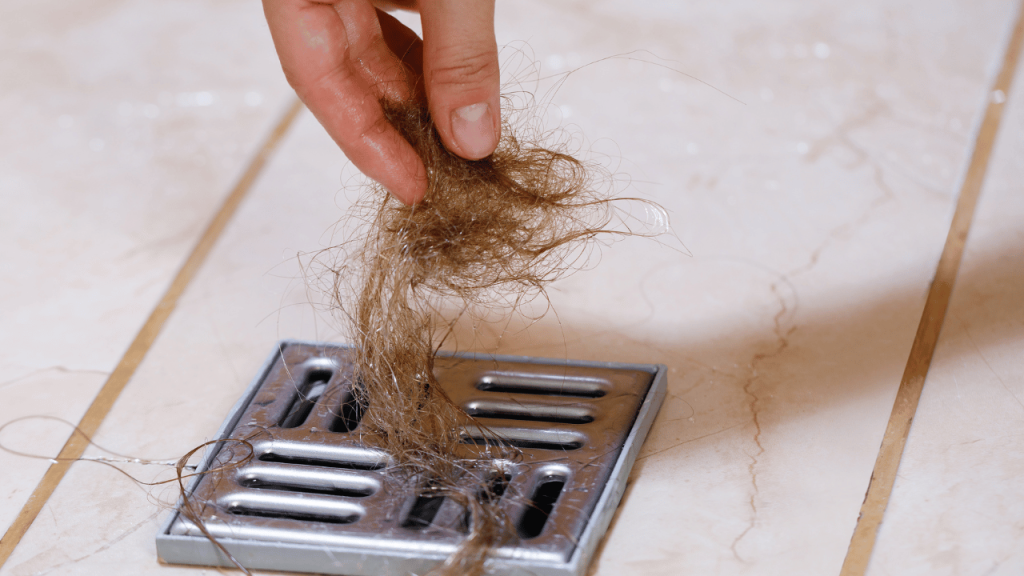
Hair ball chunks are the most common gross thing in bathroom drains. They look like dark twisted clumps coated in gray soap scum and smell vaguely sour. Each person sheds 50 to 100 hairs a day, and most of that ends up in the shower or bathroom sink. The hair wraps around the drain crossbar or P-trap, traps soap and skin oils, and builds into a mass that eventually pulls itself loose and comes back up.
Here's what to look for and what to do about it:
What hair ball chunks look like
Dark, stringy, twisted into a rope-like clump. Often gray on the outside (soap scum) and dark on the inside (compressed hair). The smell is sour or musty, not full-on sewer.
Immediate fix (under 30 minutes)
Remove the drain cover. Use a hair removal tool (a $5 plastic Zip-It works as well as anything fancy) and pull the clump out by hand. Flush with hot water and a tablespoon of dish soap. Install a hair trap to stop the next one.
Black Sludge or Slime
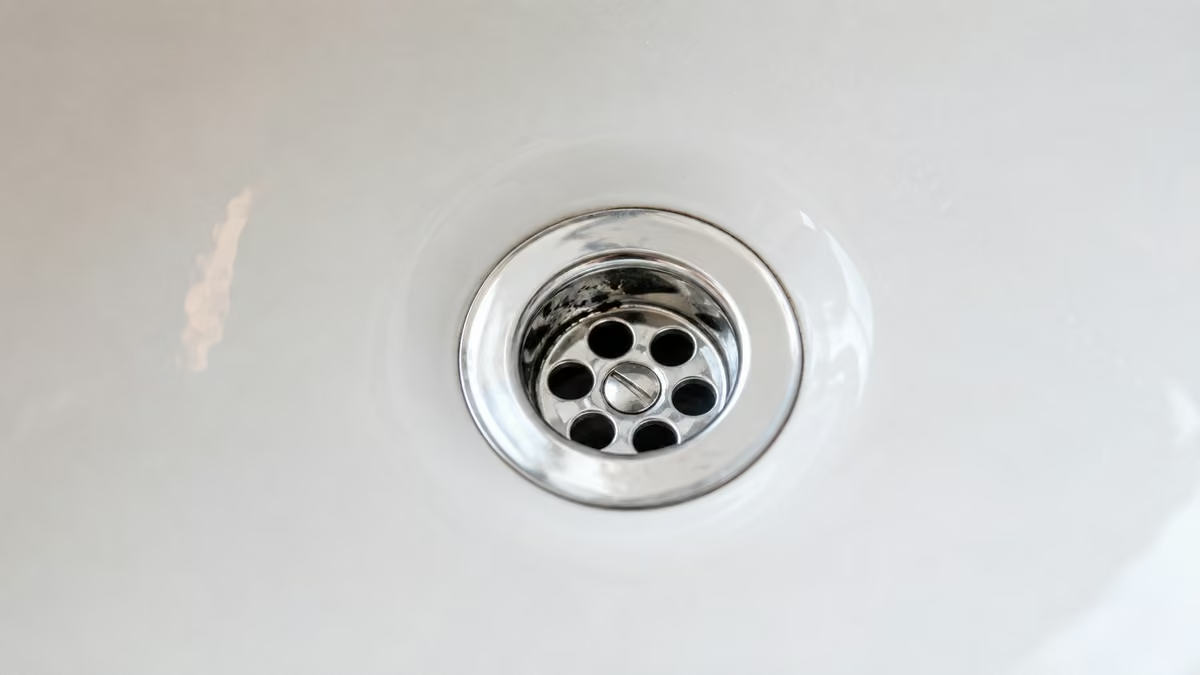
Black sludge is the second most common drain horror. It has two completely different causes, and the fix changes depending on which one you have. According to the CDC's guidance on water-related bacterial growth, the most common cause is bacterial biofilm. The less common cause is manganese precipitate from your water supply.
Here's how to tell the difference and what to do about each:
Biofilm vs manganese: how to tell which one you have
Bacterial biofilm feels sticky, stretches when you pull it apart, and smells like sewer. It thrives in bathroom drains where dead skin, soap, and hair feed the colony. Manganese precipitate feels gritty, breaks into flakes, has no smell, and appears in homes with well water or water high in dissolved iron. Most homeowners have biofilm.
Immediate fix and when it's not enough
For biofilm, scrub the inside of the drain with a stiff brush and dish soap. Follow with a slow pour of 1 cup baking soda and 2 cups white vinegar, wait 15 minutes, flush with boiling water. If the sludge returns within 4 weeks, the biofilm has spread deeper into the drain line and needs professional drain cleaning. For manganese, the only real fix is a whole-house water filter.
Worms or Larvae in the Drain
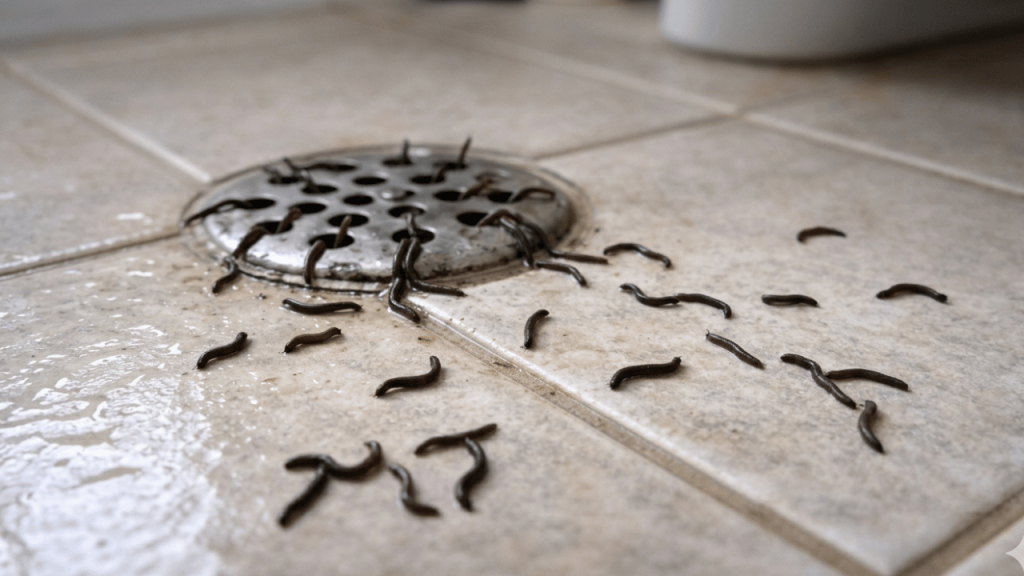
Seeing something move in your drain is the moment most homeowners stop scrolling and start panicking. The good news is that 99% of "drain worms" are actually fly larvae, which are harmless and easy to remove. The bad news is the other 1%, when actual earthworms appear, signals a much more serious problem.
Here are the three things you might be seeing and what each one means:
Drain fly larvae vs midge larvae vs earthworms
Drain fly larvae are small (about 1/4 inch), pale gray or brown, and look like tiny segmented worms with dark heads. They feed on biofilm in the drain. Midge larvae are red or pink, slightly larger, and wriggle aggressively. They come from standing water and bacterial growth. Earthworms are the long, segmented, dark brown ones you see in the garden. They never naturally live in your drain.
When earthworms point to a plumbing check
An earthworm can enter the room from damp soil, a nearby plant, or a gap around the fixture. One sighting does not prove that a sewer pipe is cracked. If earthworms return while several drains run slowly or sewage backs up, stop using the affected fixtures and ask a plumber whether a camera inspection is appropriate. Sewer line repair should be considered only if the inspection confirms damage.
Pink Biofilm or Pink Slime
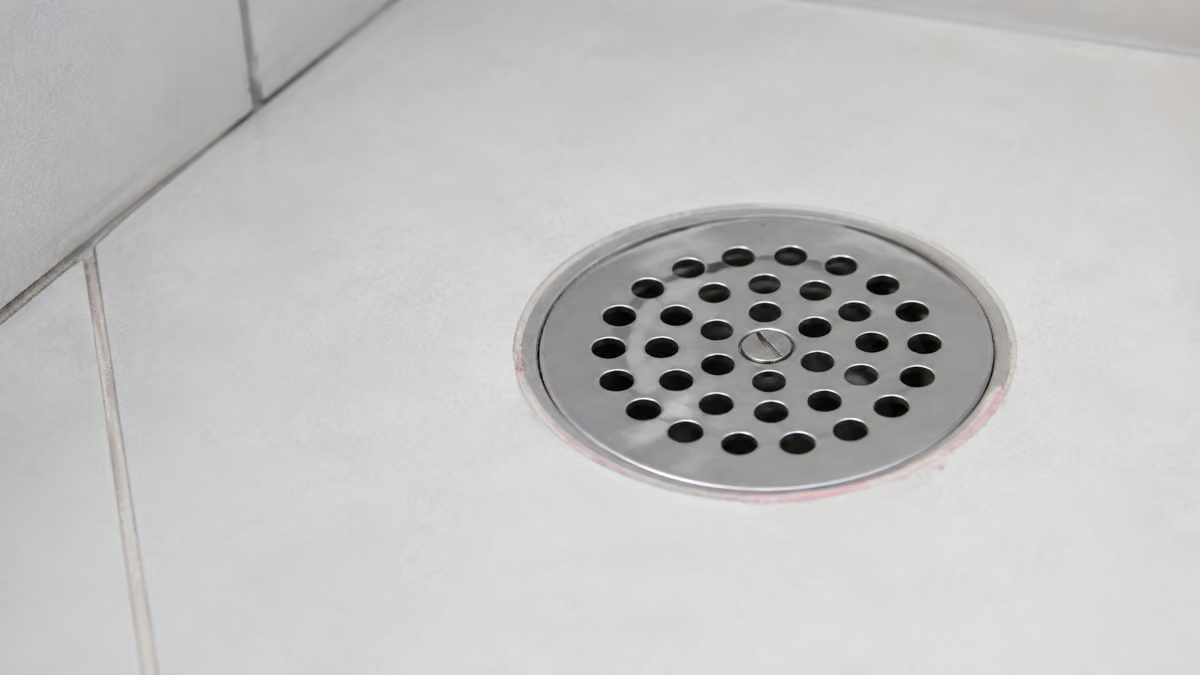
Pink slime in your shower or bathroom sink isn't mold and it isn't dirt. It's a bacterium called Serratia marcescens. Pink slime thrives in humid bathrooms because it feeds on phosphate residue from soaps, shampoos, and shaving creams. Every shower gives it another meal.
Here's what to know about the pink stuff before you reach for the bleach:
What Serratia marcescens actually is?
Serratia marcescens is a real bacterium, not a mold or a fungus. It grows almost everywhere in nature but only shows up as pink slime when it has constant moisture, organic food (your soap), and warm temperatures. It is usually not dangerous to healthy adults but can cause infections in people with weakened immune systems.
Why does pink slime keep coming back after you clean it?
You can wipe pink slime away in 5 minutes. It will return in 1 to 3 weeks unless you fix the moisture source. The fix is humidity control. Run the bathroom fan during and 30 minutes after showers, switch to phosphate-free soaps, and dry shower surfaces with a squeegee. Cleaning treats the symptom. Ventilation treats the cause.
Orange Slime or Rust-Colored Buildup
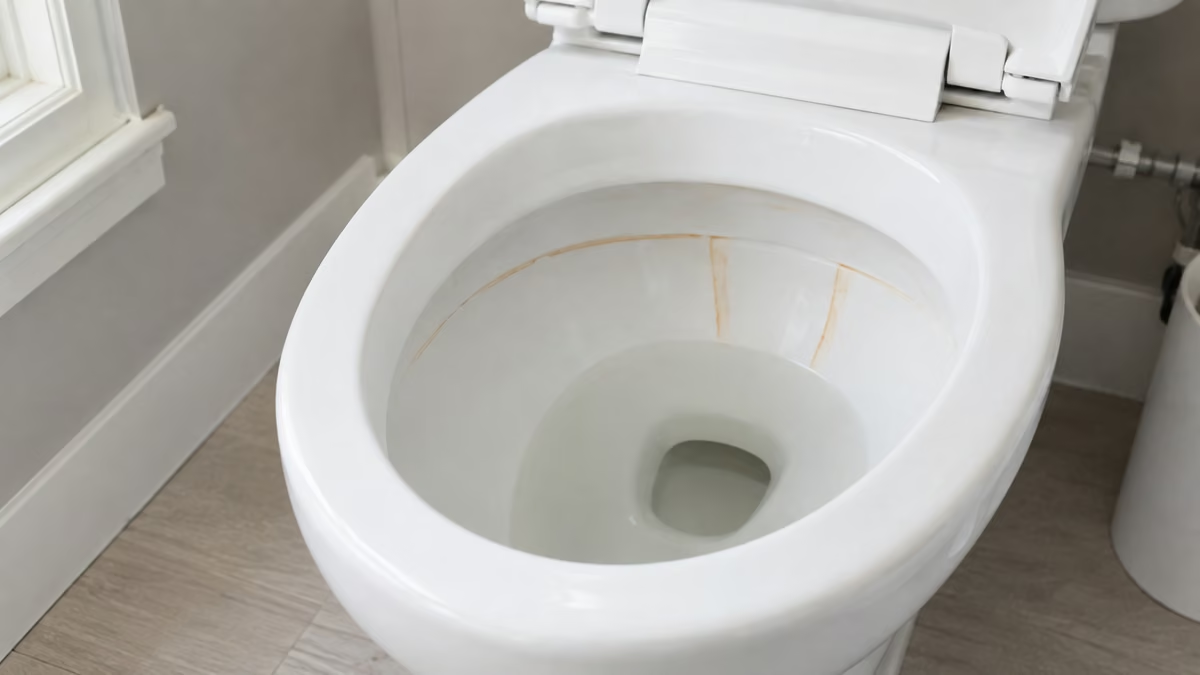
Orange slime in your drain looks like rust mixed with snot. It's not rust. It's a colony of iron bacteria, mainly Gallionella and Leptothrix, that feed on dissolved iron in your water. According to the US Geological Survey on iron bacteria, these organisms are harmless to drink but create slimy orange to brown deposits inside pipes, water heaters, and toilets. It's most common in homes with well water.
Here's how to identify it and why standard cleaners don't work on it:
Iron bacteria and where they come from
Iron bacteria oxidize the dissolved iron in your water and produce a rust-colored slime as a byproduct. The colonies live in well casings, water heaters, and stagnant pipes. Anywhere you have iron in water and oxygen, you can get them.
Why do chemical drain cleaners don't work on iron bacteria?
The slime protects the bacteria underneath. Bleach and chemical drain cleaners kill the surface layer but the colony regenerates within days. The real fix is a chlorine shock treatment of the water heater and well system, plus an iron-removing whole-house filter.
Gray or Brown Water Backing Up the Drain
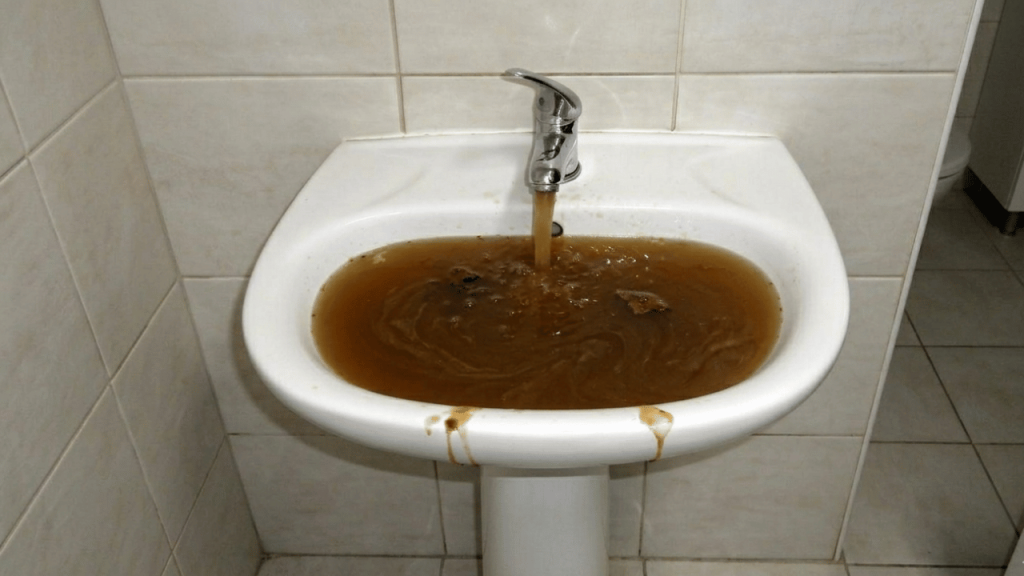
This is the emergency one. If gray water (dishwater or shower water) starts coming up a drain instead of going down, you have a clog in the main line. If brown water with sewer smell appears, you have a sewer backup. Either one means stop using all drains and call a plumber within 24 hours.
Here's the difference between the two and what each means:
Gray water vs brown water
Gray water is wastewater from a sink, shower, or washing machine. It backs up when the main drain line clogs between the fixtures and the city sewer. Brown water with sewer smell means the clog sits in the sewer line or the city's main backed up into yours. Brown water needs emergency service. Gray water needs a same-day appointment.
Food Debris or Chunks (Kitchen Drains)
Food debris coming back out of a kitchen sink almost always means a buildup in the P-trap or a partial clog further down the line. Coffee grounds, rice, pasta, eggshells, and fibrous vegetables (celery, asparagus) are the worst offenders. Fats, oils, and grease (FOG) make the problem worse by hardening on cooler pipe walls and trapping everything that follows.
For a first-time problem, remove the P-trap under the sink, dump and clean it, and reassemble. For a repeat problem, the clog is past the P-trap and needs a snake or hydro jetting. Habits also fix this. Install a strainer over the drain and never pour FOG down the kitchen sink.
White, Chalky, or Crusty Mineral Deposits
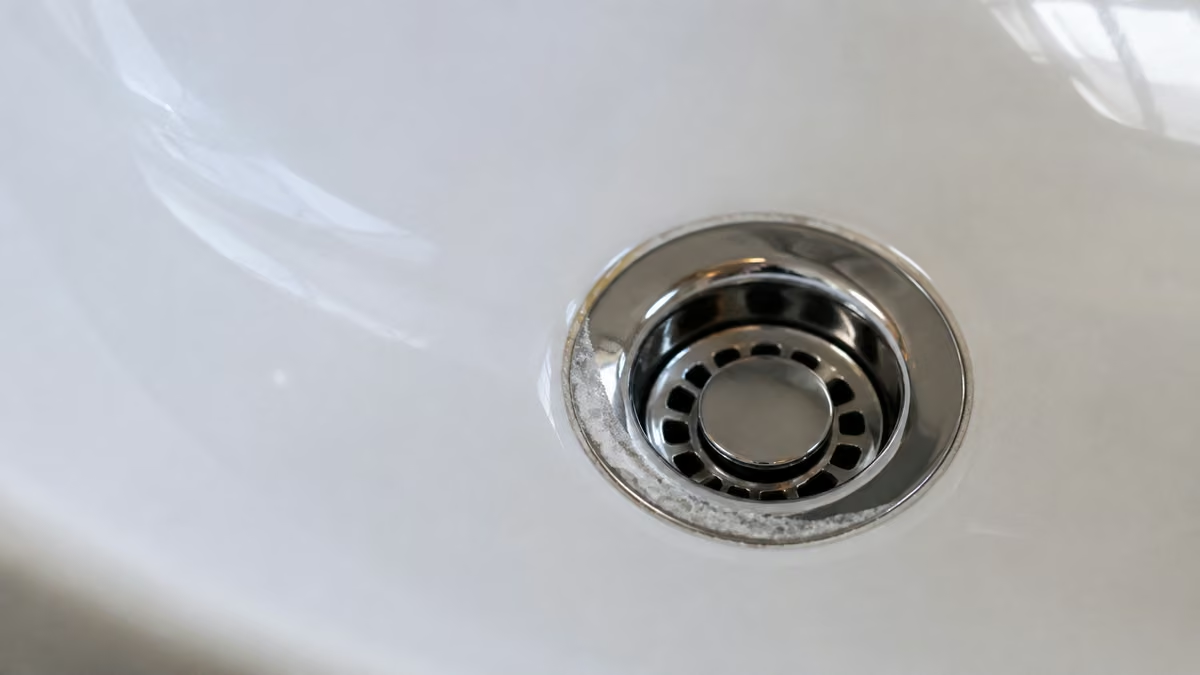
White or chalky buildup around the drain opening or fixture base is hard water scale, mostly calcium carbonate and magnesium that stays after water evaporates. Hard water exists almost everywhere in the US, but Tucson and Phoenix homes see some of the highest mineral content in the country at 16 to 22 grains per gallon.
Here's why it shows up and when to fix the cause, the underlying cause rather than the surface symptom:
Why does hard water create a drain crust?
Every time water evaporates from a drain, the dissolved minerals stay behind. Over months and years, the crust thickens and narrows the pipe diameter. Surface scrubbing with a 1:1 vinegar-water solution removes the visible crust in 15 to 30 minutes.
When to add a water softener
If you see mineral buildup on multiple fixtures at once, your dishwasher leaves spots, and your water heater runs less efficiently, the cause isn't the drains. A whole-house softener fixes the cause and stops the crust from coming back.
When Each Scenario Becomes a Plumbing Emergency?
Not every gross thing in your drain is an emergency. Most are DIY fixes. A few are not. The fastest way to decide is by matching what you see to a clear urgency level, then knowing which fix to start with.
Here's the urgency level and immediate action for each of the 8 scenarios:
| Scenario | Urgency | Immediate Action |
| Hair ball chunks | DIY safe | Remove with Zip-It tool, flush with hot water |
| Black biofilm sludge | Call within 1 week | DIY clean, schedule pro cleaning if it returns |
| Drain fly or midge larvae | DIY safe | Clean drain, bleach soak, fix moisture source |
| Earthworms in drain | Emergency (same day) | Stop using drain, call plumber |
| Pink slime (Serratia) | DIY safe | Wipe surface, fix bathroom humidity |
| Orange iron bacteria | Schedule | Chlorine shock + iron filter |
| Gray water backup | Call within 24 hours | Stop using drains, call plumber |
| Brown water sewer backup | Emergency (same day) | Stop using all water, call plumber |
| Food debris recurring | Schedule | P-trap clean, hydro jetting if it repeats |
| Mineral white crust | Schedule | Vinegar surface clean, softener if widespread |
When to Call a Plumber for Gross Drain Stuff?
Most gross stuff in your drain has a clear cause and a quick fix. Use the 8 scenarios above to identify what you're seeing, check the urgency level, and either pull on gloves or grab the phone. For the cases where DIY won't cut it (recurring black sludge, earthworms, sewer backup, chronic food debris), Elite Rooter is one option. We run a camera inspection on every drain call, which means we see the actual cause inside the line before recommending a fix. That keeps you from paying for a snake job when the real problem is a cracked sewer pipe, or a hydro jet when biofilm is hiding inside a section that needs lining instead.
We operate in Arizona, California, Colorado, and Florida with full licensing in each state. Most service calls book within the same day. Written estimates come before any work starts, and the price holds for 7 days after the visit. If you want a second opinion, our drain cleaning service page has more details on the methods we use and the typical cost ranges. If you're still figuring out what you're seeing in the drain, try the DIY fix first. Plumbing surprises get less scary once you know what you're looking at.
Frequently Asked Questions
Here are quick answers to the questions homeowners search for most often when something gross comes out of their drain.
What's the black stuff coming out of my drain?
Black sludge in drains is almost always biofilm, a sticky bacterial coating of hair, soap residue, skin cells, and grease. It grows up to 1 mm thick every 90 days. In well-water homes, the black stuff can also be manganese precipitate, which feels gritty rather than slimy.
Is biofilm in drains a health hazard?
Biofilm itself is not dangerous to most healthy adults. The concern is the bacteria living inside it, including Legionella, Pseudomonas, and E. coli. Direct contact with open cuts, weakened immune systems, or chronic indoor air exposure can cause real health problems. For most homeowners, basic cleaning is enough.
What's the pink slime in my shower drain?
Pink slime is Serratia marcescens, a bacterium that feeds on phosphate residue in soaps and shampoos. It grows in humid bathrooms with poor ventilation. It's usually harmless but returns within weeks unless you fix the humidity source.
Are worms in my drain dangerous?
Drain fly and midge larvae are harmless but indicate biofilm buildup. Earthworms in your drain mean a crack in your sewer line, which is a same-day emergency. Stop using the drain and call a plumber.
How do I clean gross drain buildup safely?
Skip the harsh chemicals. Use a stiff drain brush, then a baking soda and vinegar pour (1 cup soda, 2 cups vinegar), wait 15 minutes, and flush with boiling water. Enzyme-based monthly products prevent the buildup from coming back.
When should I call a plumber for a gross drain?
Call within 24 hours for any backup of gray or brown water. Call the same day for earthworms in the drain or recurring sewer smell. For surface gross stuff that wipes away easily, DIY first and call only if it returns.