
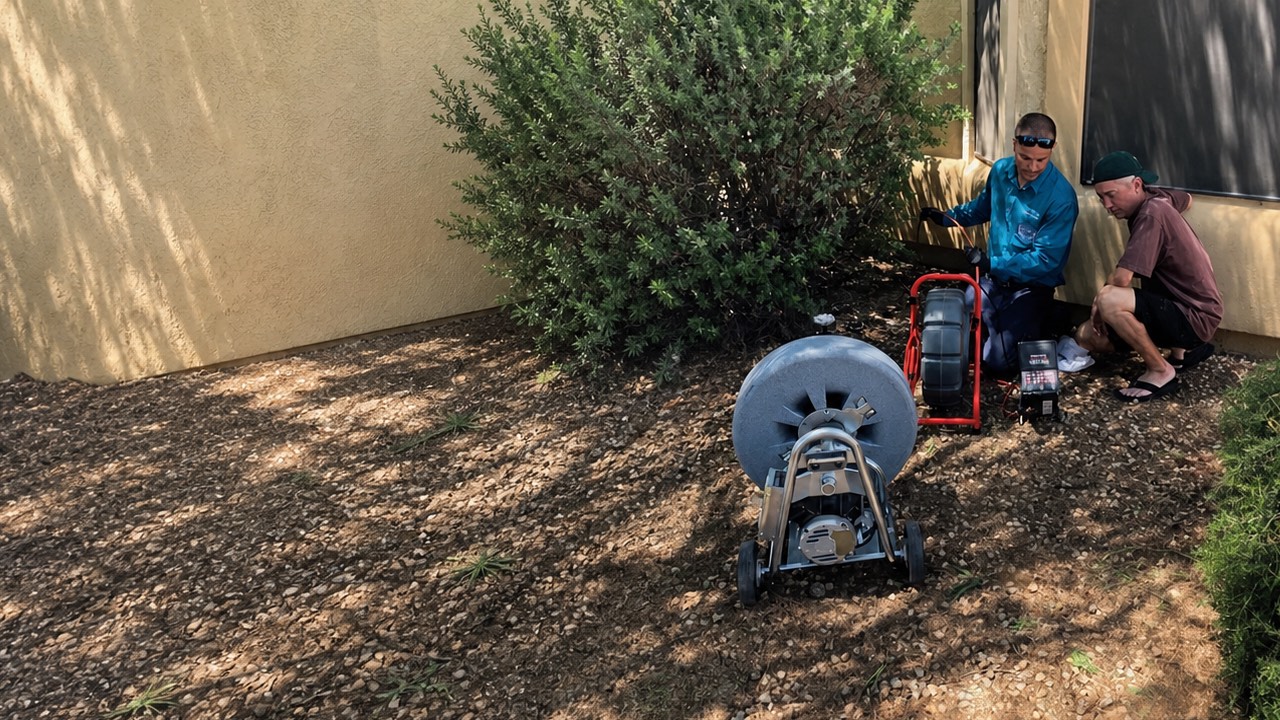
A sewer camera estimate can feel final when the screen shows a dark pool and the technician calls it a belly. The footage matters, but the word belly is still the start of the decision. Before you approve excavation, ask for the evidence that connects that low area to the proposed scope.
A useful recording should help you separate four choices: monitor a documented low spot, clean the line and inspect again, repair one section, or replace a longer run. There is no honest one-frame answer.
What the camera has to establish
Ask for the complete recording, not a still image. NASSCO's Building Sewer and Drain Inspection program trains inspectors to record conditions inside private building sewers and drains with defined assessment codes. You do not need a particular certification to ask for the same basic discipline: identify the access point, the direction of travel, the location of the low section, the visible pipe condition, and anything that limited the inspection.
- Where does the pooled section begin and end?
- Was the line flowing during the pass, and did the pool drain afterward?
- Was the pipe clean enough to see its bottom and walls?
- What pipe material, joints, roots, cracks, offsets, corrosion, or breaks were visible?
- Was the full reachable run recorded beyond the low spot?
- What symptom or service history makes action urgent now?
Separate a flow problem from a structural problem
NASSCO's PACP condition system applies to mainline pipe surveys, not a universal household repair rule. Its useful lesson is narrower: it records structural condition separately from operation and maintenance condition, and it weighs both severity and extent. High structural findings point toward engineering or rehabilitation decisions. Maintenance findings can point toward cleaning or other operational work.
Use that distinction when you review a home sewer video. Deposits or roots may need cleaning even when the pipe wall is sound. A crack, open joint, collapse, or several deformed sections changes the structural discussion. A low area can exist alongside either kind of finding, which is why standing water alone does not set the repair length.
How the evidence changes the next step
| Possible next step | Evidence to request | What it does not mean |
|---|---|---|
| Monitor | A clear baseline video; affected length; no nearby structural damage; symptom history; written triggers for another inspection. | The low spot is permanently harmless. |
| Clean, then inspect again | Deposits, grease, or roots obscure the view or restrict flow; a second full recording after cleaning. | Cleaning restored the pipe's grade. |
| Spot repair | One located low section; documented sound pipe on both sides; access and restoration scope in writing. | Every isolated low area can use the same method. |
| Longer repair or replacement | Several affected sections, structural defects, recurring failures, or surrounding pipe condition that makes a short repair poor scope. | A single frame of standing water proves the whole run has failed. |
Do not turn a model code into a diagnosis
The 2024 International Residential Code calls for horizontal drainage piping to be installed in uniform alignment at uniform slopes. That explains why a low section matters to gravity flow. The IRC is a model code, however. A city or county may adopt a different edition, amend it, or use another plumbing code. The code text also does not tell you from one camera frame whether an existing line needs monitoring, a short repair, or full replacement.
What a written sewer proposal should show
- The camera recording and the date of inspection
- The access point, direction, and approximate location of the low area
- The affected length and how it was determined
- The pipe material and visible condition before and after the low area
- Whether cleaning was completed or recommended before final diagnosis
- The proposed repair limits and why they match the footage
- Excavation, access, permits, inspection, testing, backfill, and surface restoration included in the scope
- Any conditions that could change the scope after exposure
If you still have only a screenshot and a verbal price, ask for the recording and written scope before comparing proposals. The existing sewer camera guide explains what an inspection can document. The sewer repair page owns the service decision once the affected section is clear. Use the location finder to confirm which Elite Rooter team serves the address and what that team offers.
Frequently asked questions
Does standing water on a sewer camera prove the pipe has a belly?
It proves that water was visible during that pass. Ask where the pooled section begins and ends, whether the line was in use, whether debris blocked the view, and whether the water drained as the camera moved. Those details help separate a persistent low area from an incomplete observation.
Can cleaning fix a sewer line belly?
Cleaning can remove deposits or roots that block flow or obscure the camera. It cannot restore missing grade or support beneath a sagged pipe. If the first view is obstructed, cleaning followed by another camera pass may produce better evidence for the repair decision.
Does one belly mean the whole sewer line must be replaced?
No. An isolated low area and several low areas are different scopes. Ask the contractor to document the affected length, the condition on both sides, and why a spot repair or longer replacement is being proposed.
Is there a universal amount of standing water that requires replacement?
No universal replacement threshold applies to every home, pipe, or jurisdiction. Treat a percentage or depth as one observation. The recommendation should also explain the affected length, structural condition, service history, access, and local requirements.
Can a sewer camera show why the pipe sagged?
A camera shows the inside of reachable pipe. It may document pooling, deposits, roots, open joints, cracks, or other visible conditions, but it does not show the soil support outside the pipe wall. Locating work or excavation may be needed before a cause is confirmed.